
Thistle Do Nicely souvenir and Scottish gift shop in Oban
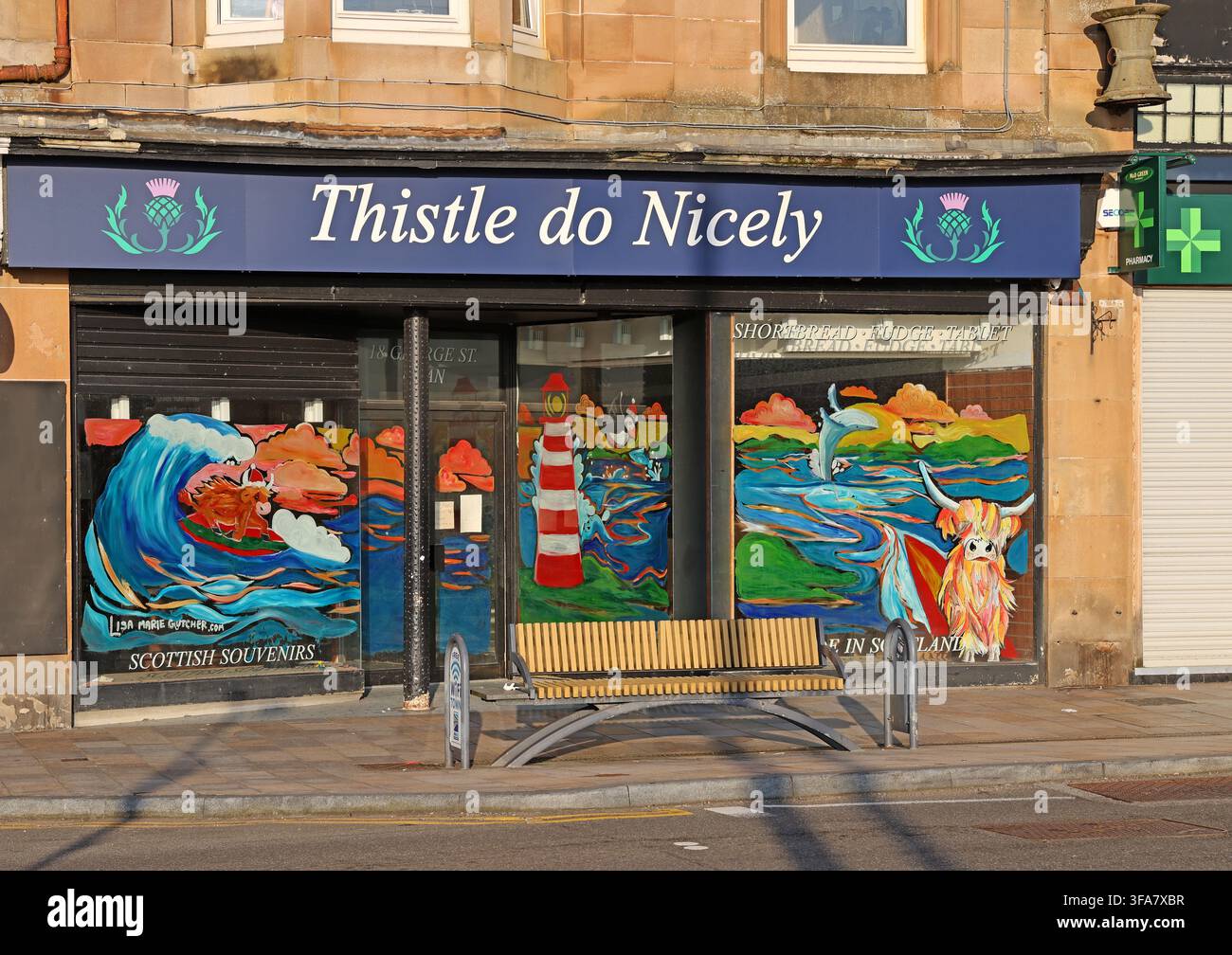
Image details
Contributor:
Tony SmithImage ID:
3FA7XBRFile size:
89.7 MB (4.4 MB Compressed download)Releases:
Model - no | Property - noDo I need a release?Dimensions:
6661 x 4708 px | 56.4 x 39.9 cm | 22.2 x 15.7 inches | 300dpiDate taken:
17 August 2025Location:
Oban, Argyll and Bute, Scotland, UKMore information:
. Thistle Do Nicely souvenir and Scottish gift shop in Oban. Photographed on 17 August 2025. The recorded location is Oban, Argyll and Bute, Scotland, UK. Thistle Do Nicely Scottish souvenir and gift shop in Oban, photographed on the town's commercial waterfront streets. The colourful shopfront and Scottish-themed branding reflect the strong visitor economy in this gateway to the Inner Hebrides. The image provides contemporary editorial context for tourism retail, independent shops, souvenirs, Scottish identity, high-street trading and visitor spending in Oban and the wider Argyll and Bute economy. Oban grew around a sheltered bay on Scotland's west coast and expanded in the nineteenth century with steamship traffic and the arrival of the railway in 1880. It remains a major gateway to the Inner Hebrides, with CalMac ferries, rail and road connections concentrated around the waterfront. Tourism, seafood, island travel and maritime services all contribute to the town's modern economy. Seen through local business, the earlier context is that local businesses provide unusually precise social-history evidence because names, branding and uses change more quickly than the buildings they occupy; A shop, café, pub or service company can disappear while the façade survives, leaving photographs as a record of the previous commercial life of the street. For consumer object, the historical context is that material culture includes the ordinary products people bought, used, collected or displayed; Small manufactured objects can reveal national identity, advertising, technology and popular taste in ways that formal records do not. Looking at market hall, the longer history is that market halls have long concentrated small traders under one roof, combining food, household goods and specialist retail with an important social role; Regenerated markets increasingly mix traditional stalls with cafés, events and independent makers.

