
Panoramic view of Oban harbour waterfront with Oban Distillery chimney
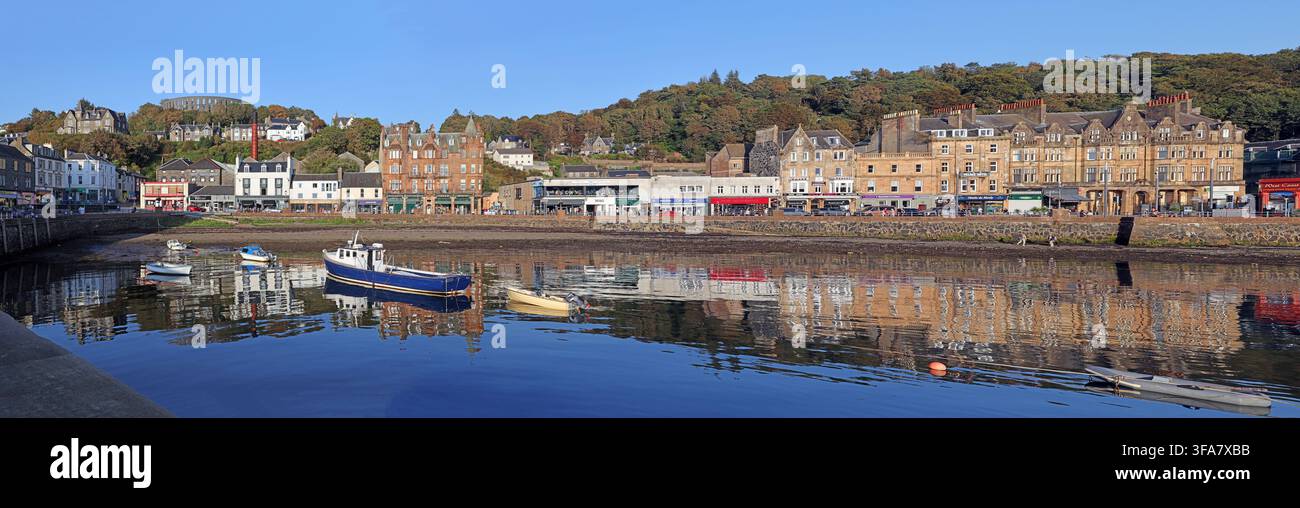
Image details
Contributor:
Tony SmithImage ID:
3FA7XBBFile size:
77.7 MB (5 MB Compressed download)Releases:
Model - no | Property - noDo I need a release?Dimensions:
9186 x 2956 px | 77.8 x 25 cm | 30.6 x 9.9 inches | 300dpiDate taken:
17 August 2025Location:
Oban, Argyll and Bute, Scotland, UKMore information:
. Panoramic view of Oban harbour waterfront with Oban Distillery chimney. Photographed on 17 August 2025. The recorded location is Oban, Argyll and Bute, Scotland, UK. Panoramic view across Oban harbour and waterfront, including the distinctive town buildings and the chimney associated with Oban Distillery. Calm water and a broad sweep of the shoreline show the close relationship between the harbour, tourism, retail and whisky heritage in this compact Scottish coastal town. The image provides wide editorial context for Oban, Argyll and Bute, ferry travel, maritime activity, town-centre development, Scotch whisky tourism and the west-coast landscape. Oban grew around a sheltered bay on Scotland's west coast and expanded in the nineteenth century with steamship traffic and the arrival of the railway in 1880. It remains a major gateway to the Inner Hebrides, with CalMac ferries, rail and road connections concentrated around the waterfront. Tourism, seafood, island travel and maritime services all contribute to the town's modern economy. For the story of waterfront, it is useful to note that harbours and ferry ports have shaped coastal communities for centuries, providing sheltered water for fishing, trade and passenger travel; Quays, piers, slipways and terminal buildings record changing vessel sizes and the transition from cargo handling to modern roll-on roll-off ferry operations. The historical setting for spirit production is that scotch whisky became one of Scotland's most recognisable exports, while local liqueurs and gins use ingredients, packaging and place names to build regional identity; Distilleries increasingly developed visitor centres alongside production. Seen through water quality, the earlier context is that coastal safety information is shaped by local hazards such as currents, tides, mud, pollution or shipping, meaning signs can be important evidence of how a shoreline is managed.

