
Walter Smith bronze statue with raised arms outside Rangers Ibrox
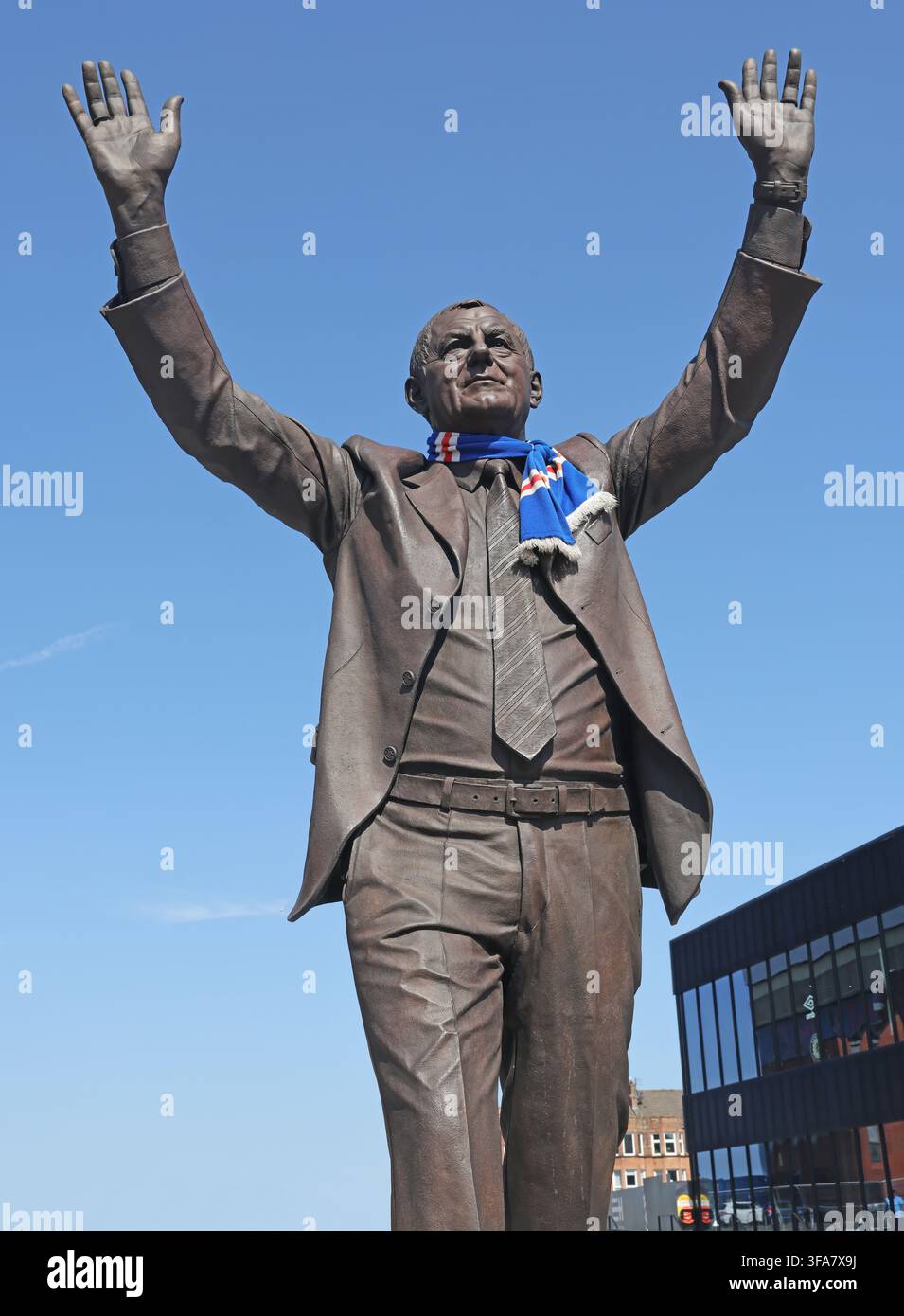
Image details
Contributor:
Tony SmithImage ID:
3FA7X9JFile size:
116.2 MB (2.8 MB Compressed download)Releases:
Model - no | Property - noDo I need a release?Dimensions:
5464 x 7432 px | 46.3 x 62.9 cm | 18.2 x 24.8 inches | 300dpiDate taken:
17 August 2025Location:
Ibrox, Glasgow, Scotland, UKMore information:
. Walter Smith bronze statue with raised arms outside Rangers Ibrox. Photographed on 17 August 2025. The recorded location is Ibrox, Glasgow, Scotland, UK. Full-length view of the Walter Smith bronze statue outside Rangers FC's Ibrox Stadium in Glasgow. The former manager is depicted with both arms raised in celebration, creating a strong sporting memorial image. The statue reflects Smith's enduring association with Rangers and can illustrate Scottish football history, football management, club legends, supporter culture, memorial art and the heritage of Ibrox Stadium. Seen through mural, the earlier context is that monuments and civic artworks are part of the visual history of place; Their subjects reveal whom a community chose to celebrate, while later reinterpretation or controversy can change the meaning of an apparently permanent object. For matchday, the historical context is that british sports venues often have histories extending far beyond their present-day appearance, with rebuilt stands, sponsorship names and safety standards reflecting the professionalisation and commercial growth of spectator sport. Looking at business signage, the longer history is that local businesses provide unusually precise social-history evidence because names, branding and uses change more quickly than the buildings they occupy; A shop, café, pub or service company can disappear while the façade survives, leaving photographs as a record of the previous commercial life of the street. The 2026 relevance of mural comes from the fact that contemporary street art continues to blur the line between unofficial expression, commissioned mural and tourist attraction; Images are therefore relevant to urban culture, creative industries, heritage interpretation and place-making. For matchday, the 2026 context is that professional sport continues to be closely tied to broadcast rights, tourism, sponsorship and stadium redevelopment, while supporter experience, policing, ticket.

