
Rangers Ibrox memorial sculpture remembering the 1971 stadium disaster
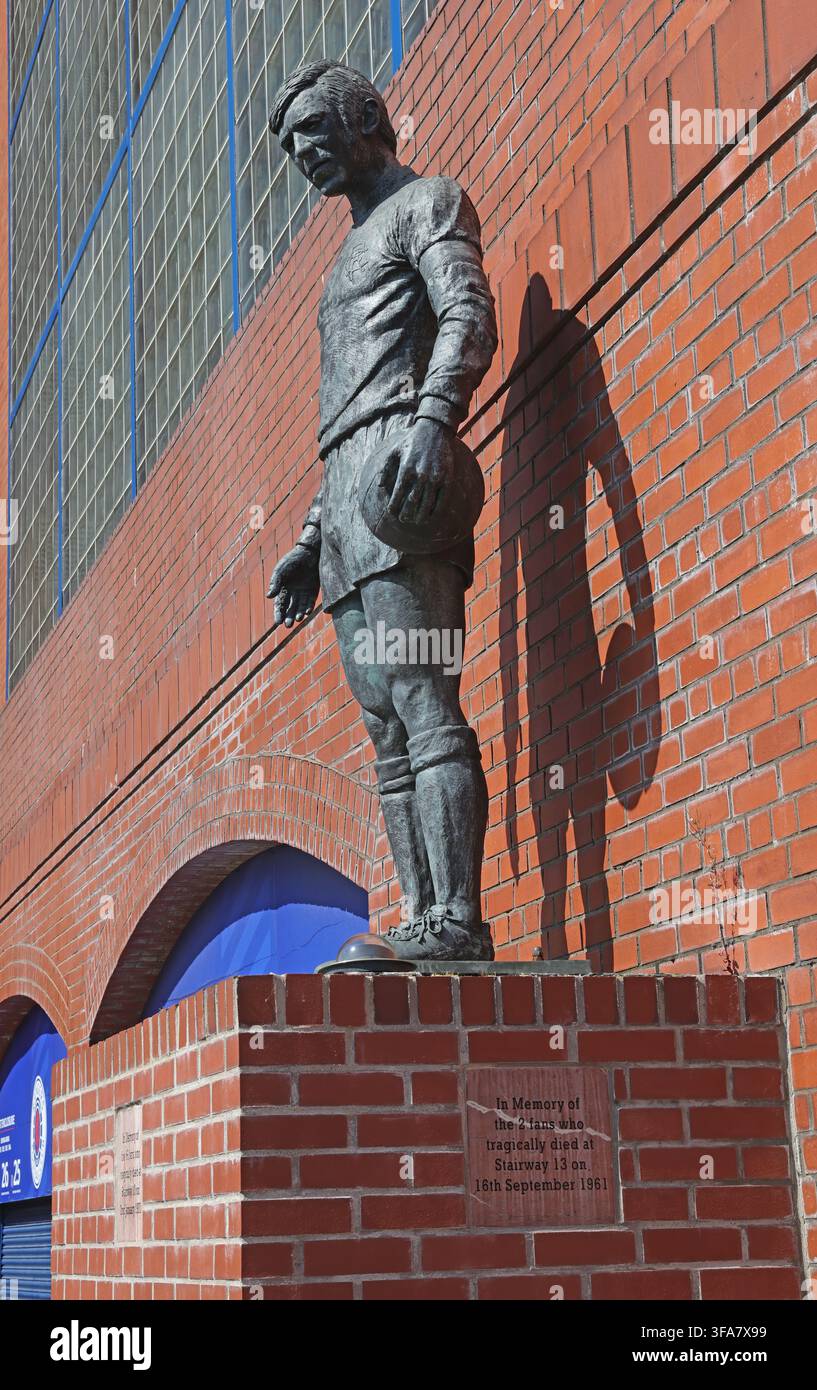
Image details
Contributor:
Tony SmithImage ID:
3FA7X99File size:
113.1 MB (5.2 MB Compressed download)Releases:
Model - no | Property - noDo I need a release?Dimensions:
4985 x 7928 px | 42.2 x 67.1 cm | 16.6 x 26.4 inches | 300dpiDate taken:
17 August 2025Location:
Ibrox, Glasgow, Scotland, UKMore information:
. Rangers Ibrox memorial sculpture remembering the 1971 stadium disaster. Photographed on 17 August 2025. The recorded location is Ibrox, Glasgow, Scotland, UK. The bronze figure forms part of Rangers FC's remembrance area at the stadium and provides a solemn visual link to one of the most significant tragedies in Scottish football history. The image is suitable for respectful editorial coverage of football safety, memorials, supporter remembrance, Rangers heritage, Ibrox history and the continuing commemoration of those who lost their lives. For supporters, the historical context is that british sports venues often have histories extending far beyond their present-day appearance, with rebuilt stands, sponsorship names and safety standards reflecting the professionalisation and commercial growth of spectator sport. Looking at artwork, the longer history is that public art turns streets and buildings into records of local culture; Murals, statues and memorial sculpture can commemorate people and events, celebrate industry, respond to politics or simply enliven public space, while materials and style often identify a particular era. The background to memorial is that parish churches and cathedrals are among Britain's richest sources of architectural and social history; Medieval fabric, later chapels, organs, altars, monuments and inscriptions can coexist within a single building, revealing generations of craftsmanship and changing liturgy. For supporters, the 2026 context is that professional sport continues to be closely tied to broadcast rights, tourism, sponsorship and stadium redevelopment, while supporter experience, policing, ticket prices and transport continue to shape matchday debate. In 2026, artwork remains relevant because contemporary street art continues to blur the line between unofficial expression, commissioned mural and tourist attraction; Images are therefore relevant to urban culture, creative industries, heritage interpretation and.

