
Smartphone showing the 14 August 2026 UK Government wildfire alert, warning the public to avoid barbecues, firepits, fireworks and open flames
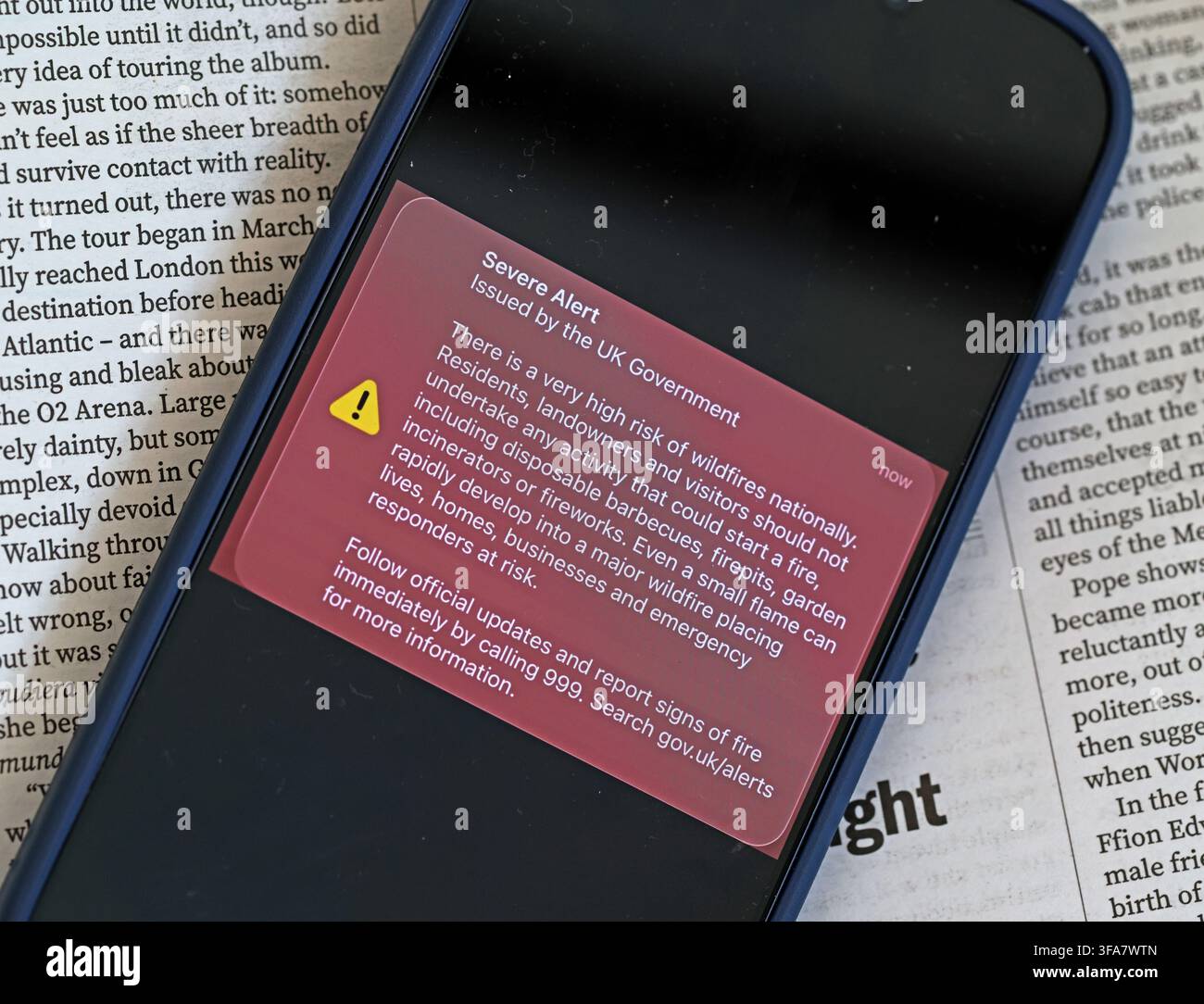
Image details
Contributor:
Tony SmithImage ID:
3FA7WTNFile size:
101.6 MB (4.4 MB Compressed download)Releases:
Model - no | Property - noDo I need a release?Dimensions:
6812 x 5212 px | 57.7 x 44.1 cm | 22.7 x 17.4 inches | 300dpiDate taken:
15 August 2026Location:
United KingdomMore information:
Smartphone displaying the UK Government Severe Alert issued on 14 August 2026 warning of a very high national risk of wildfires during an exceptionally hot and dry British summer. The emergency message advised residents, landowners and visitors to avoid activities capable of starting fires, including disposable barbecues, firepits, garden incinerators and fireworks, and urged people to call 999 immediately on seeing signs of fire. The warning had a substantial evidence base. England had recorded its driest July on record, receiving only around 10% of its long-term average rainfall, while seven consecutive weeks had brought less than 10mm of rain nationally. By 10 August the UK summer mean temperature was 16.48C, 1.88C above the 1991-2020 average, making a record warm summer increasingly likely. A Met Office Amber Extreme Heat warning then forecast temperatures approaching 38C in places on 13 August. Fire services were already dealing with significant wildfires and the Met Office had explained that dry ground, heat, low humidity and wind can allow fires to spread rapidly. Against that background, the danger prompting the alert was credible rather than hypothetical. Government guidance also identifies wildfires as the type of life-threatening emergency for which the mobile Emergency Alerts system may be used. Whether such a broad alert was proportionate remained open to debate: wildfire severity varied geographically and emergency warnings risk losing impact if used too readily. However, unusually dry vegetation, repeated heatwaves, active fires and pressure on emergency services gave authorities a strong factual case for urgent prevention messaging. The photograph can illustrate wildfire prevention, climate change, extreme weather, emergency communications, public safety, government warnings, heatwaves, drought, fire-service pressure and debate over the appropriate use of mass mobile alerts. It became a notable test of public acceptance of alerts.

