
Nip and Growler Ale House pub frontage in King's Lynn, Norfolk, England, UK.
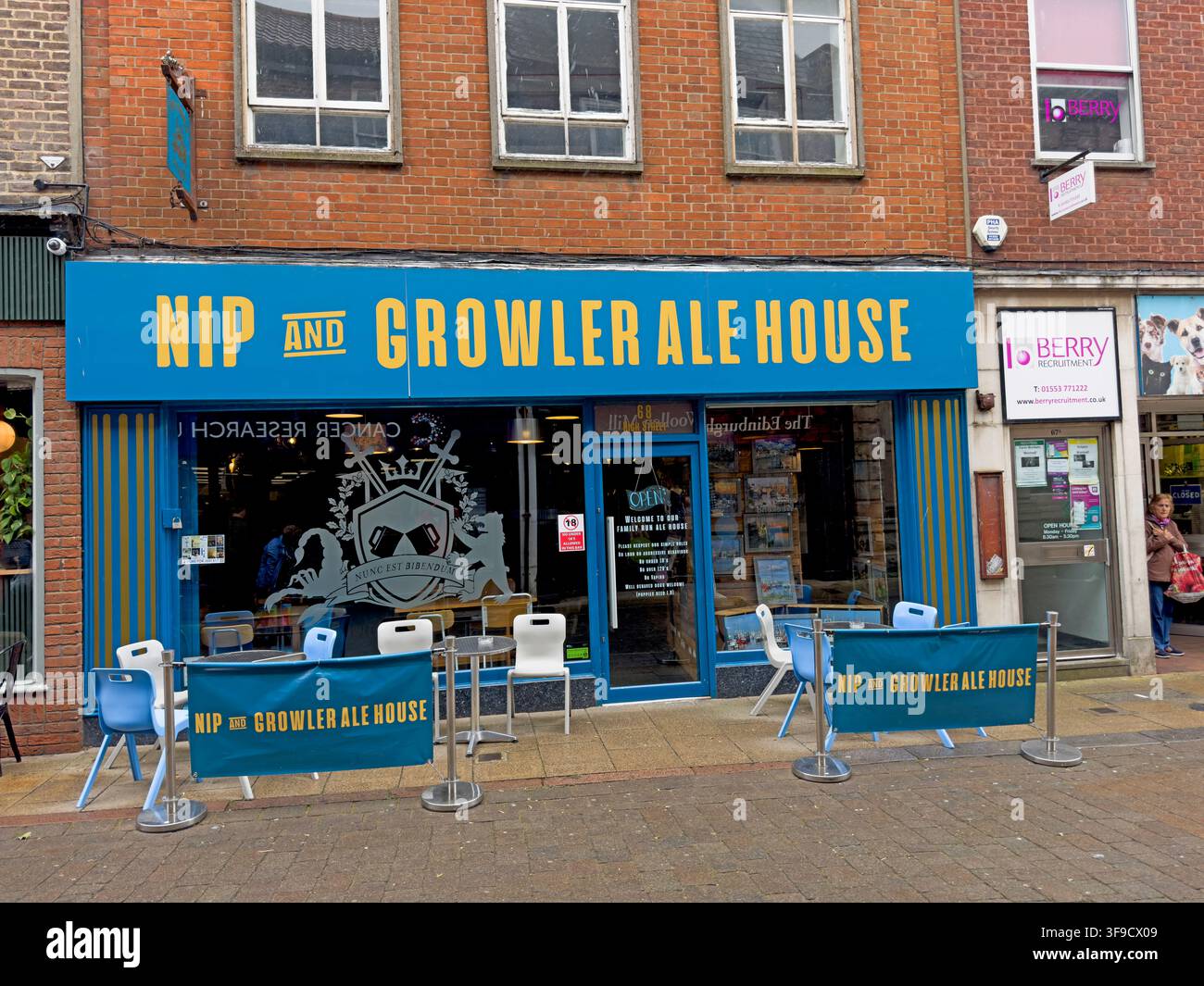
Image details
Contributor:
Tony SmithImage ID:
3F9CX09File size:
91.5 MB (3.9 MB Compressed download)Releases:
Model - no | Property - noDo I need a release?Dimensions:
6529 x 4897 px | 55.3 x 41.5 cm | 21.8 x 16.3 inches | 300dpiDate taken:
8 June 2024Location:
King's Lynn, Norfolk, England, UKMore information:
. Nip and Growler Ale House pub frontage in King's Lynn, Norfolk, England, UK. Photographed on 8 June 2024. For the story of beer culture, it is useful to note that public houses form a distinctive strand of British social history; Coaching routes, tied brewery estates, Victorian urban growth and twentieth-century leisure each shaped the location and appearance of pubs, many of which later became restaurants, shops, housing or community assets. For present-day beer culture, 2026 is significant because pub survival remains a live issue as energy, staffing, taxation and changing drinking habits affect the licensed trade; Historic and contemporary pub images therefore have relevance to community assets, nightlife, independent brewing, high-street change and hospitality economics. Useful alternative terminology includes licensed premises, alehouse, hostelry, bar trade, real ale, cask ale, local pub, historic pub, independent brewery, 681IMG_4787, Kings, and bar. The historical setting for nightlife is that british pubs developed from inns, taverns and alehouses into licensed social institutions that have long served as meeting places, music venues and landmarks; Names, brewery signs, etched glass, tiled interiors and evolving fascias can preserve local history even when ownership or use changes. Seen through independent brewery, the earlier context is that beer culture links agriculture, brewing, distribution and the licensed trade; Cask-conditioned ale, handpumps, brewery branding and pub interiors became especially significant to the real-ale revival from the 1970s onwards, while later craft brewing introduced new styles and independent producers. In the 2026 discussion of nightlife, in England eligible pubs and live-music venues receive a 15% business-rates relief for the 2026/27 billing year, reflecting continuing concern about operating costs, closures and the role of hospitality in town-centre vitality.

