
Historic Weinhaus Zum Spiegel hanging sign in Mainz, Germany.
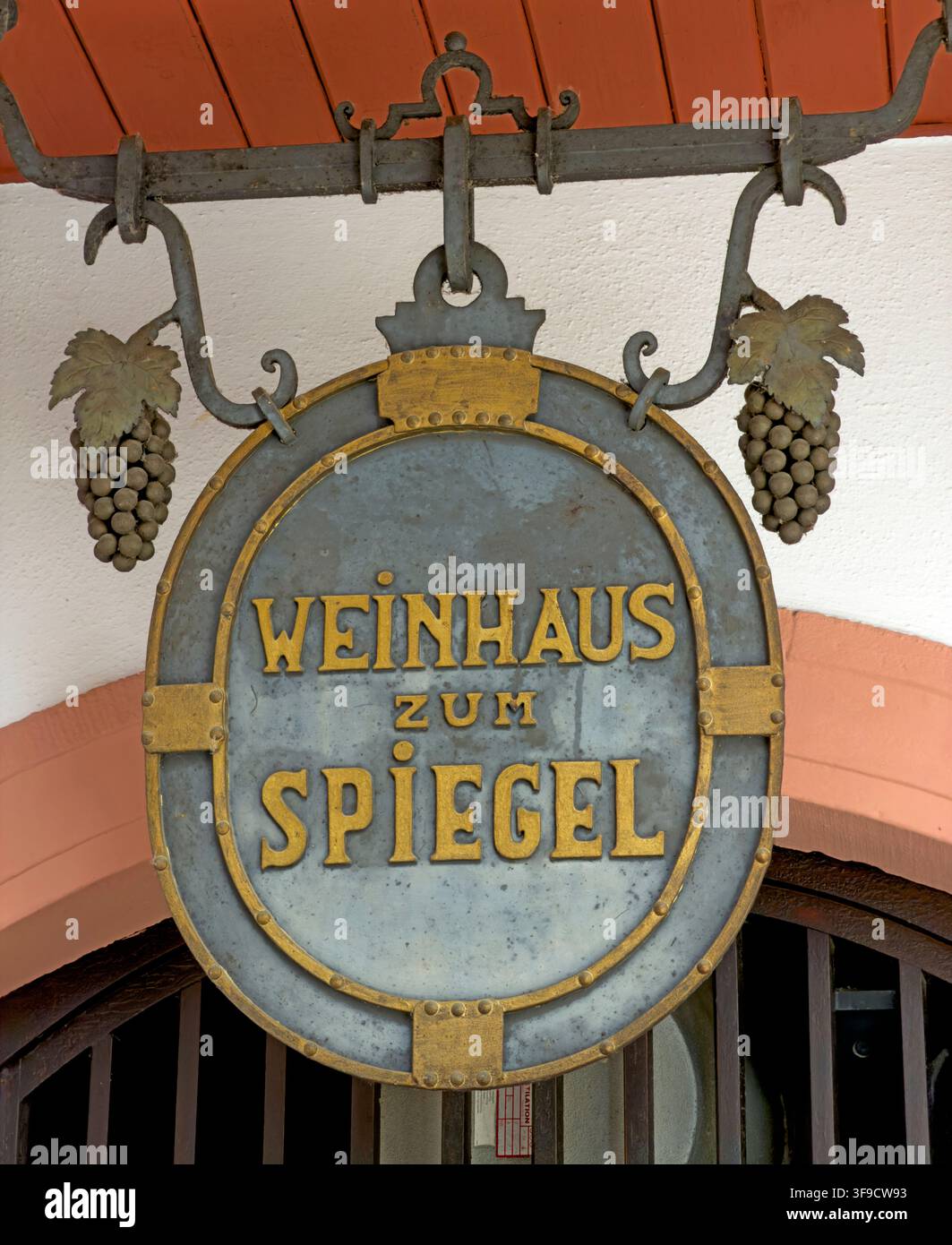
Image details
Contributor:
Tony SmithImage ID:
3F9CW93File size:
108 MB (2.7 MB Compressed download)Releases:
Model - no | Property - noDo I need a release?Dimensions:
5557 x 6792 px | 47 x 57.5 cm | 18.5 x 22.6 inches | 300dpiDate taken:
7 August 2026Location:
Mainz, Rhineland-Palatinate, GermanyMore information:
. Historic Weinhaus Zum Spiegel hanging sign in Mainz, Germany. Photographed on 7 August 2026. The recorded location is Mainz, Rhineland-Palatinate, Germany. Mainz stands on the Rhine and has more than two millennia of history, from Roman Mogontiacum through its role as an archiepiscopal city to the birthplace of Johannes Gutenberg. The old town combines reconstructed historic streets, churches, wine culture and post-war urban development, giving street signs and façades strong local-history context. Looking at notice, the longer history is that temporary and permanent notices are valuable social-history evidence because they capture the rules and assumptions of a particular moment, from parking and access to opening times, safety and public-service instructions. The background to beer culture is that british pubs developed from inns, taverns and alehouses into licensed social institutions that have long served as meeting places, music venues and landmarks; Names, brewery signs, etched glass, tiled interiors and evolving fascias can preserve local history even when ownership or use changes. In 2026, notice remains relevant because current public-realm design increasingly expects signs to be legible, inclusive and consistent, while bilingual and accessibility information reflects wider policy around language and equal access. Current 2026 context around beer culture is that in England eligible pubs and live-music venues receive a 15% business-rates relief for the 2026/27 billing year, reflecting continuing concern about operating costs, closures and the role of hospitality in town-centre vitality. Other useful descriptive phrases include signage, public information, wayfinding, direction sign, lettering, typography, public realm, visitor guidance, information sign, bilingual signage, accessibility sign, graphic communication, street furniture, public house, licensed premises, and hostelry.

