
Directional sign for ferry terminal, buses, taxis and trains in Oban, Scotland, UK.
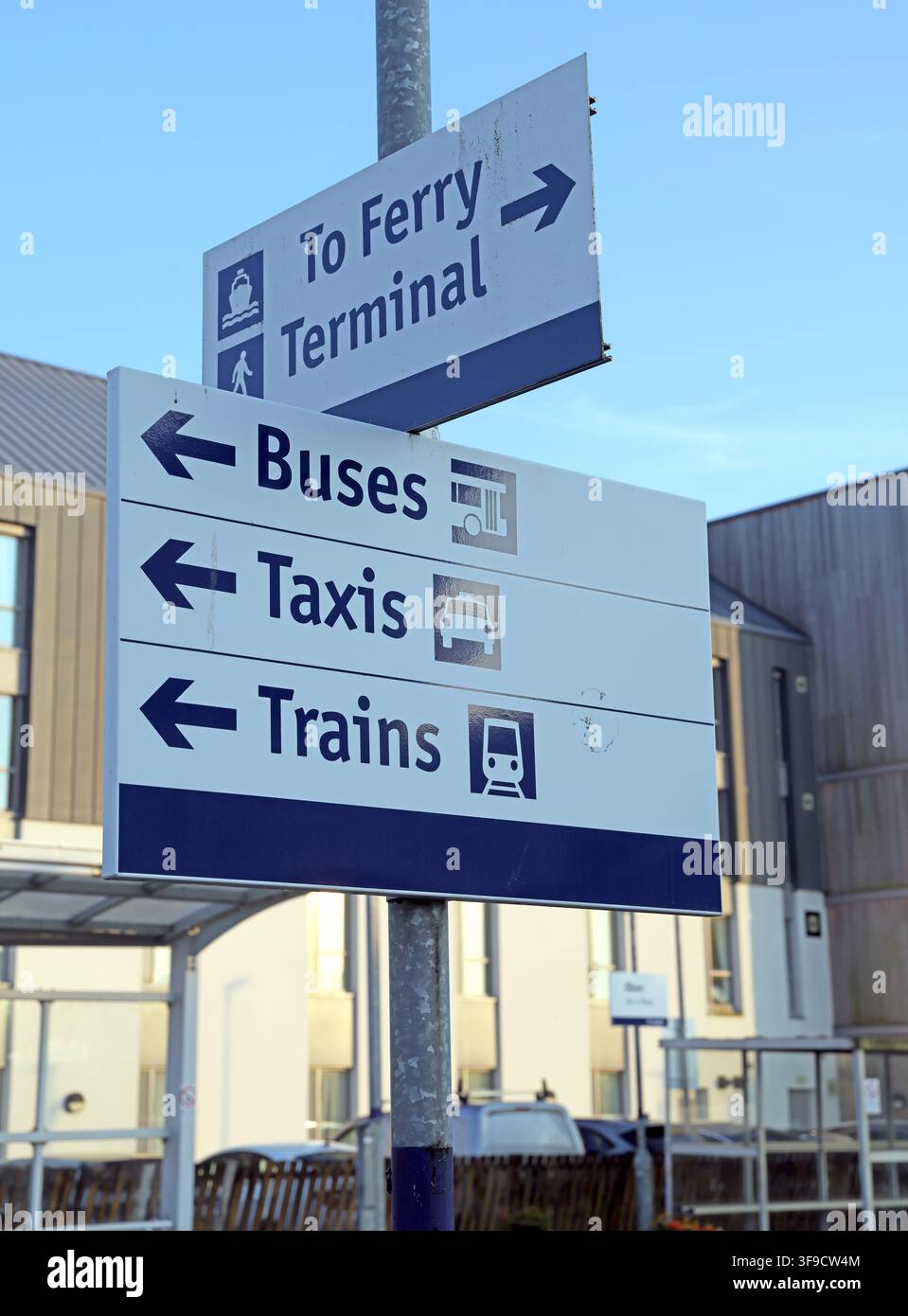
Image details
Contributor:
Tony SmithImage ID:
3F9CW4MFile size:
115.7 MB (1.9 MB Compressed download)Releases:
Model - no | Property - noDo I need a release?Dimensions:
5464 x 7400 px | 46.3 x 62.7 cm | 18.2 x 24.7 inches | 300dpiDate taken:
17 August 2025Location:
Oban, Argyll and Bute, Scotland, UKMore information:
. Directional sign for ferry terminal, buses, taxis and trains in Oban, Scotland, UK. Photographed on 17 August 2025. The recorded location is Oban, Argyll and Bute, Scotland, UK. Oban grew around a sheltered bay on Scotland's west coast and expanded in the nineteenth century with steamship traffic and the arrival of the railway in 1880. It remains a major gateway to the Inner Hebrides, with CalMac ferries, rail and road connections concentrated around the waterfront. Tourism, seafood, island travel and maritime services all contribute to the town's modern economy. Seen through lifeline ferry, the earlier context is that maritime gateways connect island and mainland economies, carrying residents, visitors, freight and vehicles while also supporting fishing, leisure craft and tourism; Older waterfront buildings often survive beside modern ferry infrastructure, making port landscapes unusually layered records of economic change. For typography, the historical context is that temporary and permanent notices are valuable social-past evidence because they capture the rules and assumptions of a particular moment, from parking and access to opening times, safety and public-service instructions. Looking at commuter travel, the longer history is that railways transformed British towns from the nineteenth century onwards, concentrating passenger movement around stations while creating new suburbs, goods yards and industrial connections; Station buildings, platforms, signals and rolling stock can date a transport scene as clearly as surrounding architecture. The 2026 relevance of lifeline ferry comes from the fact that current 2026 transport policy places increasing emphasis on integrated journeys, active travel and lower-emission fleets, so ferry terminals now sit within wider networks of rail, bus, cycling and electric-vehicle infrastructure rather than functioning as isolated ports.

