
Oban harbour waterfront at low tide in evening light, Scotland, UK.
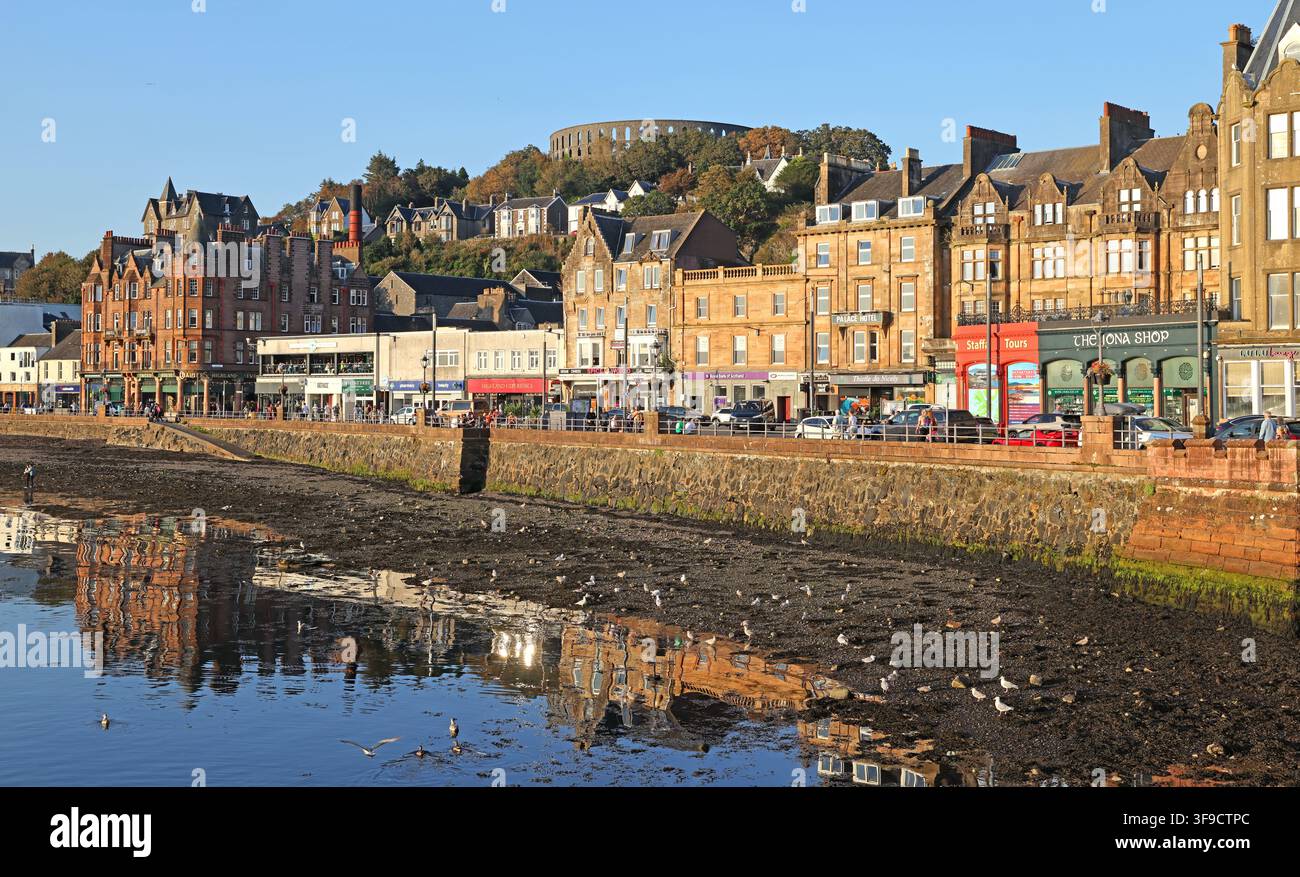
Image details
Contributor:
Tony SmithImage ID:
3F9CTPCFile size:
116.3 MB (7.8 MB Compressed download)Releases:
Model - no | Property - noDo I need a release?Dimensions:
8192 x 4960 px | 69.4 x 42 cm | 27.3 x 16.5 inches | 300dpiDate taken:
17 August 2025Location:
Oban, Argyll and Bute, Scotland, UKMore information:
. Oban harbour waterfront at low tide in evening light, Scotland, UK. Photographed on 17 August 2025. The recorded location is Oban, Argyll and Bute, Scotland, UK. Oban grew around a sheltered bay on Scotland's west coast and expanded in the nineteenth century with steamship traffic and the arrival of the railway in 1880. It remains a major gateway to the Inner Hebrides, with CalMac ferries, rail and road connections concentrated around the waterfront. Tourism, seafood, island travel and maritime services all contribute to the town's modern economy. The background to quayside is that maritime gateways connect island and mainland economies, carrying residents, visitors, freight and vehicles while also supporting fishing, leisure craft and tourism; Older waterfront buildings often survive beside modern ferry infrastructure, making port landscapes unusually layered records of economic change. Current 2026 context around quayside is that ferry reliability, vessel replacement, accessibility and the resilience of island transport remain prominent issues in Scotland and other coastal regions; Port photographs therefore connect tourism and scenic travel with the practical dependence of communities on dependable maritime links. Closely associated editorial terms include working harbour, ferry terminal, maritime transport, island connectivity, lifeline ferry, port infrastructure, marine travel, coastal transport, harbour town, passenger ferry, vehicle ferry, maritime heritage, coastal economy, 255A9169, and destination. Closely connected keywords include architecture and historic. Within the history of harbour town, harbours and ferry ports have shaped coastal communities for centuries, providing sheltered water for fishing, trade and passenger travel; Quays, piers, slipways and terminal buildings record changing vessel sizes and the transition from cargo handling to modern roll-on roll-off ferry operations.

