
ScotRail Oban railway station sign with church tower behind, Scotland, UK.
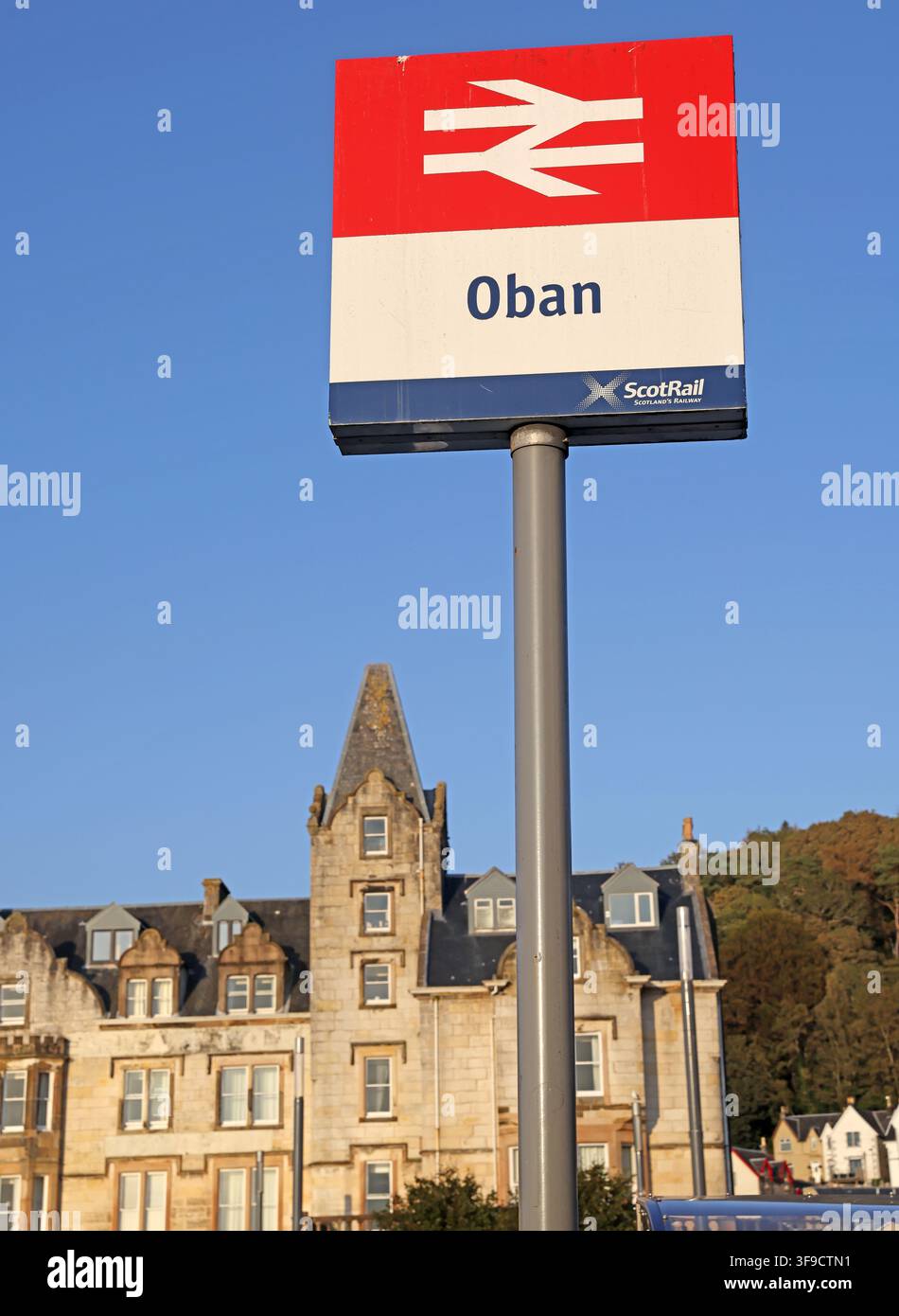
Image details
Contributor:
Tony SmithImage ID:
3F9CTN1File size:
116.8 MB (2 MB Compressed download)Releases:
Model - no | Property - noDo I need a release?Dimensions:
5464 x 7472 px | 46.3 x 63.3 cm | 18.2 x 24.9 inches | 300dpiDate taken:
17 August 2025Location:
Oban railway station, Oban, Argyll and Bute, Scotland, UKMore information:
. ScotRail Oban railway station sign with church tower behind, Scotland, UK. Photographed on 17 August 2025. The recorded location is Oban railway station, Oban, Argyll and Bute, Scotland, UK. Oban grew around a sheltered bay on Scotland's west coast and expanded in the nineteenth century with steamship traffic and the arrival of the railway in 1880. It remains a major gateway to the Inner Hebrides, with CalMac ferries, rail and road connections concentrated around the waterfront. Tourism, seafood, island travel and maritime services all contribute to the town's modern economy. Within the history of station architecture, stations are both functional transport interchanges and pieces of civic architecture; Their canopies, footbridges, booking halls, signal boxes and signage reveal how passenger expectations and railway technology changed from steam-era operation to today's increasingly digital network. In relation to local history, historical context shows that churches combine worship with architecture, local memory and centuries of community history; Stonework, stained glass, memorials, furnishings and churchyards often record successive periods of rebuilding, Victorian restoration, local benefactors and family history. For the story of street furniture, it is useful to note that wayfinding developed from painted names and fingerposts into standardised road, rail and public-information systems; Local signs still retain distinctive typography or bilingual wording even within increasingly consistent national standards. Against the 2026 backdrop for station architecture, rail reform, fares, accessibility and passenger information remain central issues as government develops the Great British Railways model; Photographs of stations, trains and earlier operating equipment can illustrate both current public transport and the rapid disappearance of previous brands and systems.

