
Bilingual Oban railway station sign in English and Gaelic, Scotland, UK.
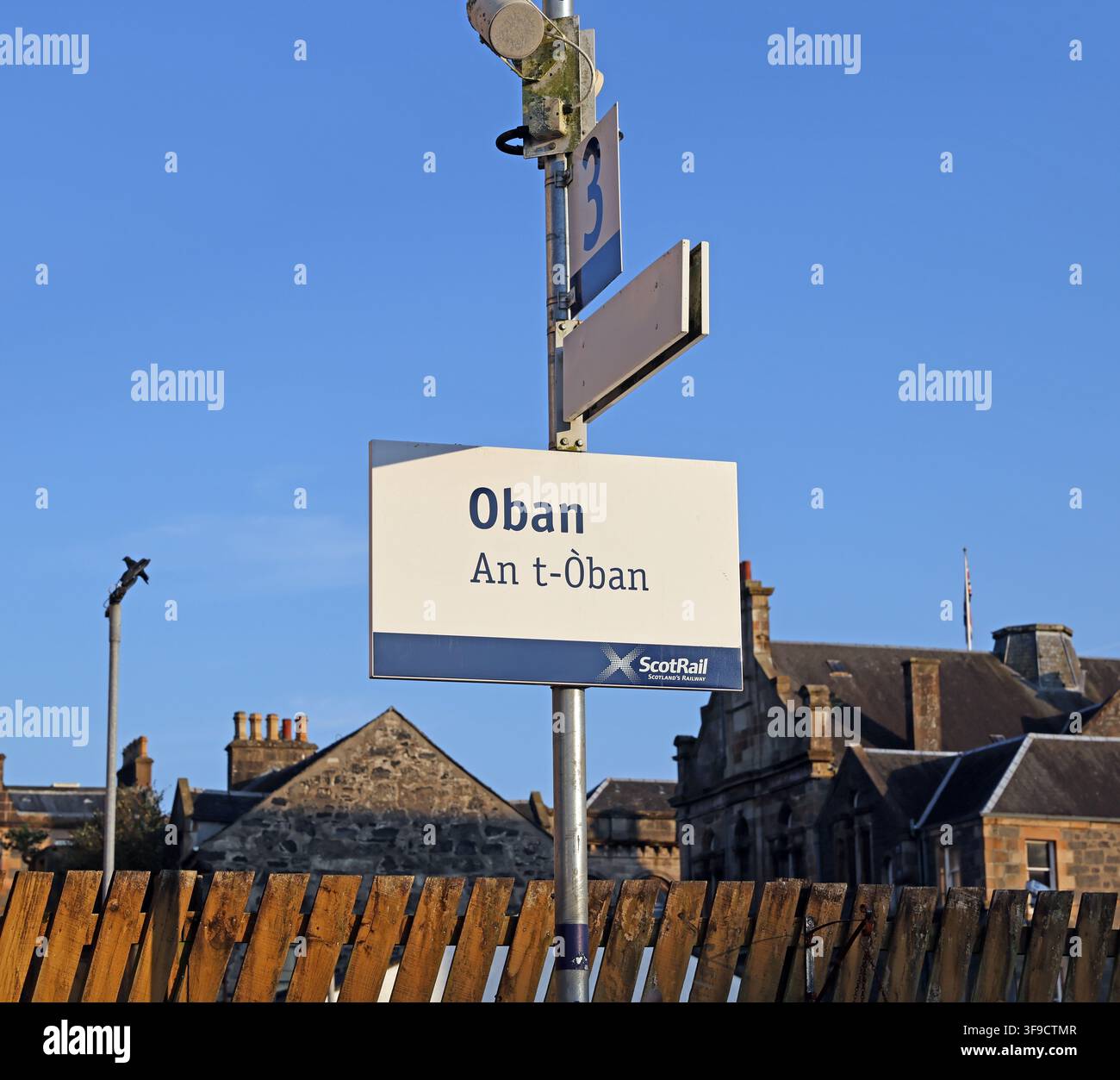
Image details
Contributor:
Tony SmithImage ID:
3F9CTMRFile size:
83.9 MB (1.7 MB Compressed download)Releases:
Model - no | Property - noDo I need a release?Dimensions:
5725 x 5122 px | 48.5 x 43.4 cm | 19.1 x 17.1 inches | 300dpiDate taken:
17 August 2025Location:
Oban railway station, Oban, Argyll and Bute, Scotland, UKMore information:
. Bilingual Oban railway station sign in English and Gaelic, Scotland, UK. Photographed on 17 August 2025. The recorded location is Oban railway station, Oban, Argyll and Bute, Scotland, UK. Oban grew around a sheltered bay on Scotland's west coast and expanded in the nineteenth century with steamship traffic and the arrival of the railway in 1880. It remains a major gateway to the Inner Hebrides, with CalMac ferries, rail and road connections concentrated around the waterfront. Tourism, seafood, island travel and maritime services all contribute to the town's modern economy. In relation to rail heritage, historical context shows that railways transformed British towns from the nineteenth century onwards, concentrating passenger movement around stations while creating new suburbs, goods yards and industrial connections; Station buildings, platforms, signals and rolling stock can date a transport scene as clearly as surrounding architecture. For the story of official signage, it is useful to note that gaelic declined sharply through historical social and economic pressures but remained strong in parts of the Highlands and Islands; Twentieth- and twenty-first-century revival measures increased its use in education, broadcasting, public signage and official services. The historical setting for signage is that temporary and permanent notices are valuable social-past evidence because they capture the rules and assumptions of a particular moment, from parking and access to opening times, safety and public-service instructions. As of 2026, the position for rail heritage is that rail policy is especially topical because the Railways Bill is progressing with the intention of establishing Great British Railways as the publicly owned directing mind for track, stations, timetables and passenger services; Older operator branding and station scenes therefore gain added historical context during another major restructuring of the industry.

