
Awaab's Law letter tiles over a Rochdale map,illustrating social housing safety, damp and mould, tenants' rights and landlord accountability, Oct 2026
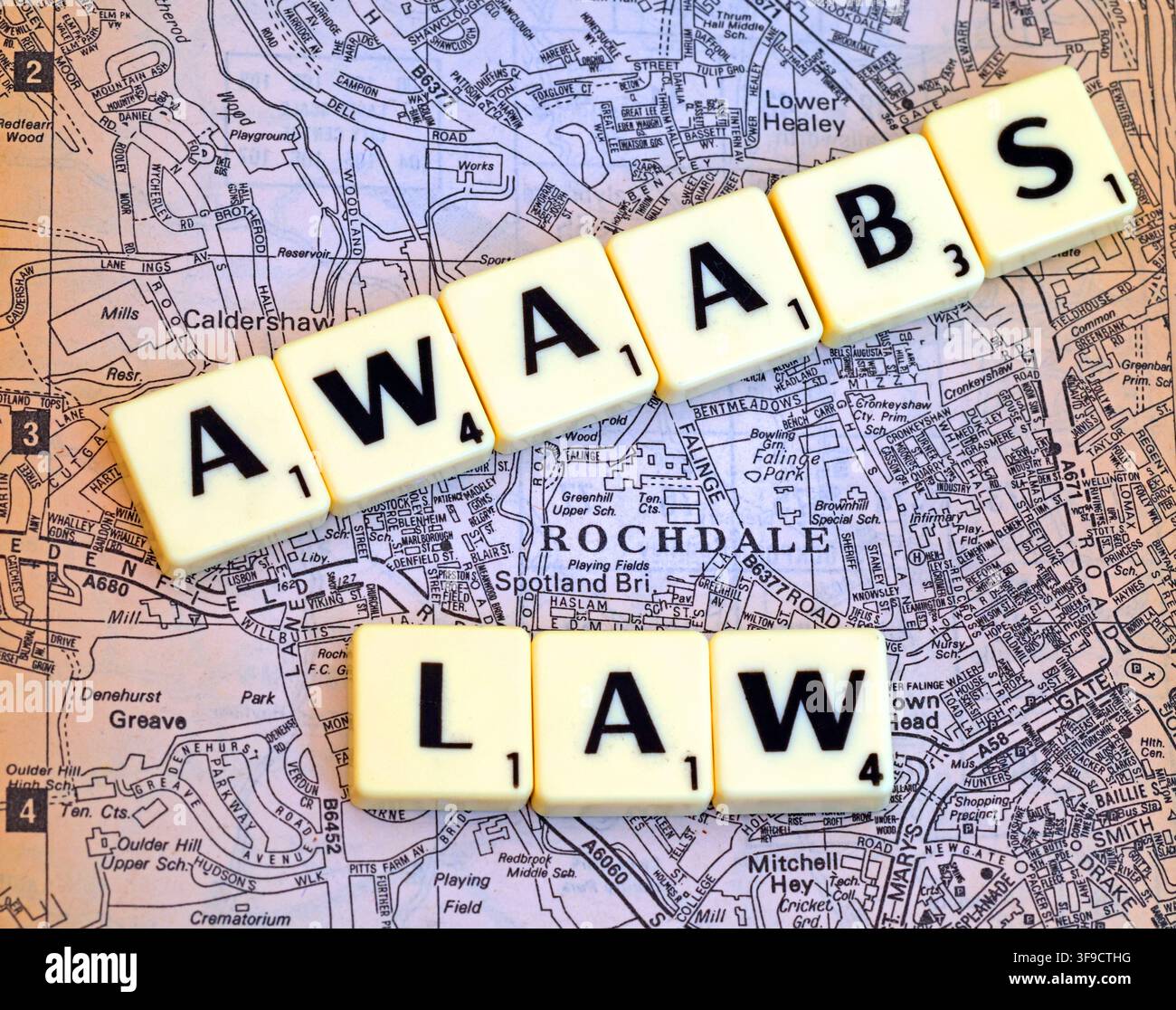
Image details
Contributor:
Tony SmithImage ID:
3F9CTHGFile size:
108.2 MB (4.6 MB Compressed download)Releases:
Model - no | Property - noDo I need a release?Dimensions:
6920 x 5464 px | 58.6 x 46.3 cm | 23.1 x 18.2 inches | 300dpiDate taken:
15 August 2026Location:
Rochdale, Greater Manchester, England, UKMore information:
Awaab's Law spelled out with letter tiles across a street map of Rochdale, Greater Manchester, creating a direct visual link between the town, social housing conditions and one of the most significant recent changes to housing repair regulation in England. The law takes its name from two-year-old Awaab Ishak, whose death following prolonged exposure to mould in his Rochdale home became a national focus for concerns about damp, unhealthy housing and the treatment of tenants reporting serious property defects. The image can illustrate current reporting about social landlords, housing associations and councils being required to respond more quickly and transparently when potentially dangerous conditions are identified. Phase 1 of Awaab's Law came into force for England's social rented sector in October 2025, covering emergency hazards and significant damp and mould hazards within prescribed timescales. Government guidance confirms that Phase 2 is due to take effect from 30 November 2026 and extend the significant-hazard requirements to areas including excess cold and heat, electrical hazards, fire and explosion risks, structural collapse, falls and domestic hygiene. Current debate also centres on whether statutory deadlines are translating into effective repairs on the ground, with tenants continuing to raise concerns about persistent mould, repeated surface treatments, delayed investigations and failures to tackle underlying causes. The Rochdale map gives the composition particular editorial relevance to Awaab Ishak's story while the prominent LAW lettering broadens its usefulness for coverage of tenants' rights, housing standards, landlord accountability, complaints, maladministration, inspections, repair records, hazard triage, vulnerable residents and the wider drive for safer social homes

