
UK Government Severe Alert on a smartphone warning of very high wildfire risk nationally during the hot, exceptionally dry summer of August 2026
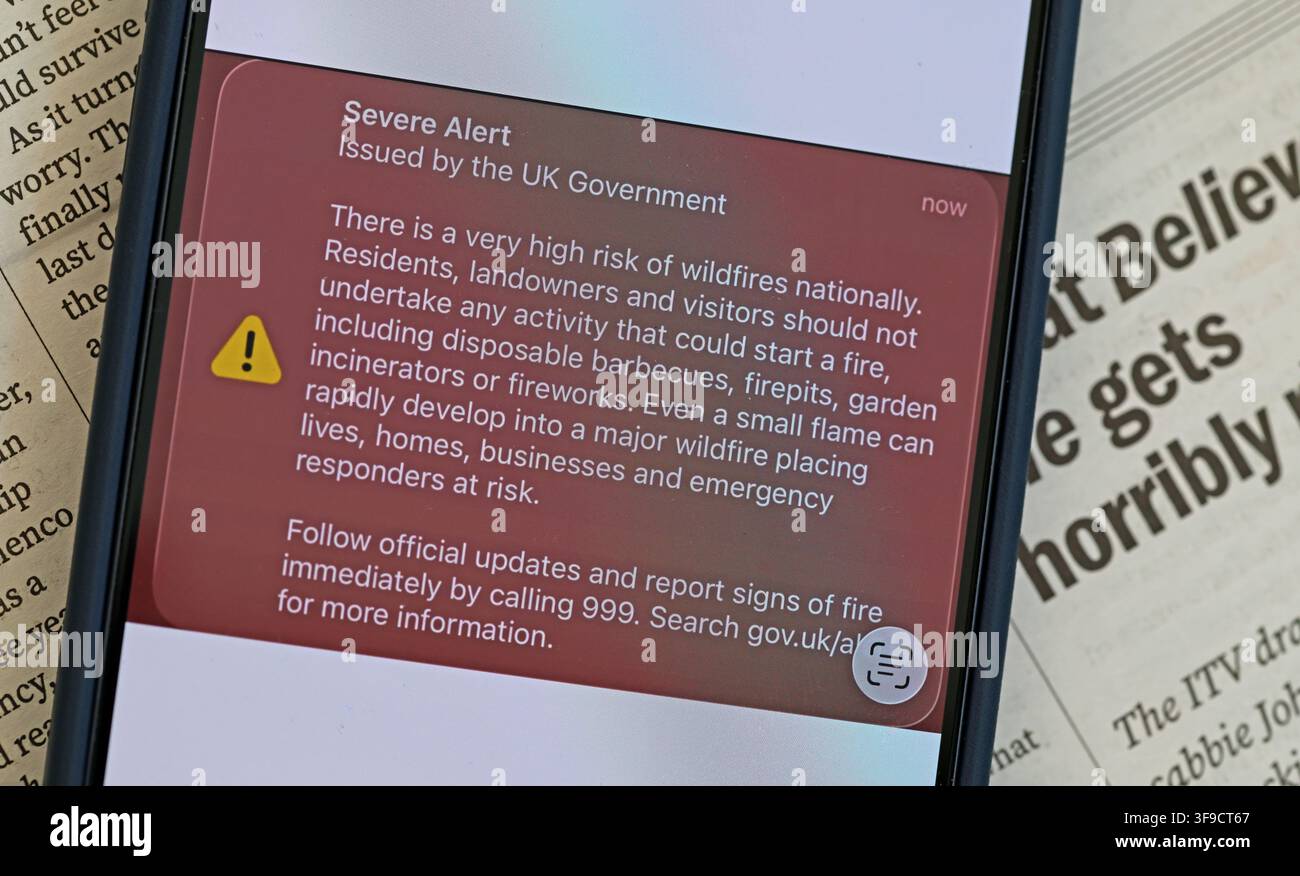
Image details
Contributor:
Tony SmithImage ID:
3F9CT67File size:
87 MB (5 MB Compressed download)Releases:
Model - no | Property - noDo I need a release?Dimensions:
7089 x 4288 px | 60 x 36.3 cm | 23.6 x 14.3 inches | 300dpiDate taken:
15 August 2026Location:
United KingdomMore information:
Close-up editorial image of a smartphone displaying the UK Government Severe Alert issued on 14 August 2026, warning of a very high risk of wildfires nationally during a hot and exceptionally dry British summer. The red warning panel tells residents, landowners and visitors not to undertake activities capable of starting a fire, naming disposable barbecues, firepits, garden incinerators and fireworks. It warns that even a small flame can rapidly develop into a major wildfire, placing lives, homes, businesses and emergency responders at risk, and tells the public to report signs of fire immediately by calling 999. The warning was issued against a credible background of exceptional heat, prolonged dryness and active wildfire danger. On 13 August the Met Office provisionally recorded 38.1C at Kew Gardens, making it the UK's fifth hottest day on record, while describing the summer as remarkable for repeated extreme heat and exceptionally dry conditions across much of England and Wales. Environment Agency reporting also said continued hot, dry weather was increasing wildfire risk and that fires had broken out around the country. Government wildfire guidance stressed that most UK wildfires are caused by human activity and that one small spark can threaten countryside, habitats, homes and infrastructure. The image can illustrate wildfire prevention, emergency alerts, climate change, drought, heatwaves, fire-service pressure, public safety, civil protection and digital government communications. It also provides a visual for debate about the use of mass mobile warnings: supporters could point to dangerous conditions and the potential consequences of preventable fires, while critics may question proportionality and alert fatigue. The phone lying over printed newspaper pages contrasts modern emergency communication with traditional media, creating a contemporary editorial image about risk, public behaviour and Britain's growing exposure to extreme summer weather.

