
Panorama of Centenary Square in Birmingham city centre, combining several of the square’s best-known civic and cultural landmarks. Hall of Memory
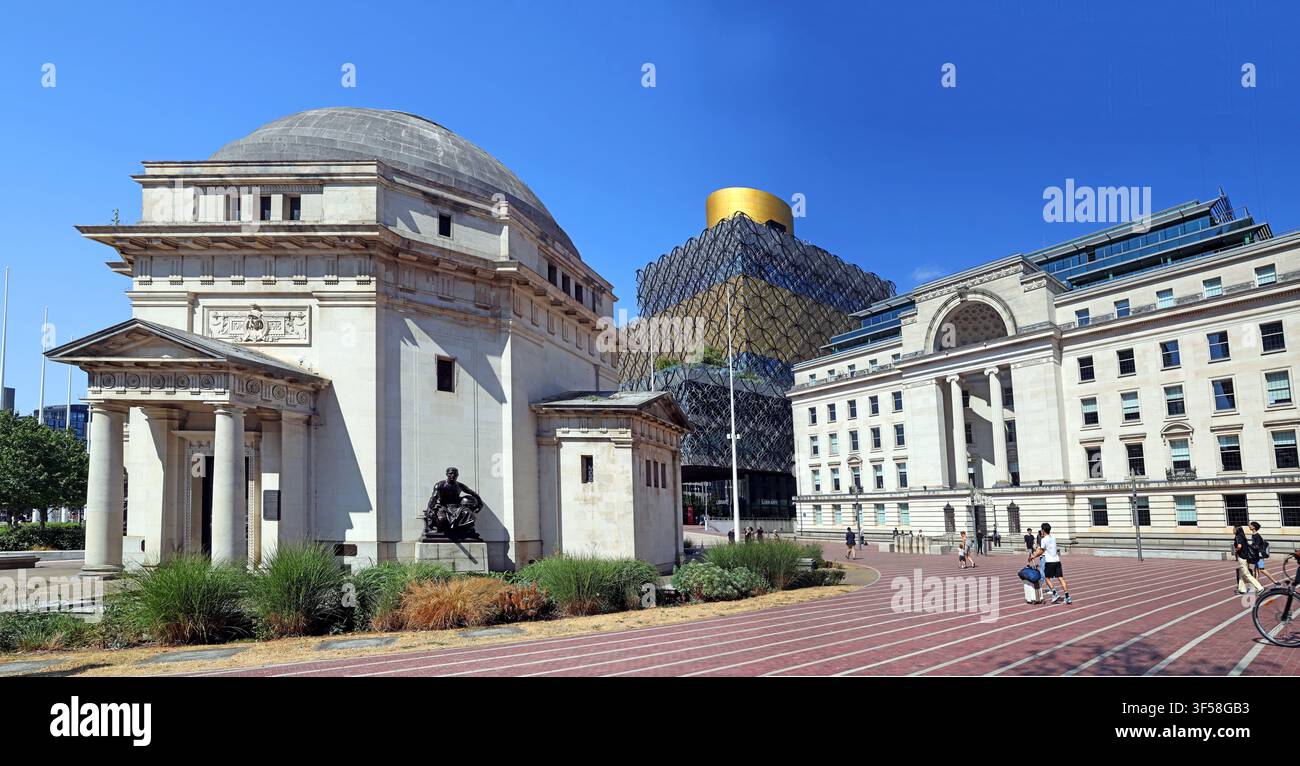
Image details
Contributor:
Tony SmithImage ID:
3F58GB3File size:
232.5 MB (10 MB Compressed download)Releases:
Model - no | Property - noDo I need a release?Dimensions:
12496 x 6504 px | 105.8 x 55.1 cm | 41.7 x 21.7 inches | 300dpiDate taken:
29 July 2026More information:
. Panorama of Centenary Square in Birmingham city centre, West Midlands, England, combining several of the city's best-known civic, cultural and memorial landmarks including the Library of Birmingham, Baskerville House and the Hall of Memory. The square forms a major pedestrian public space on Birmingham's western city-centre axis and is surrounded by institutions associated with culture, learning, government, entertainment and remembrance. The Hall of Memory, built in Portland stone and opened in 1925, commemorates Birmingham citizens who died in the First World War and remains one of the city's principal war memorials. Baskerville House, named after Birmingham printer and typographer John Baskerville, is an imposing interwar civic building overlooking the square. The Library of Birmingham opened in 2013 and brought a dramatic contemporary architectural landmark to the area with its glass façade, circular metal filigree and rooftop golden rotunda. Centenary Square itself was comprehensively redesigned and reopened in 2019 with new paving, trees, seating and water features, strengthening its role as a venue for events and public gatherings. The photograph is suitable for editorial coverage of Birmingham architecture, civic heritage, urban regeneration, public realm, war memorials, libraries, city-centre tourism, cultural investment, planning, architecture and West Midlands development. The panorama is particularly useful for showing how buildings from different eras sit together around a renewed public square, illustrating Birmingham's changing civic ambitions from the interwar period to the twenty-first century and providing a broad contemporary record of one of the city's most important urban spaces. It can also illustrate Birmingham's visitor economy, major public events, remembrance, architectural tourism and the way civic spaces are used to express local identity while accommodating changing patterns of work, leisure and city-centre living.

