
Mr Egg, 22 Hurst Street, Birmingham, B5 4BN
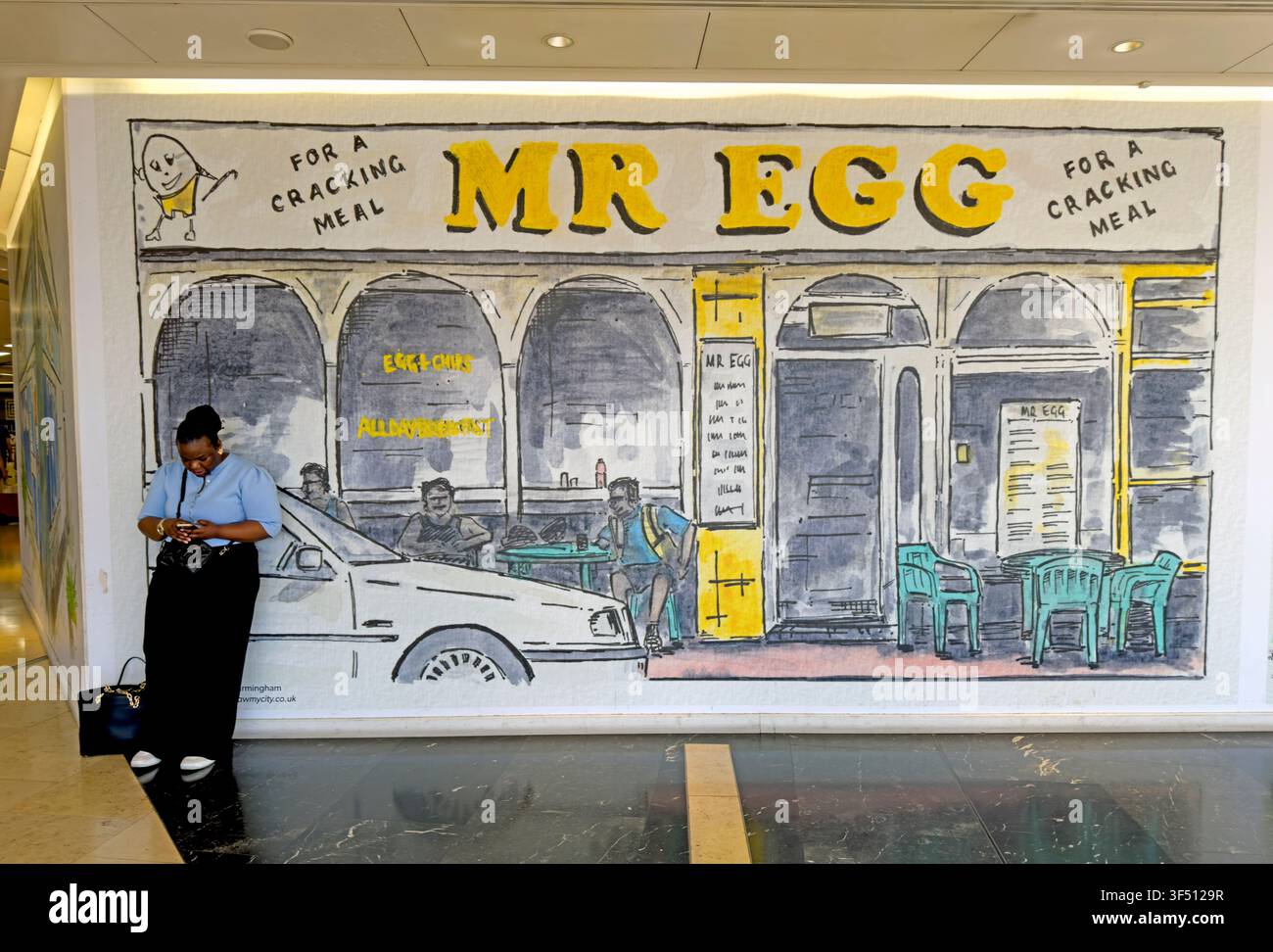
Image details
Contributor:
Tony SmithImage ID:
3F5129RFile size:
66.8 MB (1.9 MB Compressed download)Releases:
Model - no | Property - noDo I need a release?Dimensions:
5864 x 3979 px | 49.6 x 33.7 cm | 19.5 x 13.3 inches | 300dpiDate taken:
29 July 2026Location:
Mr Egg, 22 Hurst Street, Birmingham, West Midlands B5 4BN, EnglandMore information:
Large illustrated mural depicting the famous Mr Egg café at 22 Hurst Street in Birmingham city centre, West Midlands, England. The artwork celebrates one of Birmingham’s best-known independent late-night cafés, a venue remembered by generations of residents, students, shift workers, taxi drivers, theatre audiences, pub customers and nightclub visitors seeking inexpensive hot food into the early hours. Established during the late twentieth century, Mr Egg became closely associated with Birmingham’s nightlife and developed a loyal following for traditional British café favourites including egg dishes, full English breakfasts, bacon, sausage, beans, chips, toast and tea served long after many restaurants had closed. Located on Hurst Street close to the city’s entertainment district and Southside, the café occupied a distinctive position within Birmingham’s social history, becoming an instantly recognisable landmark for people enjoying evenings out or finishing work after midnight. The mural recreates the familiar frontage with outdoor seating, menu boards and the memorable ‘For a Cracking Meal’ slogan, preserving the appearance of a business that became part of the city’s cultural identity throughout the 1980s, 1990s and into the twenty-first century. As Birmingham has undergone extensive regeneration, with changing retail patterns, new residential developments and a transformed hospitality sector, surviving memories of long-established independent cafés have become increasingly valued as part of the city’s urban heritage. Images of Mr Egg resonate with those interested in local history, nostalgia, British café culture, independent businesses, city centre regeneration, architecture, food history, tourism, documentary photography and the evolution of the UK’s night-time economy. The mural serves both as public art and as a reminder of an iconic Birmingham institution that occupies a special place in the memories of countless visitors and local people alike.

