
Working Class Hero exhibition entrance in Birmingham, contrasting Ozzy Osbourne's working-class Aston roots with global celebrity and wealth
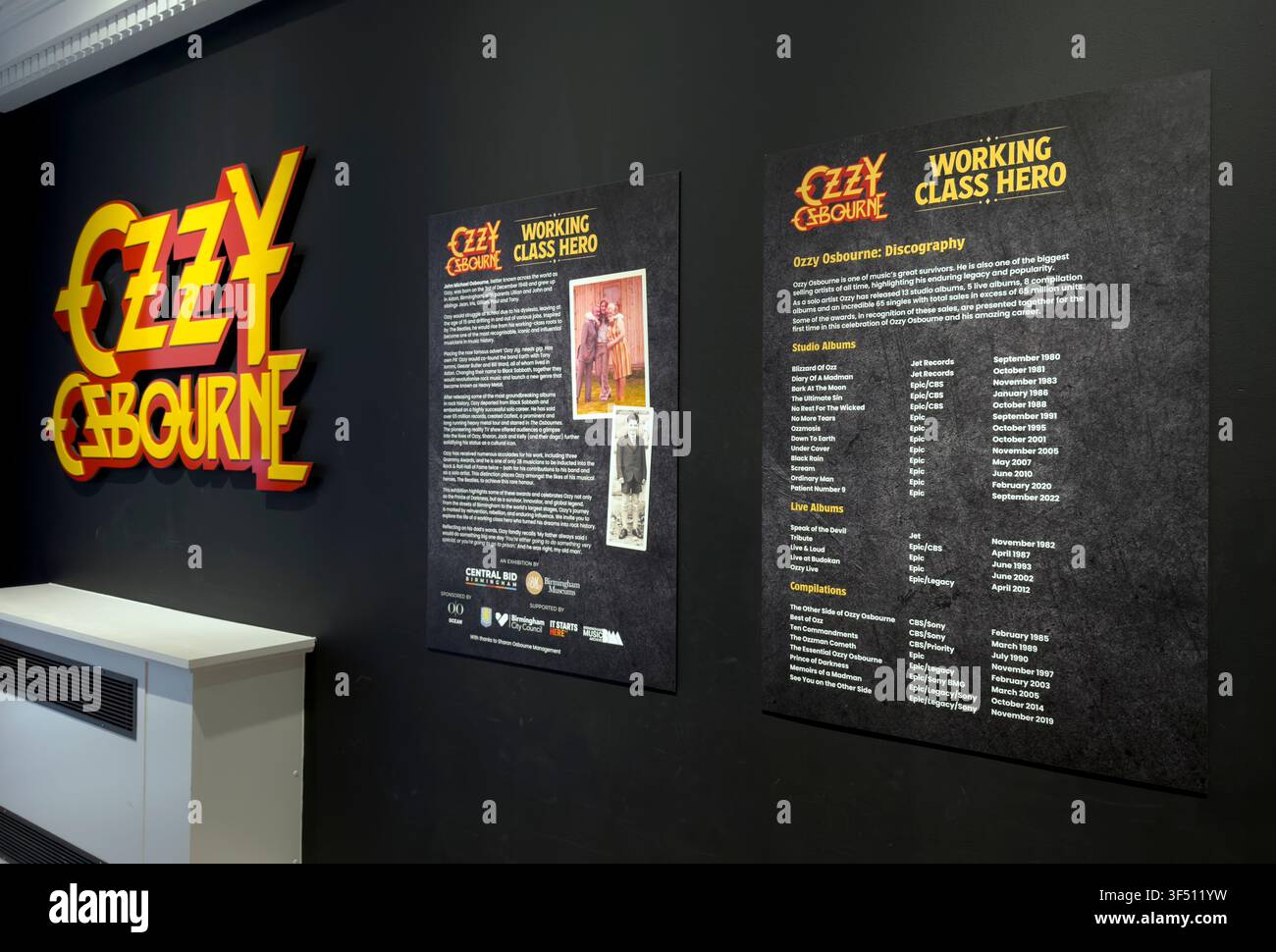
Image details
Contributor:
Tony SmithImage ID:
3F511YWFile size:
74.8 MB (2 MB Compressed download)Releases:
Model - no | Property - noDo I need a release?Dimensions:
6212 x 4207 px | 52.6 x 35.6 cm | 20.7 x 14 inches | 300dpiDate taken:
29 July 2026Location:
Chamberlain Square, Birmingham, West Midlands, England, UK, B3 3DHMore information:
The entrance to Ozzy Osbourne: Working Class Hero at Birmingham Museum & Art Gallery, with a large illuminated Ozzy logo and interpretation panels introducing the Birmingham-born singer’s life, solo career and discography. The exhibition title invites an interesting question about what “working class hero” means in Osbourne’s case. His origins were undeniably working class: he grew up in Aston in a large family, left school at 15 and worked in a succession of manual jobs before music transformed his life. Black Sabbath emerged from industrial Birmingham and that background became central to both the band’s identity and the city’s claim as a birthplace of heavy metal. Yet Osbourne’s later life was far removed from those beginnings. International success brought wealth, homes in Britain and the United States, decades of touring and a lifestyle associated with global celebrity rather than everyday working-class experience. From 2002, MTV reality series The Osbournes placed his affluent family life in Los Angeles on television, turning him into a mainstream celebrity far beyond heavy metal. That does not necessarily make the exhibition title false. “Working Class Hero” can be read as describing where Osbourne came from, the culture that shaped him and the extraordinary social mobility represented by his career, rather than claiming he remained economically working class throughout his life. It can equally be seen as a deliberately celebratory piece of hometown branding, simplifying a more complicated story of class, fame, wealth, migration and celebrity. The Birmingham exhibition focuses on his global achievements while repeatedly anchoring them in Aston and Birmingham. Dark walls, biography panels, discography information and the bright red and yellow Ozzy logo create a theatrical museum entrance. This indoor scene records not only a rock exhibition, but also the way museums construct and debate ideas of local identity, class origins and celebrity legacy.

