
The Last Tuesday Society and Viktor Wynd Museum of Curiosities illuminated purple at night on Mare Street, Hackney, East London.
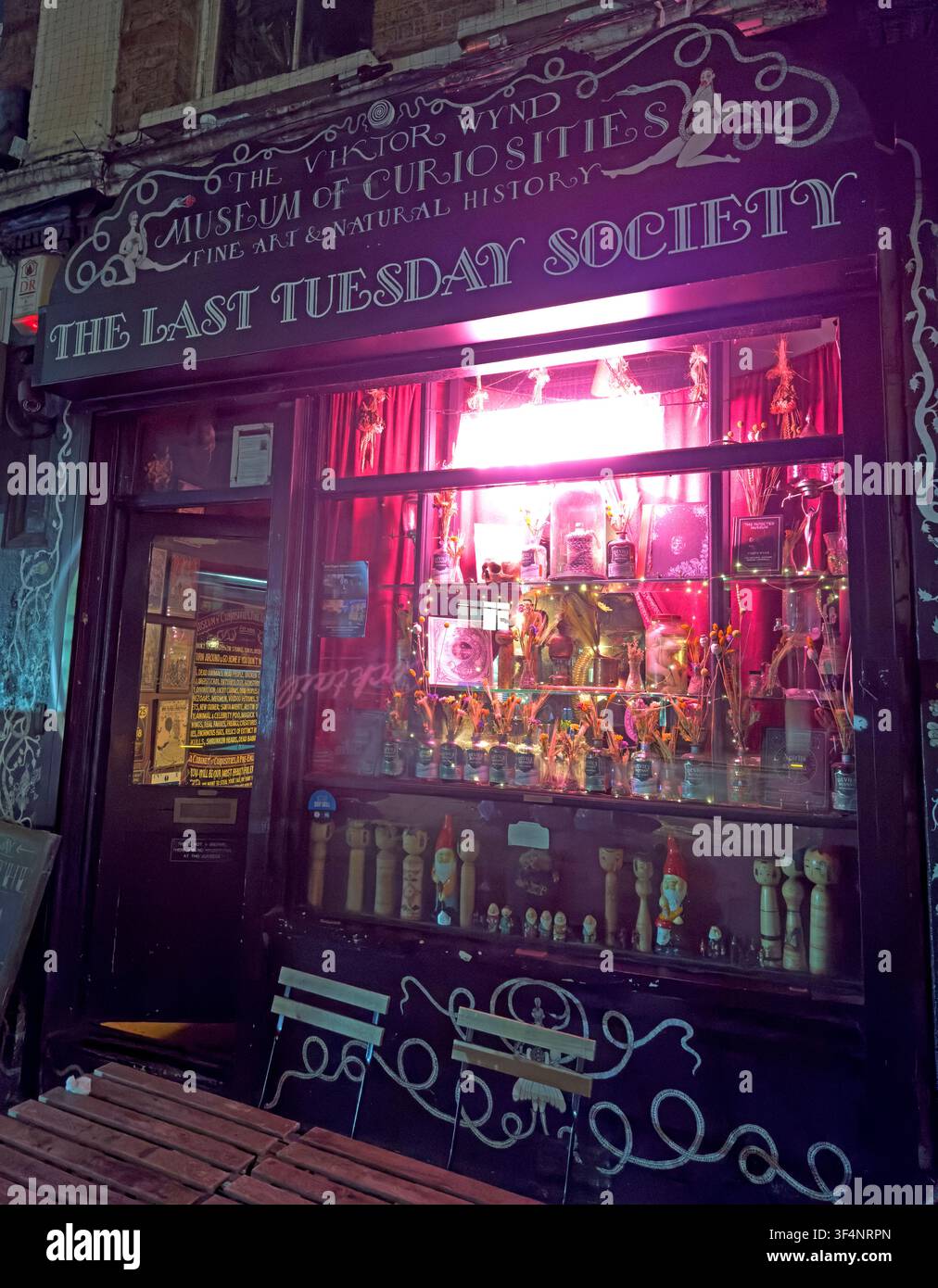
Image details
Contributor:
Tony SmithImage ID:
3F4NRPNFile size:
96.6 MB (4.6 MB Compressed download)Releases:
Model - no | Property - noDo I need a release?Dimensions:
5126 x 6584 px | 43.4 x 55.7 cm | 17.1 x 21.9 inches | 300dpiDate taken:
31 October 2023Location:
Fine Art & Natural History, 11 Mare Street, Hackney, London, E8 4RPMore information:
The richly decorated burgundy and purple shopfront of The Last Tuesday Society and Viktor Wynd Museum of Curiosities, Fine Art & Natural History stands illuminated on Mare Street in Hackney, East London. Photographed during the evening, the narrow frontage glows with intense pink light from the display window, drawing attention to shelves filled with unusual collectables, decorative objects, figurines and assorted curiosities. Elaborate white scrollwork surrounds the windows and doors, while ornate hand-painted lettering identifies the building as a museum of fine art, natural history and curiosities. The distinctive exterior reflects the unconventional character of the independent museum inside. Established at the Mare Street premises in 2008, the site originally contained Viktor Wynd Fine Art and a basement curiosity shop known as Viktor Wynd’s Little Shop of Horrors. Following a crowdfunding campaign, it was transformed into a museum, events space, café and cocktail bar, opening in its expanded form on Halloween 2014. The museum takes inspiration from the historic European Wunderkammer or cabinet of curiosities, presenting an intentionally eclectic collection rather than following conventional museum classification. Its displays encompass natural history, taxidermy, fine art, occult material, unusual artefacts and objects associated with folklore, collecting and eccentricity. The premises also house The Absinthe Parlour, helping make the venue an unusual destination within Hackney’s nightlife and cultural scene. The dramatic illuminated window, handcrafted signage and highly individual frontage make the building a striking example of independent creative enterprise and alternative culture in contemporary East London. It has become a left-field visitor attraction for people seeking unusual museums, hidden London destinations and experiences away from the capital’s mainstream tourist trail.

