
1869 Operative Bricklayers' Society trade union emblem by Arthur Waudby - early organisation of the working class through trade unions
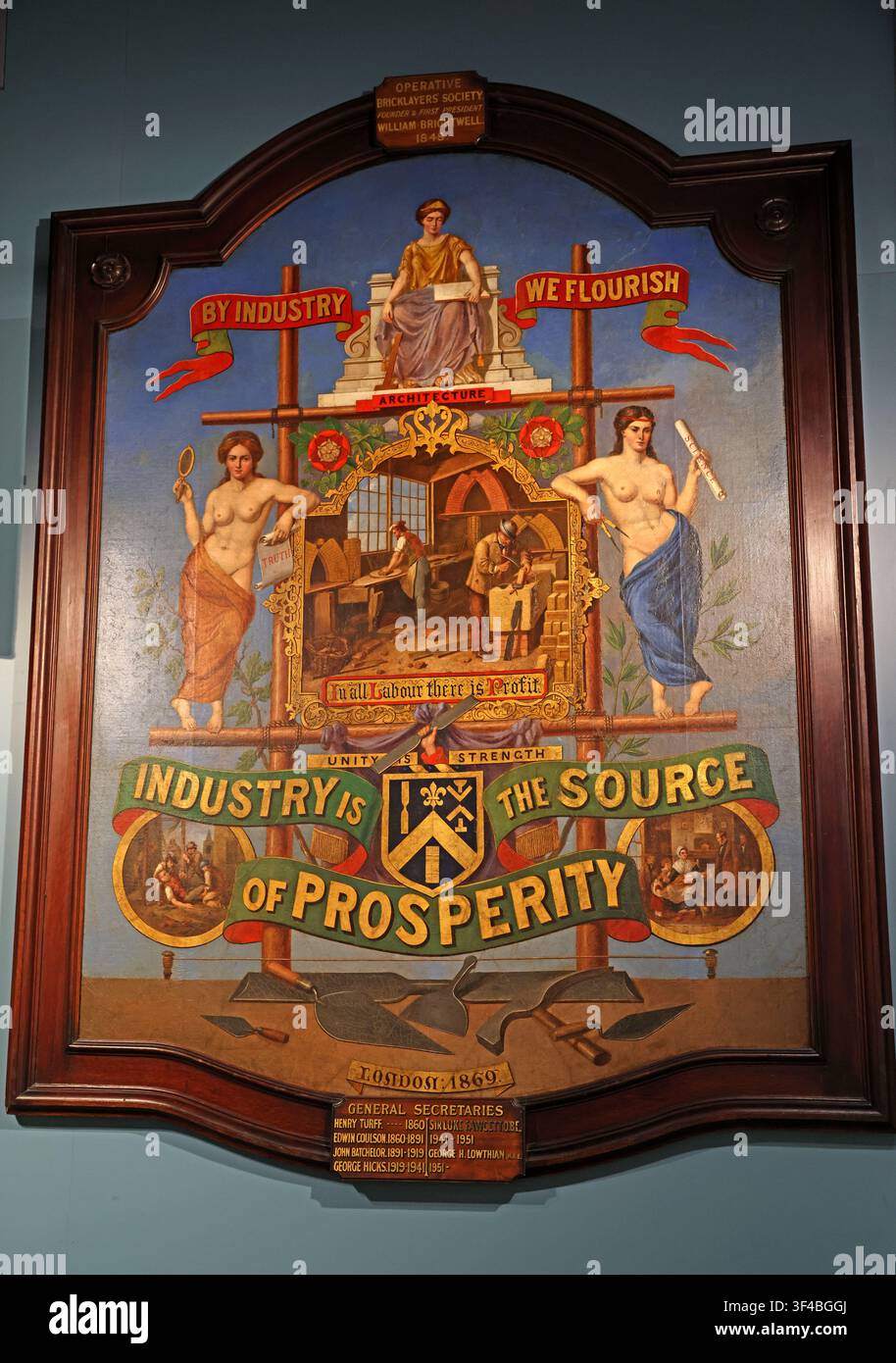
Image details
Contributor:
Tony SmithImage ID:
3F4BGGJFile size:
99.7 MB (4.3 MB Compressed download)Releases:
Model - no | Property - noDo I need a release?Dimensions:
4952 x 7036 px | 41.9 x 59.6 cm | 16.5 x 23.5 inches | 300dpiDate taken:
25 July 2026Location:
England, UKMore information:
Richly decorated 1869 emblem of the Operative Bricklayers' Society, a historic British trade union representing skilled bricklayers, displayed at the People's History Museum in Manchester. Painted by A. J. Arthur Waudby, the elaborate Victorian composition combines depictions of the bricklaying trade with allegorical female figures representing truth, architecture and science. A wooden scaffold and bricklayers' workshop occupy the central section, while smaller scenes refer to workplace injury and the financial support or compensation provided through organised labour. Prominent slogans include By Industry We Flourish, In All Labour There Is Profit, Unity Is Strength and Industry Is the Source of Prosperity, reflecting Victorian ideas of work, solidarity, mutual assistance and collective advancement. The provenance on the emblem records London 1869. The Operative Bricklayers' Society traced its origins to the London Bricklayers' Society founded in 1818 and developed into an important national craft union during the nineteenth century. It became involved in campaigns over wages and working hours and formed part of the growth of organised building-trade labour in Victorian Britain. In 1921 it merged with other building unions to form the Amalgamated Union of Building Trade Workers. The original emblem was historically displayed at the Bricklayers' head office in London and is now held within the collections of the People's History Museum. The ornate painted imagery, industrial scenes, union mottos and classical symbolism make the object an important surviving example of the visual culture created by early British trade unions. Photographed indoors, the framed artwork provides a striking record of working-class organisation, craft identity, workplace welfare, labour solidarity and the history of organised construction workers in Britain.

