
Murdoch Is Bad News banner from the print unions’ campaign during the 1986–87 Wapping dispute with News International.
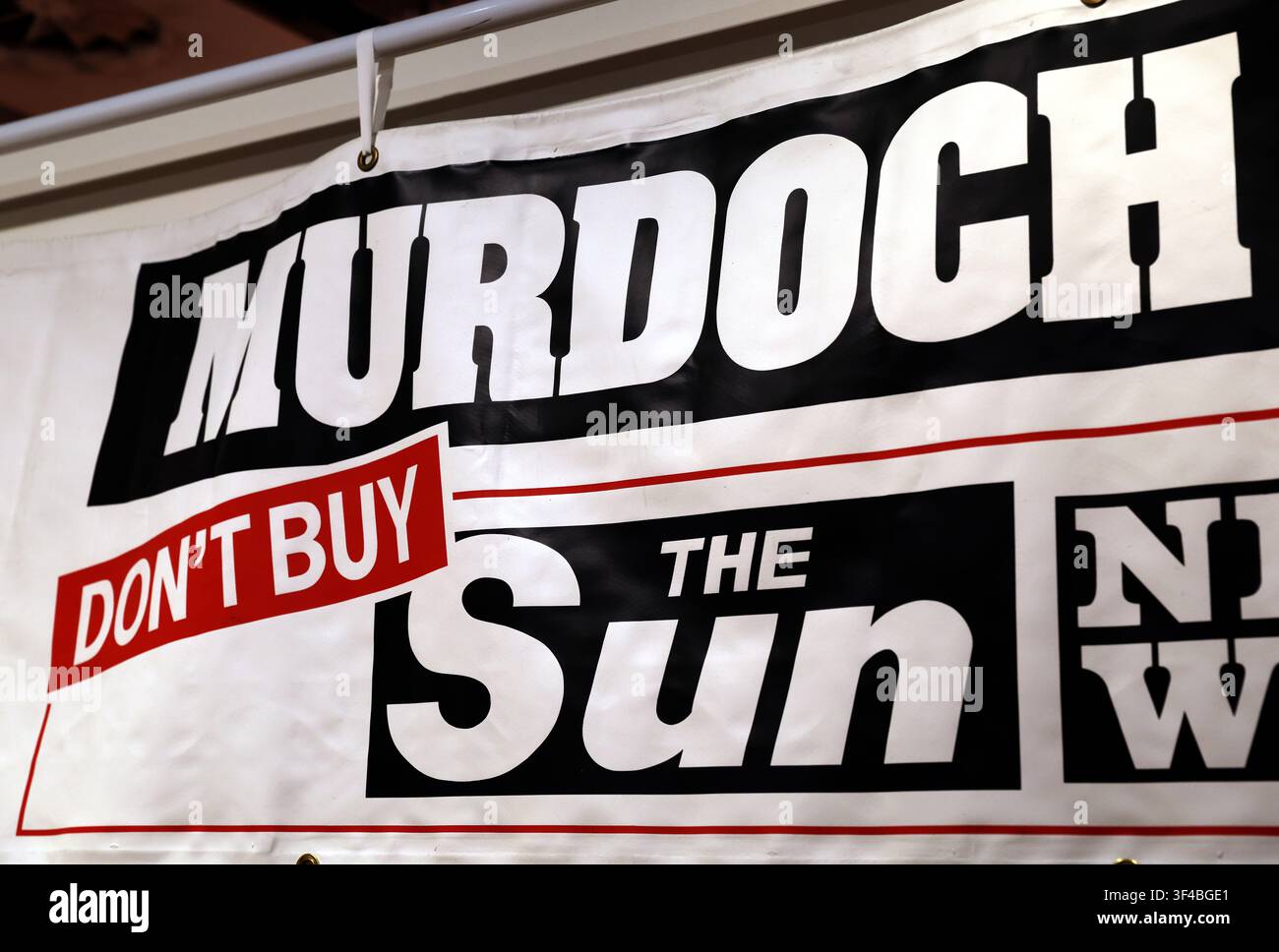
Image details
Contributor:
Tony SmithImage ID:
3F4BGE1File size:
99.4 MB (2.4 MB Compressed download)Releases:
Model - no | Property - noDo I need a release?Dimensions:
7168 x 4846 px | 60.7 x 41 cm | 23.9 x 16.2 inches | 300dpiDate taken:
25 July 2026Location:
Wapping, LondonMore information:
“Murdoch Is Bad News” trade-union campaign banner produced during the bitter Wapping newspaper dispute of 1986–87. Designed to resemble a tabloid front page, the black, white and red textile carries the prominent instruction “Don’t Buy” alongside the familiar mastheads of Rupert Murdoch’s News International newspapers: The Sun, News of the World, The Times and The Sunday Times. Its bold lettering and instantly recognisable newspaper typography transformed a complex industrial conflict into a direct appeal for a consumer boycott. The dispute began on 24 January 1986 after negotiations between News International and the principal print unions, the Society of Graphical and Allied Trades, known as SOGAT ’82, and the National Graphical Association broke down. Murdoch transferred production of his four national titles from traditional Fleet Street premises to a heavily secured, computerised printing plant in Wapping, East London. Around 5, 500 striking production workers were dismissed and replaced by employees belonging to the electricians’ union EETPU. Although presented publicly as a dispute over new technology and modern working practices, union supporters argued that computerised production was being used to remove established collective-bargaining arrangements and break the power of the print unions. Journalists could enter text directly into computer systems, reducing the need for the compositors, typesetters, printers and other skilled workers who had traditionally produced national newspapers. For more than a year, sacked workers, their families and supporters organised pickets, marches, fundraising events and boycott campaigns. Delivery lorries leaving the fortified Wapping plant became a focus of demonstrations, with frequent confrontations between protesters and police. Despite widespread solidarity, News International continued printing and distributing its newspapers, and SOGAT withdrew from the dispute in February 1987. The defeat transformed British news

