
Defend Rail protect jobs pay pensions poster, likely linked to the RMT union, photographed in Britain 2022
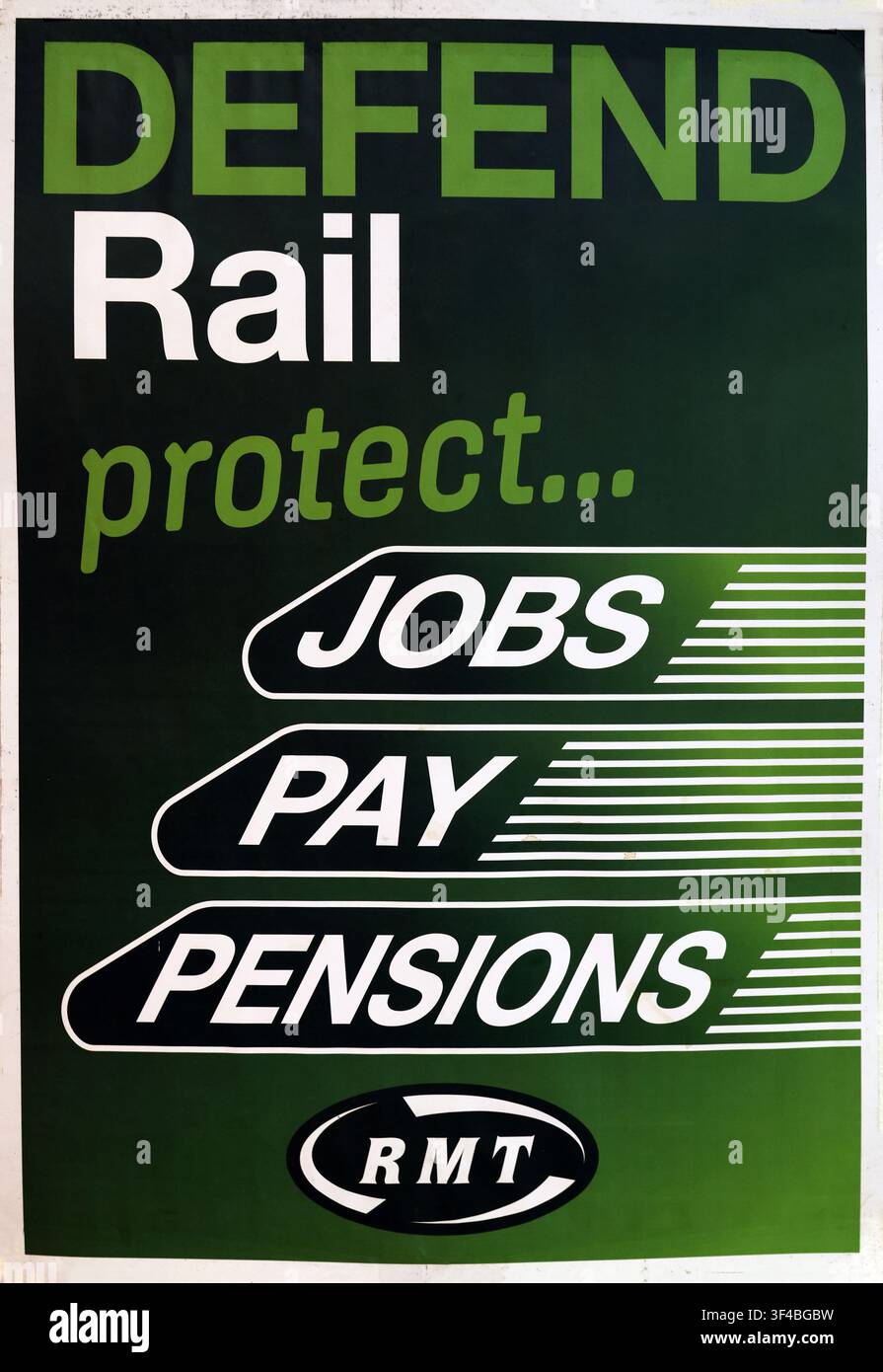
Image details
Contributor:
Tony SmithImage ID:
3F4BGBWFile size:
96.6 MB (2.2 MB Compressed download)Releases:
Model - no | Property - noDo I need a release?Dimensions:
4822 x 7001 px | 40.8 x 59.3 cm | 16.1 x 23.3 inches | 300dpiDate taken:
25 July 2026Location:
Britain, UKMore information:
RMT trade-union poster from the “Defend Rail Jobs, Pay and Pensions” campaign launched in December 2021, calling for protection of railway workers’ employment, earnings and retirement benefits. The green design carries the blunt message “DEFEND Rail” followed by “protect… JOBS, PAY, PENSIONS”, reflecting the union’s concerns as the railway emerged from the Covid-19 pandemic and government-backed restructuring gathered pace. RMT said the campaign covered Network Rail and the majority of train operating companies within the Rail Industry Recovery Group and was intended to resist job losses, pay restraint, changes to working practices and threats to the Railway Pension Scheme. Its January 2022 campaign material called for no compulsory redundancies, an end to the pay freeze, protection of terms and conditions and keeping the railway pension scheme open and affordable. The campaign developed into the wider national rail disputes of 2022, when the union argued that proposed cuts would remove thousands of jobs, reduce infrastructure inspections, weaken working conditions and leave members facing real-terms pay cuts during the cost-of-living crisis. RMT also opposed changes it believed would make staff work longer or receive poorer retirement benefits. Under general secretary Mick Lynch, the union organised ballots, strike action and picketing involving Network Rail and train operating companies, making rail industrial relations a major national political issue. This poster therefore documents the pre-strike mobilisation phase of one of Britain’s most significant recent transport labour disputes. It captures concerns over job security, railway restructuring, pay freezes, inflation, collective bargaining, working practices, pensions and the future shape of Britain’s railway workforce after the pandemic.

