
Hancock and Wood, final closing down sale, Bridge Street, Warrington
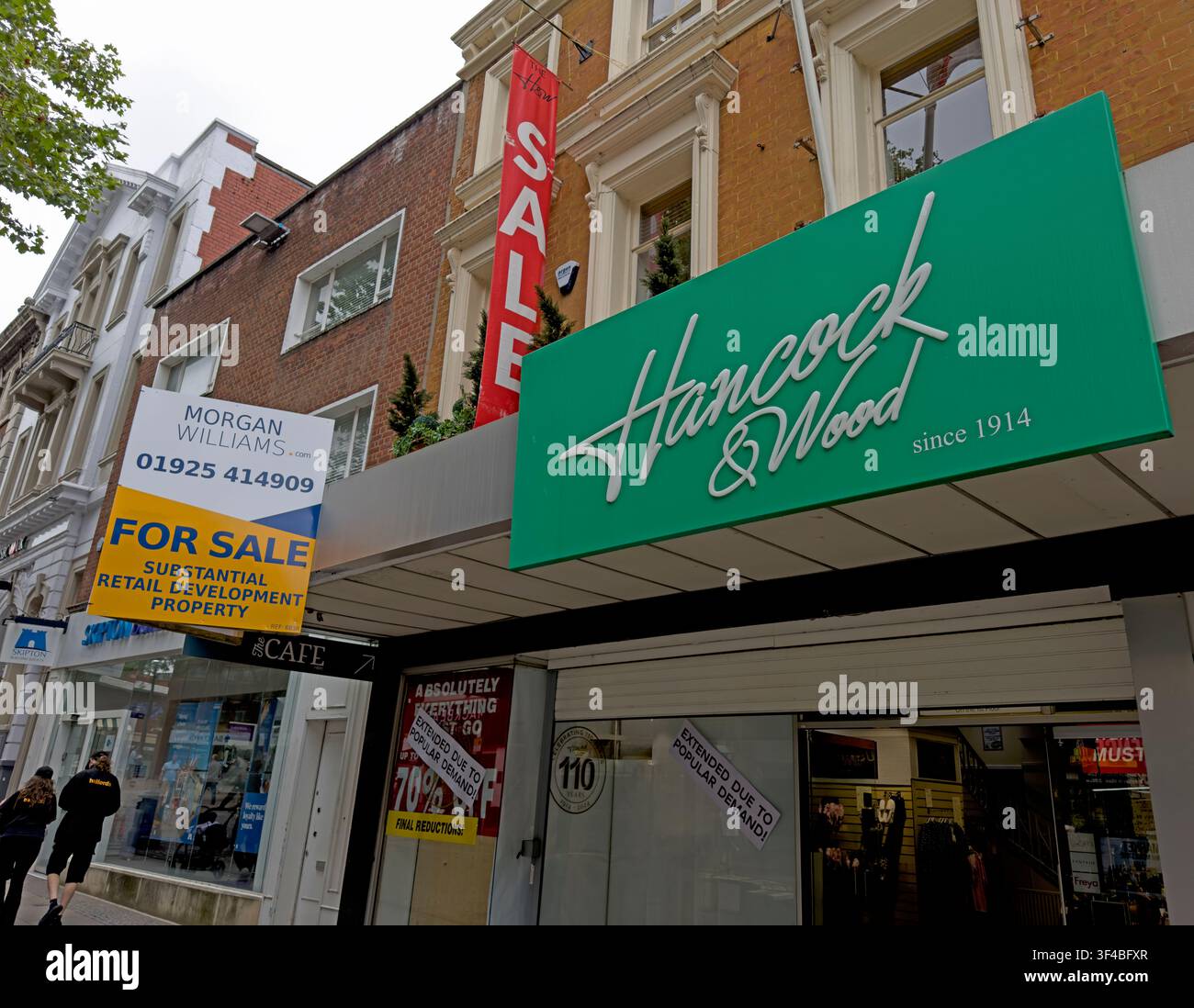
Image details
Contributor:
Tony SmithImage ID:
3F4BFXRFile size:
83.5 MB (2 MB Compressed download)Releases:
Model - no | Property - noDo I need a release?Dimensions:
6136 x 4758 px | 52 x 40.3 cm | 20.5 x 15.9 inches | 300dpiDate taken:
25 July 2026Location:
Hancock & Wood, Bridge Street, Warrington town centre, Cheshire, England, WA1 2EWMore information:
. Hancock and Wood, final closing down sale, Bridge Street, Warrington. Photographed on 25 July 2026, this summer image records the subject in its real-world setting and provides a contemporary visual reference for the place, activity, object or organisation shown. Key searchable subjects associated with the scene include Hancock and Wood, final, retail, retailing, bricks and mortar, shopping, dept, department, store, stores, closing, closed, providing natural SEO coverage without losing the specific documentary identity of the photograph. The retail context supports editorial themes around high streets, shopping centres, consumer behaviour, independent and chain businesses, store branding, commercial property, hospitality and the changing economics of town and city centres. Shopfronts, promotional material, prices, signage and surrounding public space can become valuable historical evidence as businesses close, rebrand, relocate or adapt to online competition and changing consumer demand. The transport setting gives the image wider relevance to mobility, infrastructure, roads and public transport, travel behaviour, local connectivity, logistics and the relationship between vehicles and the built environment. It can illustrate planning, transport policy, accessibility, congestion, public investment and the changing technologies and services used to move people or goods. The frame provides a detailed documentary record of the subject as it appeared at the time of photography, preserving the surrounding context as well as the principal feature. Its value is both descriptive and editorial, allowing the scene to illustrate news, features, local history, travel, social change and retrospective comparison. Visible or contextual elements such as architecture, signage, branding, public realm, transport infrastructure, street furniture and everyday activity help establish a strong sense of place where they form part of the scene.

