
Falkirk Wheel beside the canal, Falkirk, Scotland, UK.
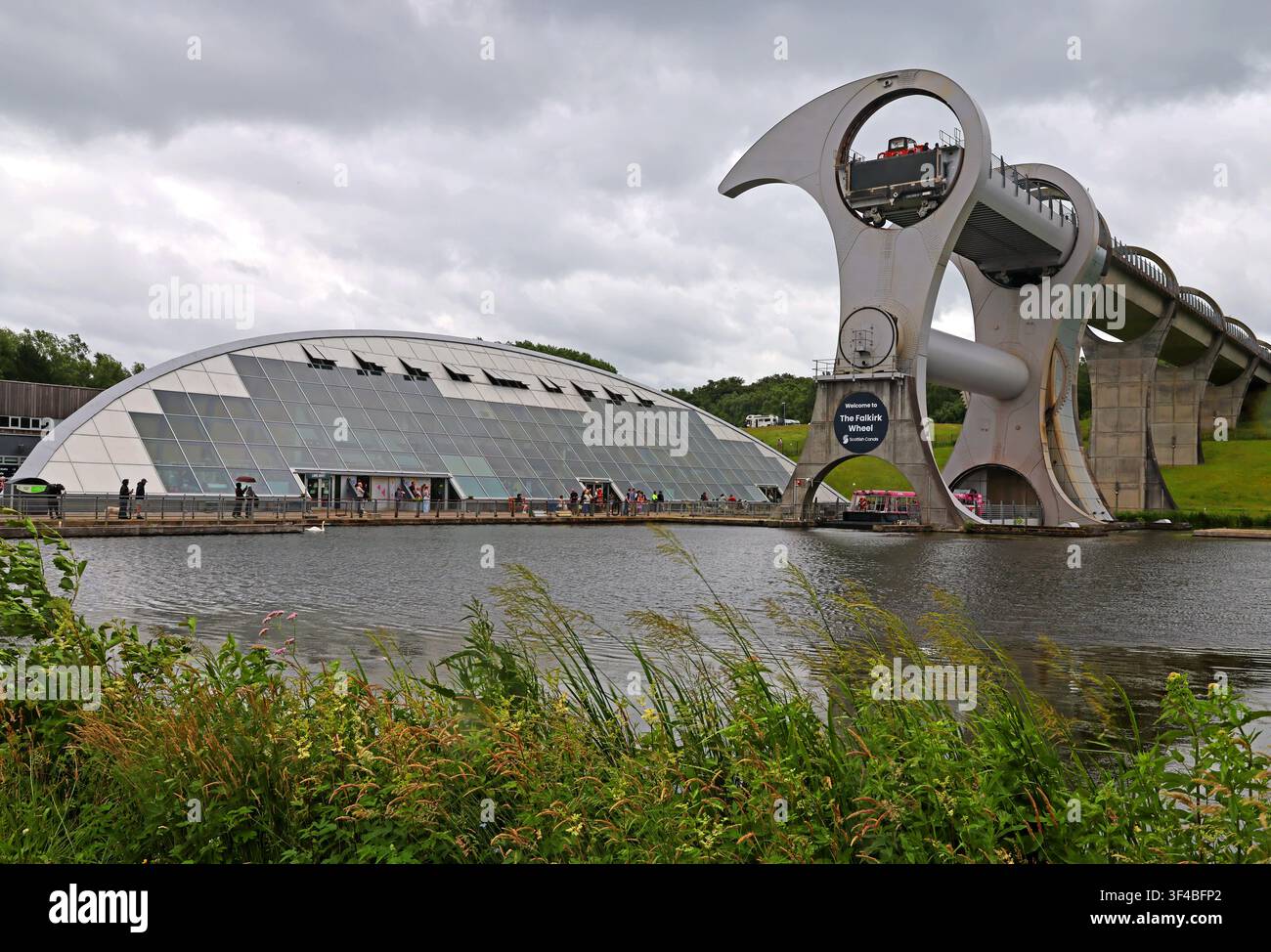
Image details
Contributor:
Tony SmithImage ID:
3F4BFP2File size:
77.9 MB (3.7 MB Compressed download)Releases:
Model - no | Property - noDo I need a release?Dimensions:
6328 x 4304 px | 53.6 x 36.4 cm | 21.1 x 14.3 inches | 300dpiDate taken:
27 June 2026Location:
Falkirk Wheel, Falkirk, Scotland, UKMore information:
. Falkirk Wheel beside the canal, Falkirk, Scotland, UK. Photographed on 27 June 2026. The recorded location is Falkirk Wheel, Falkirk, Scotland, UK. The rotating boat lift is one of Scotland's best-known pieces of modern engineering and links the Forth and Clyde Canal with the Union Canal. This wide view includes the visitor centre area and surrounding water, making it suitable for editorial use on tourism, civil engineering, waterways, canal heritage, transport innovation and Falkirk attractions. For leisure boating, the historical context is that canal infrastructure is a legacy of the Industrial Revolution, when navigable waterways linked mines, mills, factories and ports; The same lock chambers and towpaths now support leisure cruising, walking, cycling, wildlife and waterside redevelopment. For leisure boating, the 2026 context is that the condition and funding of ageing waterway infrastructure remain recurring issues, while canals are valued for navigation, walking, cycling, biodiversity and urban regeneration as well as heritage. Further relevant search phrases include inland waterway, lock gates, industrial transport, canal engineering, canal restoration, industrial archaeology, waterside regeneration, walking route, cycling route, historic freight route, 255A9816, landmark, architecture, travel, destination, and outdoor. Further subject-specific language includes Scottish and iconic. Looking at industrial archaeology, the longer history is that britain's canals were built principally in the eighteenth and early nineteenth centuries to move coal, raw materials and manufactured goods cheaply between industrial districts, ports and growing towns; Locks, basins, bridges and towpaths survive as engineering heritage. The subject also connects inland waterway, lock gates and industrial transport within the same editorial theme. Its wider context brings together lock gates, industrial transport and canal engineering.

