
Close view of the Falkirk Wheel boat lift, Falkirk, Scotland, UK.
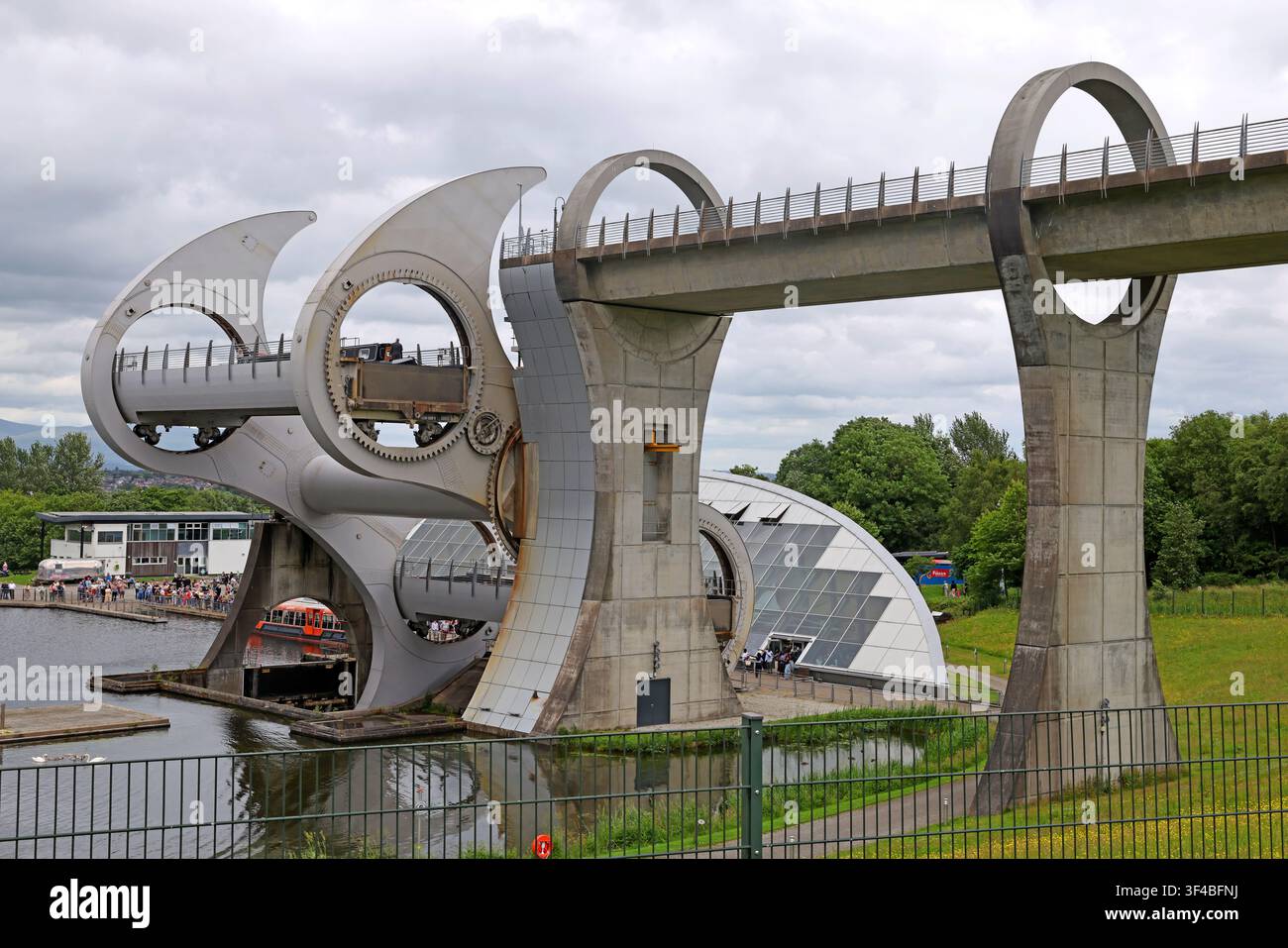
Image details
Contributor:
Tony SmithImage ID:
3F4BFNJFile size:
115.9 MB (4 MB Compressed download)Releases:
Model - no | Property - noDo I need a release?Dimensions:
7792 x 5197 px | 66 x 44 cm | 26 x 17.3 inches | 300dpiDate taken:
27 June 2026Location:
Falkirk Wheel, Falkirk, Scotland, UKMore information:
. Close view of the Falkirk Wheel boat lift, Falkirk, Scotland, UK. Photographed on 27 June 2026. The recorded location is Falkirk Wheel, Falkirk, Scotland, UK. The dramatic modern structure dominates the scene and clearly shows the distinctive rotating arms and canal basin. Looking at waterway infrastructure, the longer history is that the canal network changed from commercial freight route to recreational and heritage asset during the twentieth century; Surviving warehouses, locks, mileposts and engineering structures preserve evidence of its original industrial purpose. In 2026, waterway infrastructure remains relevant because modern waterway policy increasingly combines maintenance with climate resilience, habitat management and active travel; Older canal photographs therefore illustrate both industrial engineering and the contemporary pressure to keep historic infrastructure operational. Other useful descriptive phrases include inland waterway, canal heritage, lock gates, towpath, navigation, industrial transport, canal engineering, leisure boating, canal restoration, industrial archaeology, waterside regeneration, walking route, cycling route, historic freight route, and 255A9793. Further editorial search language includes landmark, tourism, visitor, attraction, architecture, destination, iconic, civil, outdoor, Scottish, transport, innovation, and landscape. The background to waterside regeneration is that britain's canals were built principally in the eighteenth and early nineteenth centuries to move coal, raw materials and manufactured goods cheaply between industrial districts, ports and growing towns; Locks, basins, bridges and towpaths survive as engineering heritage. Current 2026 context around waterside regeneration is that the condition and funding of ageing waterway infrastructure remain recurring issues, while canals are valued for navigation, walking, cycling, biodiversity and urban regeneration as well as heritage.

