
The Kelpies horse-head sculptures at Falkirk, Scotland, UK.
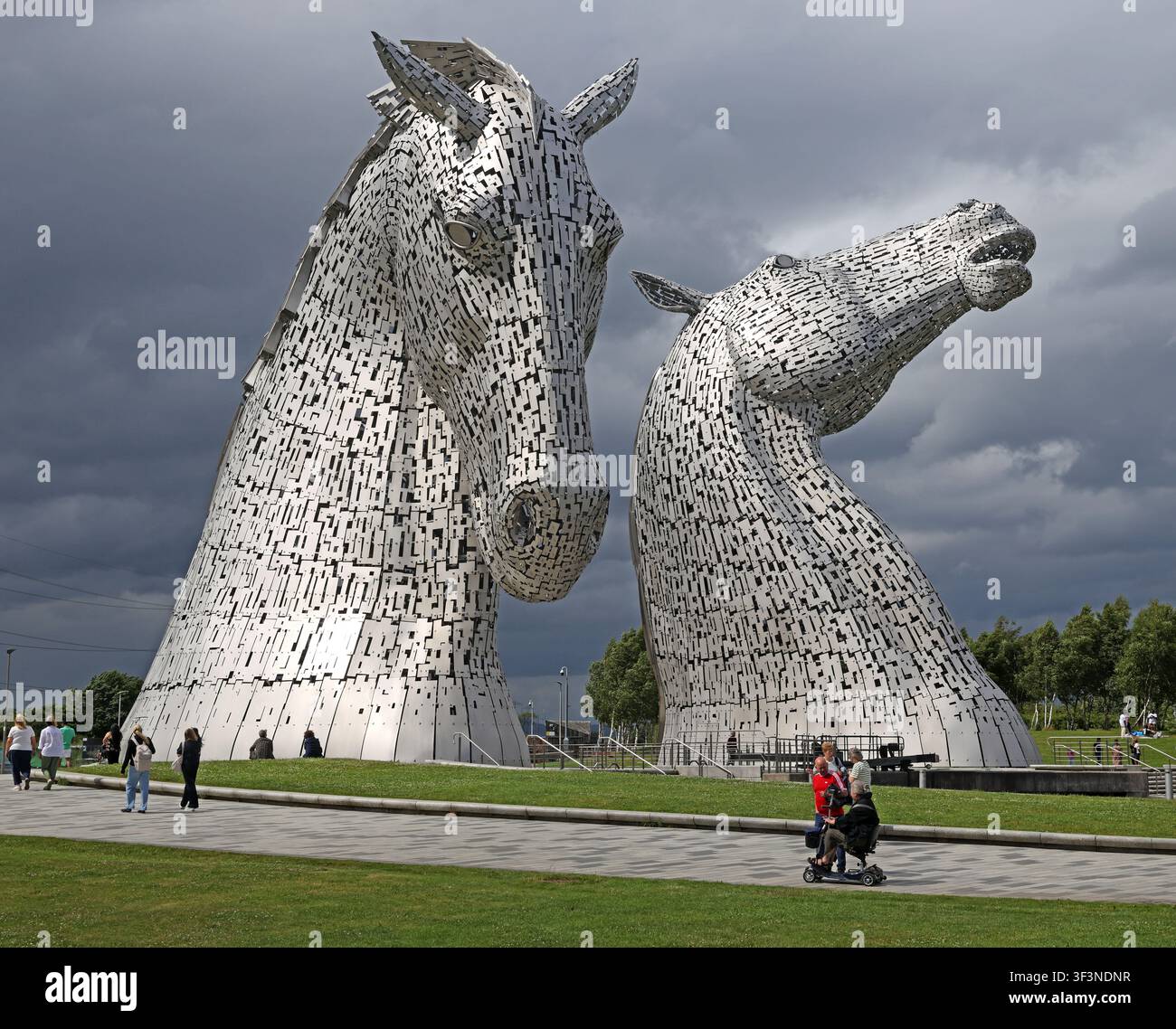
Image details
Contributor:
Tony SmithImage ID:
3F3NDNRFile size:
85.2 MB (3.6 MB Compressed download)Releases:
Model - no | Property - noDo I need a release?Dimensions:
6077 x 4901 px | 51.5 x 41.5 cm | 20.3 x 16.3 inches | 300dpiDate taken:
27 June 2026Location:
The Helix, Falkirk, Scotland, UKMore information:
. The Kelpies horse-head sculptures at Falkirk, Scotland, UK. Photographed on 27 June 2026. The recorded location is The Helix, Falkirk, Scotland, UK. These distinctive public artworks are a major Scottish landmark and the image is suitable for editorial use on sculpture, tourism, public art, landmarks, engineering-scale art, family visits and travel in central Scotland. The historical setting for urban culture is that public art turns streets and buildings into records of local culture; Murals, statues and memorial sculpture can commemorate people and events, celebrate industry, respond to politics or simply enliven public space, while materials and style often identify a particular era. In the 2026 discussion of urban culture, public art is closely connected with regeneration, tourism, identity and debate about representation; Murals and sculptures can become visitor landmarks while also prompting discussion about whose past is visible in public space. Useful indexing vocabulary includes street art, cultural identity, visual culture, community art, place-making, memorial art, creative industries, public realm, cultural landmark, 255A9862, horse heads, Andy Scott, monument, steel, outdoor, iconic, destination, architecture, and attraction. Other useful descriptive phrases include heritage, equine, sky, and park. Seen through community art, the earlier context is that public art turns streets and buildings into records of local culture; Murals, statues and memorial sculpture can commemorate people and events, celebrate industry, respond to politics or simply enliven public space, while materials and style often identify a particular era. For creative industries, the historical context is that monuments and civic artworks are part of the visual history of place; Their subjects reveal whom a community chose to celebrate, while later reinterpretation or controversy can change the meaning of an apparently permanent object.

