
Port wine bottles beside an information sign about increased duty on alcohol, photographed in Britain.
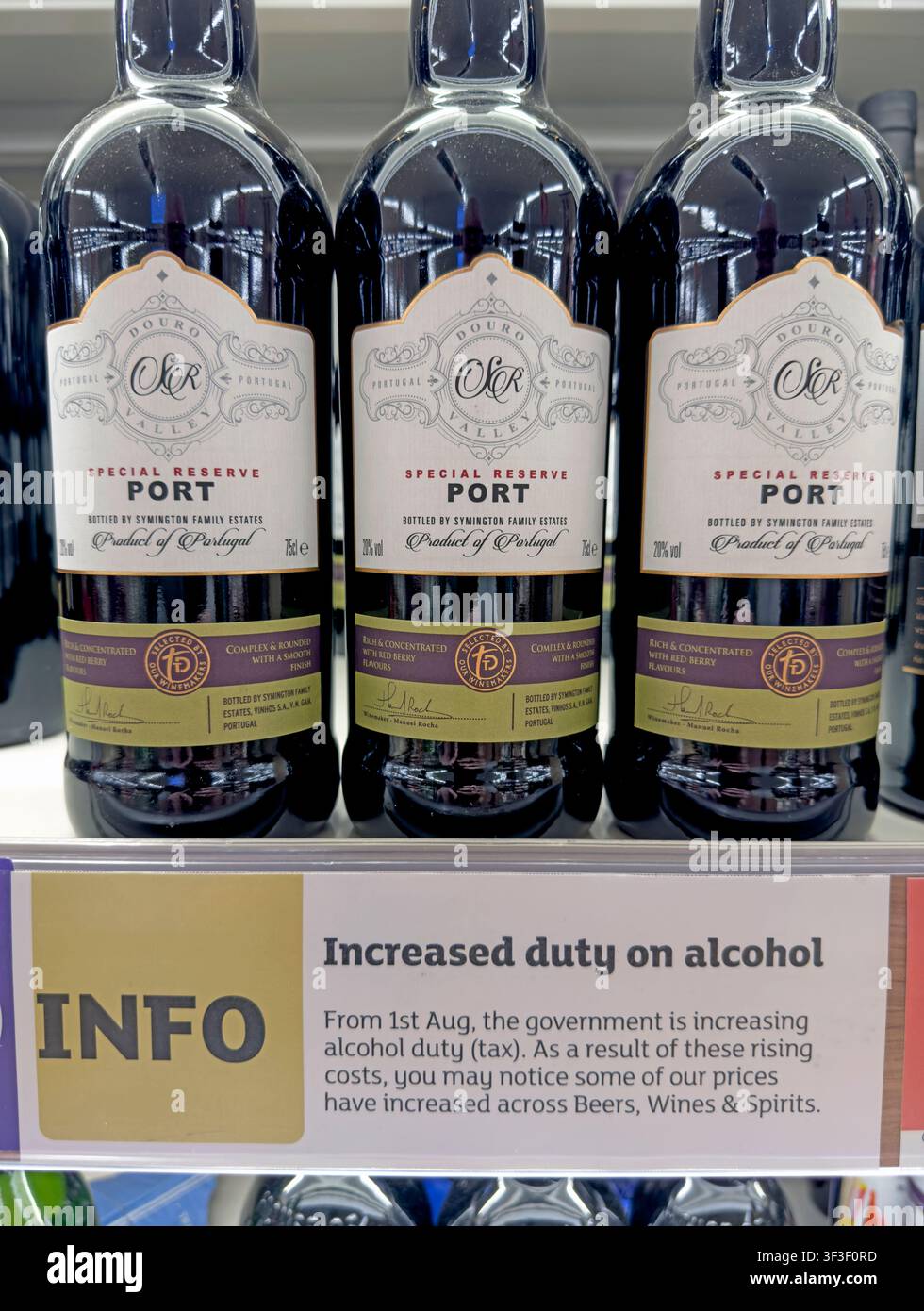
Image details
Contributor:
Tony SmithImage ID:
3F3F0RDFile size:
100 MB (2.4 MB Compressed download)Releases:
Model - no | Property - noDo I need a release?Dimensions:
5134 x 6808 px | 43.5 x 57.6 cm | 17.1 x 22.7 inches | 300dpiDate taken:
26 August 2023Location:
Britain, UKMore information:
. Port wine bottles beside an information sign about increased duty on alcohol, photographed in Britain. Photographed on 26 August 2023. The recorded location is Britain, UK. The notice highlights higher taxation affecting alcoholic drinks and the display is suitable for editorial use on alcohol duty, taxation, retail prices, wine and spirits, government policy, cost increases, off-licence sales and consumer spending. For coastal transport, the historical context is that harbours and ferry ports have shaped coastal communities for centuries, providing sheltered water for fishing, trade and passenger travel; Quays, piers, slipways and terminal buildings record evolving vessel sizes and the transition from cargo handling to modern roll-on roll-off ferry operations. Looking at culinary tradition, the longer history is that restaurants, street vendors and domestic dishes illustrate migration and cultural exchange as much as appetite; Foods once considered specialist can become familiar through travel, supermarkets and changing urban populations. The background to signage is that temporary and permanent notices are valuable social-past evidence because they capture the rules and assumptions of a particular moment, from parking and access to opening times, safety and public-service instructions. For coastal transport, the 2026 context is that ferry reliability, vessel replacement, accessibility and the resilience of island transport remain prominent issues in Scotland and other coastal regions; Port photographs therefore connect tourism and scenic travel with the practical dependence of communities on dependable maritime links. In 2026, culinary tradition remains relevant because hospitality and food retail continue to adapt to higher costs, delivery platforms and changing diets, making older restaurant and product images valuable evidence of consumer trends. Related search language includes working harbour, ferry terminal, and maritime transport.

