
Microsoft Copilot listing in the Apple App Store, highlighting concerns about AI health misinformation, dependency and false reassurance.
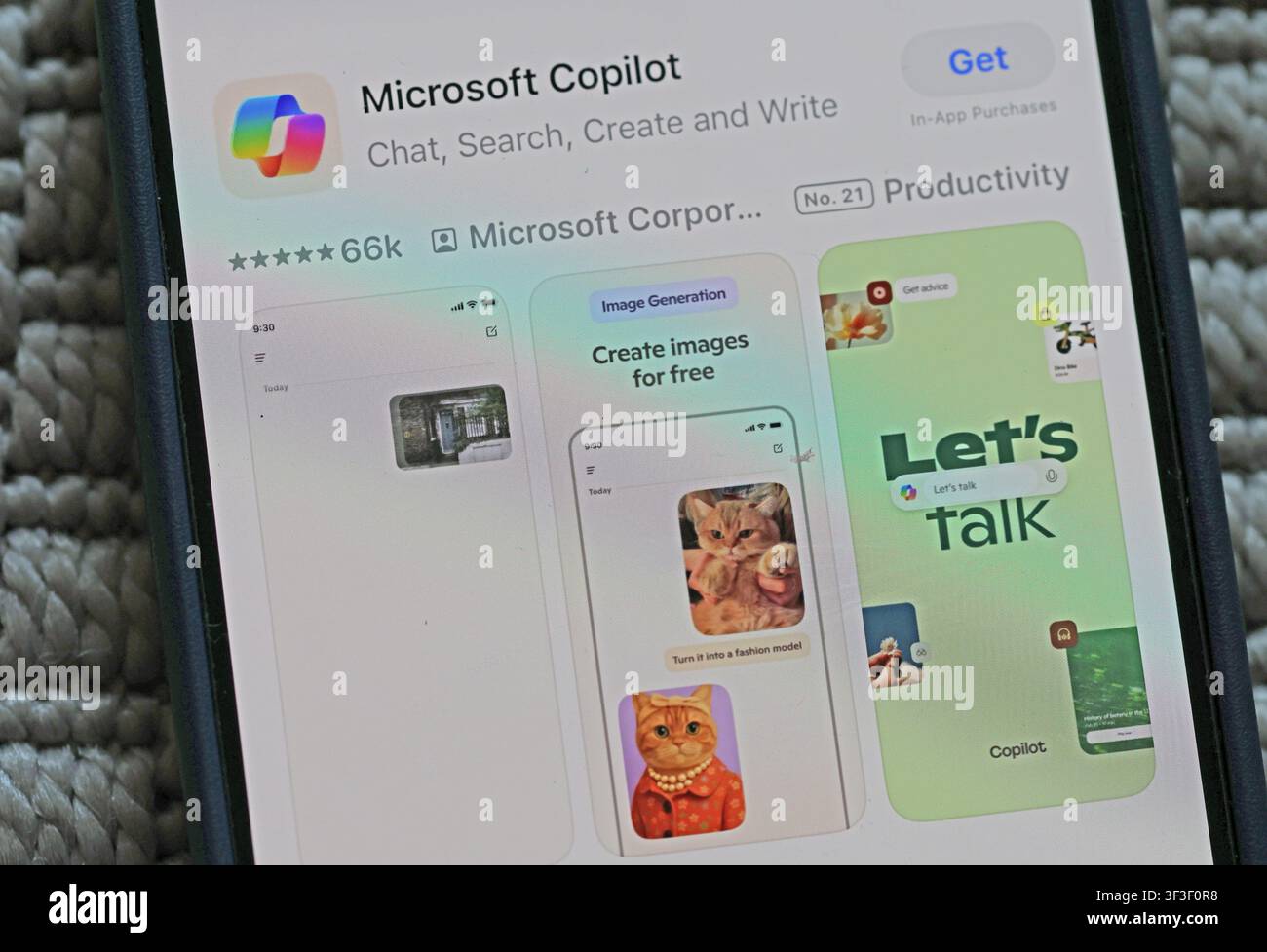
Image details
Contributor:
Tony SmithImage ID:
3F3F0R8File size:
61.2 MB (4 MB Compressed download)Releases:
Model - no | Property - noDo I need a release?Dimensions:
5596 x 3822 px | 47.4 x 32.4 cm | 18.7 x 12.7 inches | 300dpiDate taken:
23 July 2026Location:
England, United KingdomMore information:
Close-up of the Microsoft Copilot application download page displayed in the Apple App Store on an iPhone. The screen shows the Copilot logo, Microsoft Corporation as developer, a blue Get button and promotional panels advertising chat, search, writing and AI image-generation functions. The angled smartphone rests on a textured grey fabric surface. The image provides an editorial illustration of growing public reliance on general-purpose artificial intelligence assistants for personal questions, including health, medical and emotional problems. Microsoft describes Copilot as an AI companion, but warns that AI-generated content can contain mistakes and should be reviewed before users make decisions or take action. Its terms state that Copilot Health is not intended to diagnose, treat or prevent medical conditions or replace professional medical advice. Generative chatbots may provide convenient explanations, help users organise questions and offer a sympathetic response at any hour. However, they can invent facts, misunderstand symptoms, overlook urgent warning signs, provide false reassurance or produce advice that is unsuitable for an individual. Reliance on a chatbot could delay contact with a GP, mental-health professional or emergency service. There are also concerns about people developing emotional dependency on systems designed to sustain conversational engagement. AI companions may repeatedly validate a user, reinforce distorted beliefs or appear more knowledgeable and caring than they are. The World Health Organization has warned about generative AI tools not designed or tested for mental-health support being used in that role, particularly by young people. Privacy is another risk when users disclose symptoms, trauma, medication or intimate personal information. The photograph represents smartphone AI adoption, online medical misinformation, chatbot safety, emotional reliance, privacy and the need for human professional judgement.

