
Perplexity AI app listing on an Apple iPhone, illustrating risks of users trusting chatbot answers without understanding AI limits or accuracy.
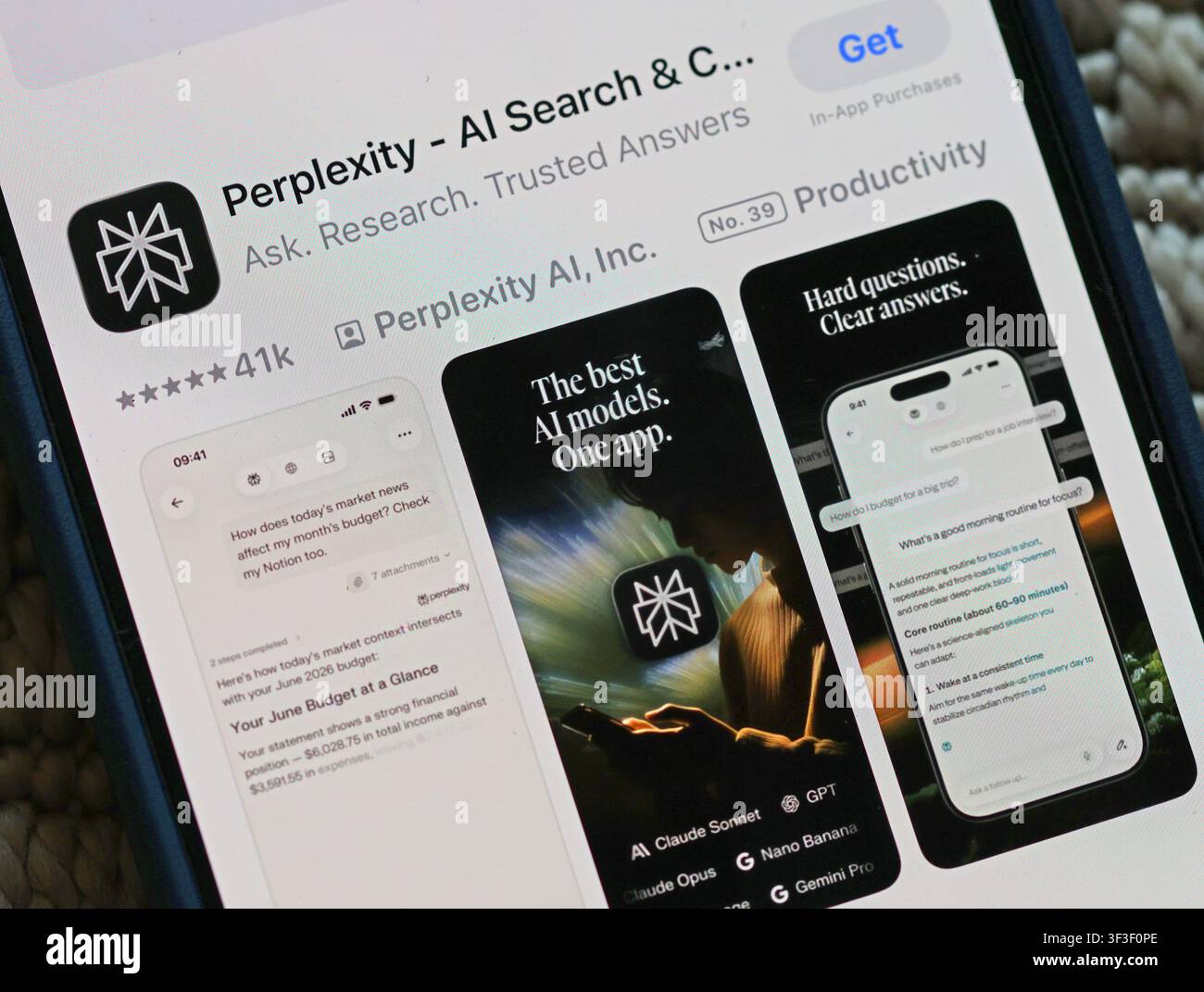
Image details
Contributor:
Tony SmithImage ID:
3F3F0PEFile size:
66.7 MB (3.7 MB Compressed download)Releases:
Model - no | Property - noDo I need a release?Dimensions:
5559 x 4195 px | 47.1 x 35.5 cm | 18.5 x 14 inches | 300dpiDate taken:
23 July 2026Location:
England, United KingdomMore information:
Close-up of a smartphone displaying the Perplexity application listing in the Apple App Store. The screen shows the Perplexity name, Perplexity AI, Inc. as developer, a blue Get button and promotional panels presenting the service as an AI search and answer tool. The display includes marketing phrases such as Ask, Research, Trusted Answers and Hard questions. Clear answers, with example screenshots showing the app interface. The handset is photographed at an angle against a textured fabric background, creating an editorial technology image about the rapid growth of consumer artificial intelligence on everyday mobile devices. The image can illustrate the increasing public use of large language model tools for search, advice, explanations and decision support, but also the risks of placing too much faith in AI generated responses. Services such as Perplexity often produce fluent, confident and highly believable answers, which may encourage people to assume the system is accurate, objective or fully reliable. In practice, AI tools can still misunderstand prompts, omit context, misread sources, present weak information too confidently or generate errors that sound persuasive. The danger is not only obvious nonsense. It is the believable mistake that appears polished and trustworthy. The photograph is therefore relevant to themes of overreliance on chatbots, digital literacy and public understanding of AI limitations. Users may become dependent on LLM based tools without appreciating that they remain probabilistic systems rather than human experts, and that important information still needs independent checking. That concern is especially relevant when AI is used for health, finance, legal matters, education, news or personal decision making. The picture works as an editorial illustration of AI safety, misinformation risk, technology ethics and the changing relationship between people and machine generated information.

