
Close-up of the Claude by Anthropic download page on smartphone, highlighting chatbot hallucinations, false reassurance and human-like AI conversation
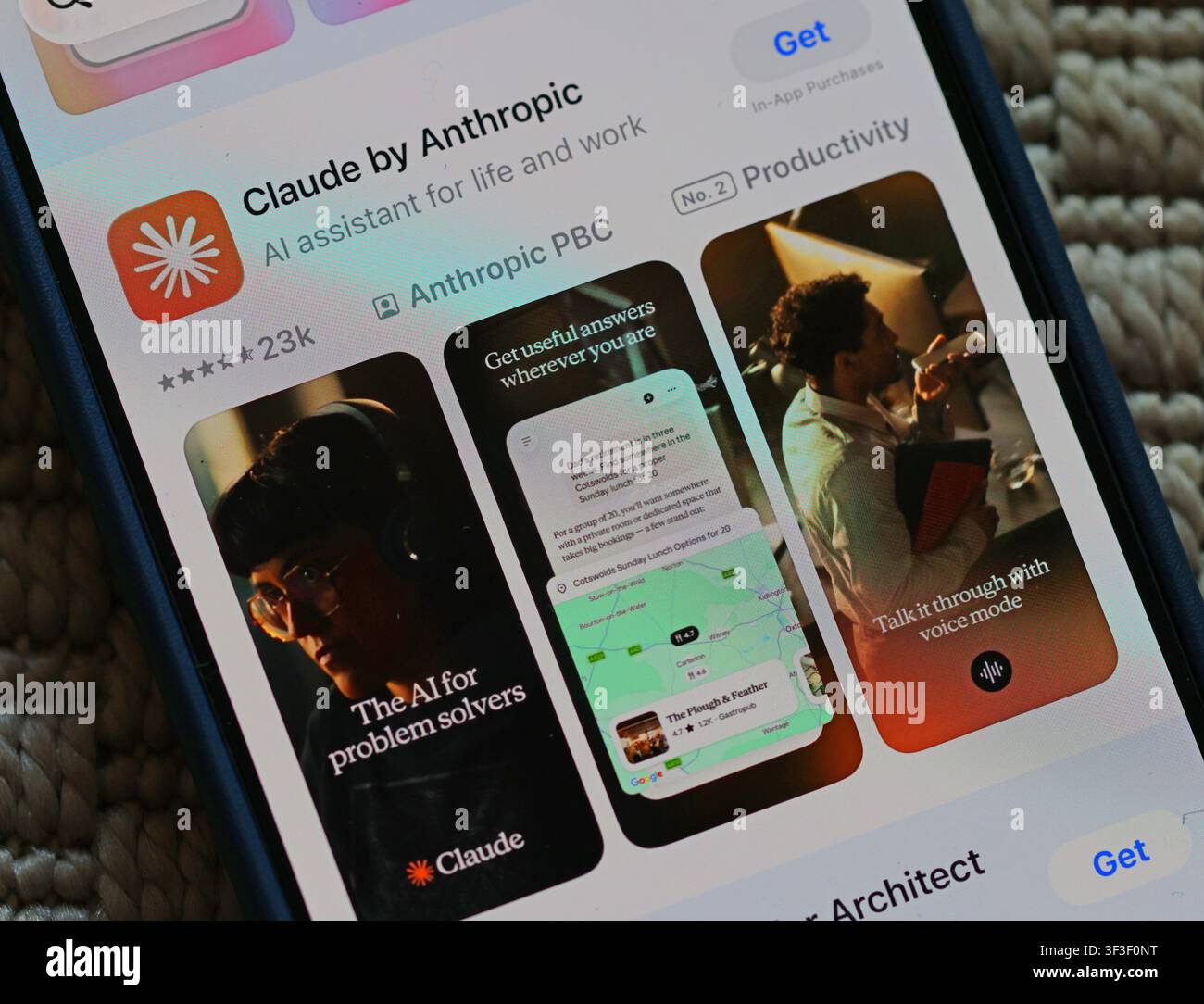
Image details
Contributor:
Tony SmithImage ID:
3F3F0NTFile size:
88.1 MB (5 MB Compressed download)Releases:
Model - no | Property - noDo I need a release?Dimensions:
6345 x 4852 px | 53.7 x 41.1 cm | 21.2 x 16.2 inches | 300dpiDate taken:
23 July 2026Location:
England, United KingdomMore information:
Close-up of a smartphone displaying the Claude by Anthropic application listing in the Apple App Store. The screen shows the Claude name, Anthropic PBC as developer, a blue Get button and promotional images presenting the software as an AI assistant for life and work. The handset is photographed at an angle against a textured fabric background, creating an editorial technology image about the fast growth of consumer artificial intelligence on everyday mobile devices. The picture can illustrate both the popularity of generative AI and the risks that arise when users begin to relate to chatbots as if they are real people rather than software systems generating responses from statistical patterns. Because conversational AI is designed to sound natural, calm and helpful, some people may start to imagine they are genuinely talking to an understanding companion, adviser or friend. That can encourage emotional reliance, excessive trust and disclosure of highly personal information. Claude, like other advanced chatbots, can often produce clear, persuasive and fluent replies. However, it can also generate confident but inaccurate statements, invented facts, misleading summaries or unsuitable advice, sometimes described as hallucinations. The danger is not only obvious nonsense. The greater risk is believable error: a reply that sounds measured, informed and reassuring while still being wrong. In practice that can matter when people ask about health symptoms, emotional problems, legal issues, finances, work decisions or other subjects where a mistaken answer could lead to harm or delay proper human help. The image therefore works as an illustration of AI safety, chatbot dependence, anthropomorphism, misinformation, digital ethics and the growing public debate about how much trust should be placed in machine-generated conversation. It also highlights the wider concern that app-based AI assistants are becoming normalised in daily life before many users fully understand them

