
Close-up of AI chatbot apps on a smartphone, highlighting hallucinations, emotional dependency, privacy risks and unsafe advice.
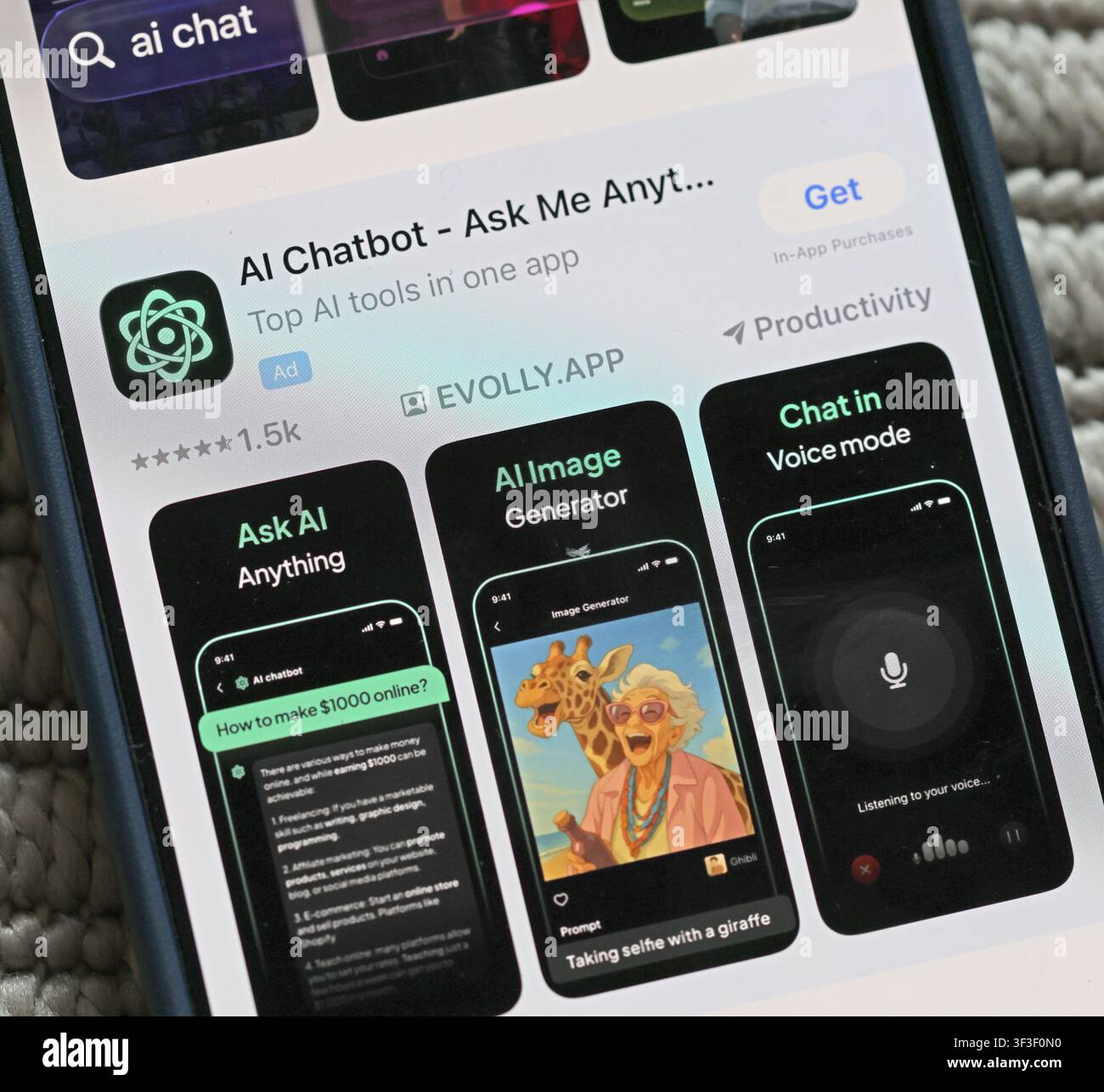
Image details
Contributor:
Tony SmithImage ID:
3F3F0N0File size:
84.8 MB (4.2 MB Compressed download)Releases:
Model - no | Property - noDo I need a release?Dimensions:
5674 x 5224 px | 48 x 44.2 cm | 18.9 x 17.4 inches | 300dpiDate taken:
23 July 2026Location:
England, United KingdomMore information:
Close-up of an Apple iPhone screen displaying artificial intelligence and chatbot application icons beneath the question “Ask me anything”. The grid represents the rapid spread of mobile AI assistants that answer questions, generate text, summarise information and imitate natural human conversation. The image illustrates both the convenience of generative AI and the dangers of treating chatbot responses as automatically accurate, impartial or safe. Large language models can produce fluent and confident answers even when information is incomplete, misunderstood or invented. These believable errors, commonly called hallucinations, may be difficult to recognise because a response can sound calm, detailed and authoritative. The risk grows when people use general-purpose chatbots for medical symptoms, mental health, legal disputes, financial decisions, relationships or other matters requiring professional knowledge and personal context. Conversational systems can also encourage overreliance. A chatbot that is always available and responds sympathetically may appear to understand the user like a human adviser or friend. In reality, it generates likely language rather than experiencing concern, judgement or empathy. Emotional dependency may reduce contact with real people, reinforce unhealthy beliefs or persuade vulnerable users to disclose intimate information. Privacy is another concern because prompts may contain health details, workplace documents, family problems, financial information or identifying personal data. Users may not understand how conversations are stored, reviewed or used by a service provider. Children and teenagers can face additional risks from persuasive replies, unsuitable content and AI companions designed to sustain engagement. This photograph illustrates chatbot hallucinations, misinformation, artificial empathy, privacy, dependency, digital literacy and the need to check AI answers against reliable sources and human advice.

