
Close-up of the Google Gemini AI assistant on a smartphone, highlighting hallucinations, believable errors and personal data concerns
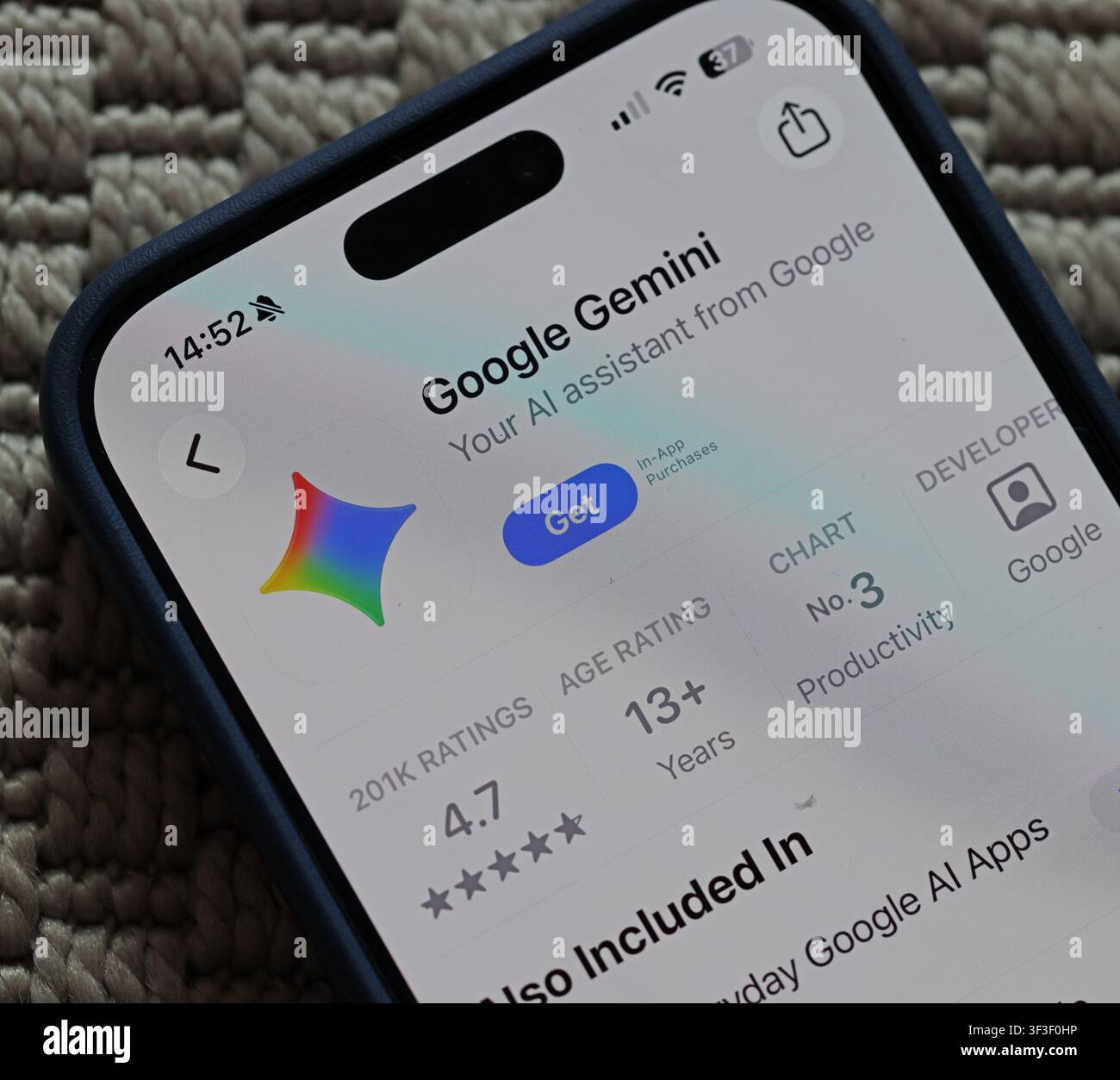
Image details
Contributor:
Tony SmithImage ID:
3F3F0HPFile size:
95.4 MB (5.6 MB Compressed download)Releases:
Model - no | Property - noDo I need a release?Dimensions:
6105 x 5464 px | 51.7 x 46.3 cm | 20.4 x 18.2 inches | 300dpiDate taken:
23 July 2026Location:
England, United KingdomMore information:
Close-up of an Apple iPhone displaying the Google Gemini application listing in the Apple App Store. The angled smartphone screen shows the Google Gemini name, its multicoloured logo, Google as developer, a 4.7 rating, 13-plus age classification and Productivity chart position. The handset lies against a textured grey fabric background, creating a contemporary editorial image about the rapid adoption of consumer artificial intelligence apps. Google Gemini is promoted as a general-purpose AI assistant capable of answering questions, drafting text, summarising information, generating ideas and working with other Google products. The photograph can also illustrate the risks of downloading and relying heavily on conversational AI software without understanding how large language models produce their responses. Gemini can provide fluent, detailed and convincing answers while still misunderstanding a question, omitting important context or presenting inaccurate information. Such believable errors are commonly described as AI hallucinations. Their polished tone can make them particularly difficult to recognise, especially when users ask about medical symptoms, mental health, money, legal problems, politics or breaking news. Privacy is another concern because users may enter personal details, confidential documents, workplace information or intimate emotional problems into chatbot services. Human-like responses can also encourage false reassurance, emotional dependency or the mistaken belief that the software genuinely understands and cares about the user. The image is suitable for stories about Google AI, chatbot misinformation, data privacy, digital literacy, artificial intelligence safety, consumer technology, algorithmic persuasion and the need to verify machine-generated answers using reliable independent sources.

