
Open carriage door and a crowded platform at Manchester Oxford Road station during a summer evening commuter rush in the city centre
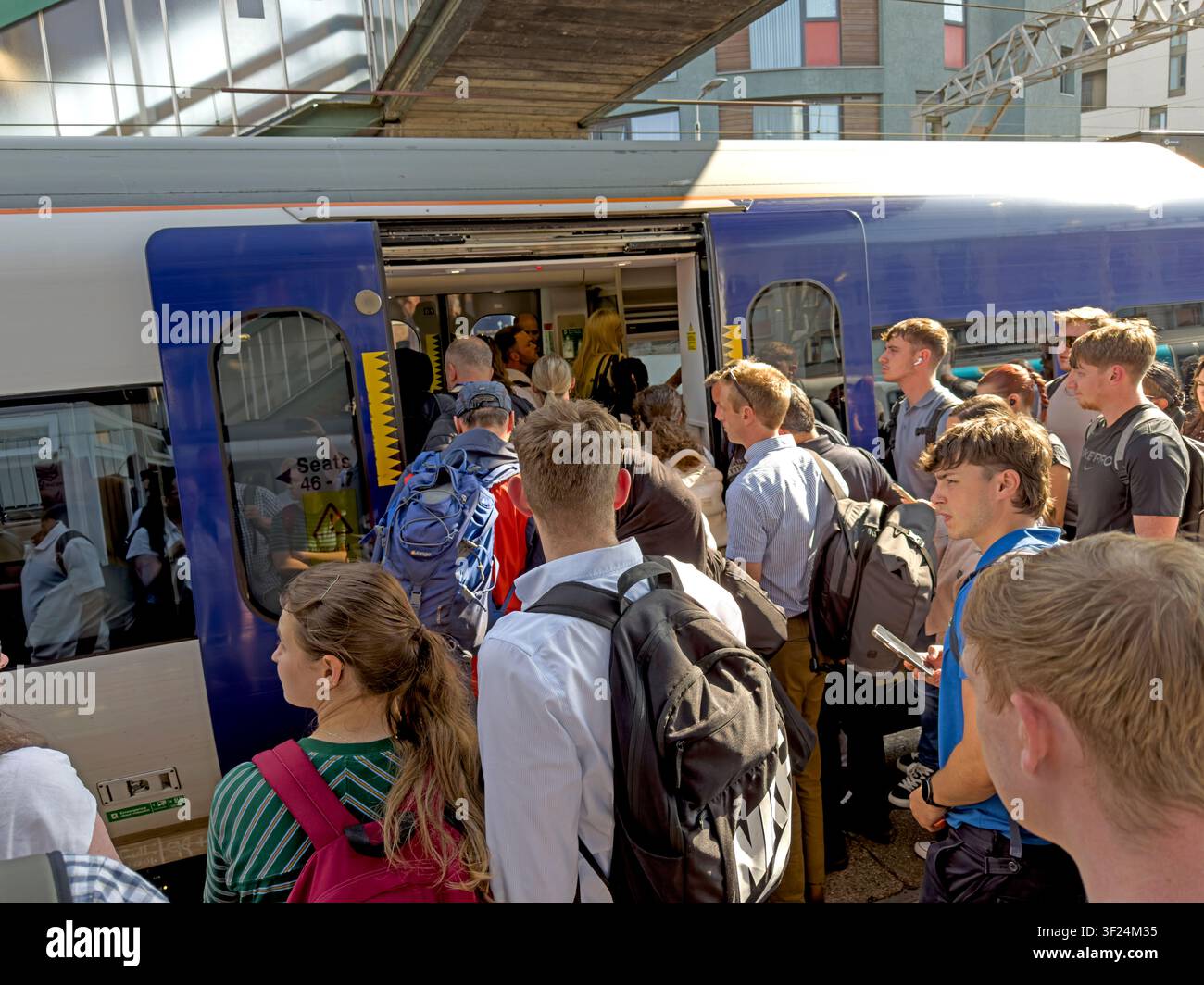
Image details
Contributor:
Tony SmithImage ID:
3F24M35File size:
107.1 MB (2.9 MB Compressed download)Releases:
Model - no | Property - noDo I need a release?Dimensions:
7064 x 5298 px | 59.8 x 44.9 cm | 23.5 x 17.7 inches | 300dpiDate taken:
15 July 2026Location:
Station Approach, Oxford Road, Manchester, Greater Manchester, M1 6FU, England, UKMore information:
Passengers crowd around an open carriage door at Manchester Oxford Road railway station on a bright summer evening, queuing to board while others wait on the already busy platform. Backpacks, smartphones and office wear suggest a mix of commuters, students and leisure travellers using one of central Manchester’s key rail gateways. The scene is tightly framed by the train, platform edge and station structures, highlighting the limited space available when high passenger numbers gather at the point of boarding and alighting. Manchester Oxford Road lies on the Castlefield Corridor between Piccadilly and Deansgate, a heavily used and operationally constrained section of railway that carries local, regional and cross-city services. The station serves the city centre, the university quarter, nearby offices, entertainment venues and onward interchange flows, so evening peaks can bring sudden surges of people onto relatively narrow platform areas. Delayed, cancelled or closely timed trains can intensify that pressure, especially when passengers cluster at doorways in anticipation of boarding. The photograph captures a wider transport issue affecting Manchester and the North of England. Congestion at the platform-train interface does not by itself prove a dangerous situation, but it can reduce circulation space, slow boarding, complicate alighting, increase stress and make conditions more difficult for those carrying luggage or needing extra time and assistance. It also illustrates the tension between passenger demand and the infrastructure limits of a busy city-centre station handling large flows within a restricted footprint. Oxford Road is also notable architecturally for its distinctive post-war station design and is the subject of long-running discussion about remodelling to improve capacity, passenger circulation and operational resilience. This image therefore works both as an everyday editorial scene of summer rail commuting and as a visual record of debate

