
Colourful spirits bottles fill a window at the Lass O'Gowrie pub in Manchester as younger drinkers increasingly explore low and no-alcohol choices
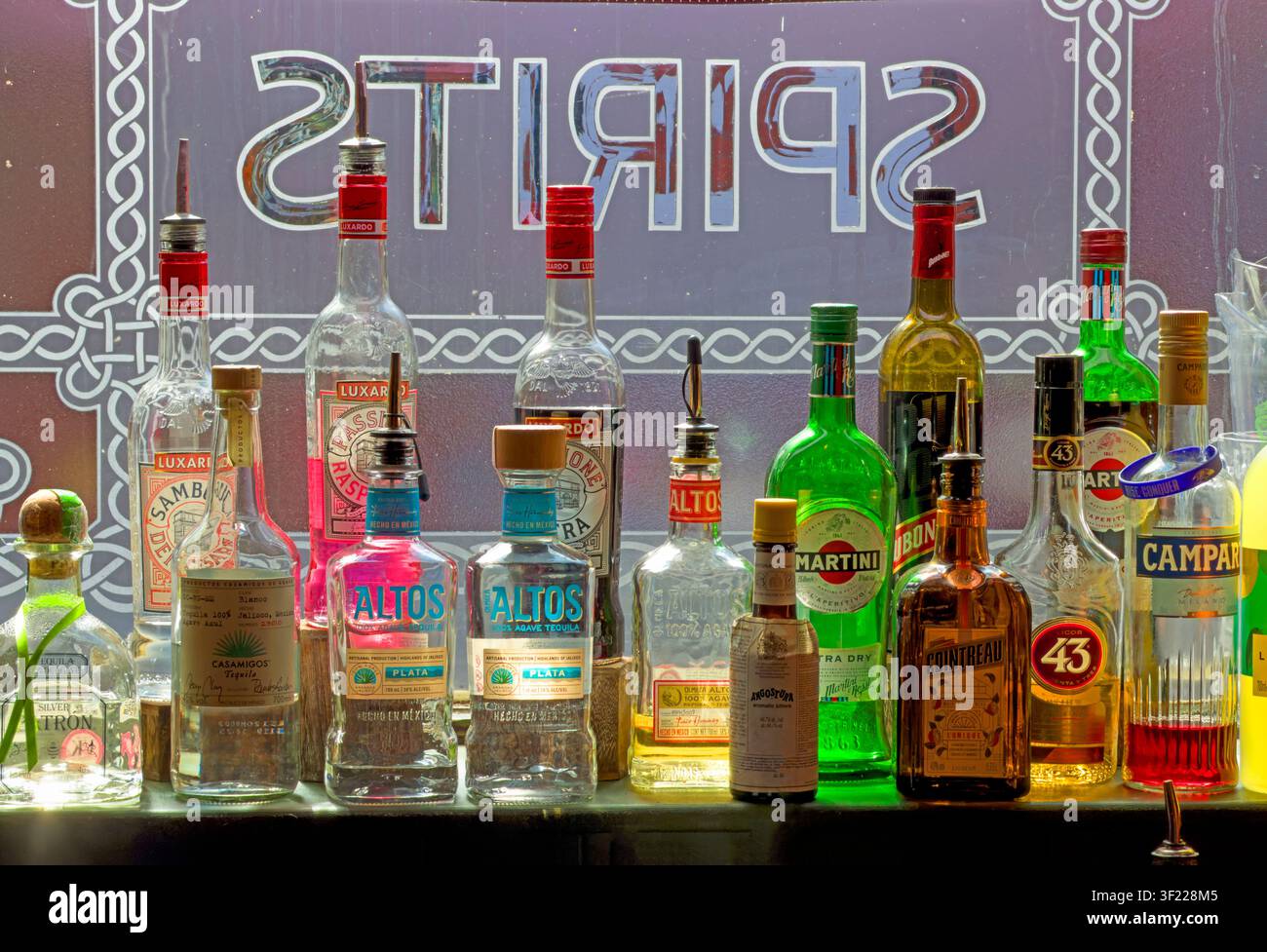
Image details
Contributor:
Tony SmithImage ID:
3F228M5File size:
71.9 MB (2.6 MB Compressed download)Releases:
Model - no | Property - noDo I need a release?Dimensions:
6064 x 4142 px | 51.3 x 35.1 cm | 20.2 x 13.8 inches | 300dpiDate taken:
15 July 2026Location:
The Lass O’Gowrie, 36 Charles Street, Manchester, Greater Manchester, M1 7DB, England, UKMore information:
Colourful collection of spirits bottles fills a sunlit window at the Lass O’Gowrie, traditionally shortened to the LoG, on Charles Street in Manchester city centre. Strong backlighting illuminates clear, green and amber glass alongside red caps and familiar international drinks brands, including Martini, Campari, Cointreau, Licor 43, Luxardo and Altos tequila. The word “SPIRITS” appears reversed across the window, creating a striking layered composition of lettering, reflections and alcohol packaging. The Grade II listed Lass O’Gowrie is a historic Manchester public house dating from the mid-nineteenth century and altered around 1900. Its distinctive exterior is decorated with glazed terracotta advertising wines, spirits, bottled ales and stout. Once a Threlfall’s Brewery house, the pub stands near Manchester Oxford Road station, the universities and the River Medlock, giving it longstanding associations with students, media workers and city-centre nightlife. The traditional display also provides a visual contrast with changing attitudes towards alcohol. No and low-alcohol products are becoming more visible in British pubs, bars and shops, with health, avoiding hangovers, driving, cost and a desire for greater control influencing consumer choices. Drinkaware reported in 2025 that 49% of UK drinkers aged 18 to 34 used alcohol-free or low-alcohol products to moderate their drinking, up from 28% in 2018. That does not mean younger adults have abandoned alcohol or conventional spirits. Other consumer research found UK Gen Z participation in alcohol increased between 2023 and 2025, challenging the simple idea of a uniformly sober generation. The stronger interpretation is that drinking occasions are diversifying: some younger consumers alternate alcoholic and alcohol-free drinks, drink less frequently, seek lower-strength choices or practise moderation without complete abstinence. This window therefore represents both the enduring visual culture of the British pub and

