
Modern Volvo cars promoted through the UK Motability Scheme, which enables eligible disabled people to lease a vehicle using mobility benefit
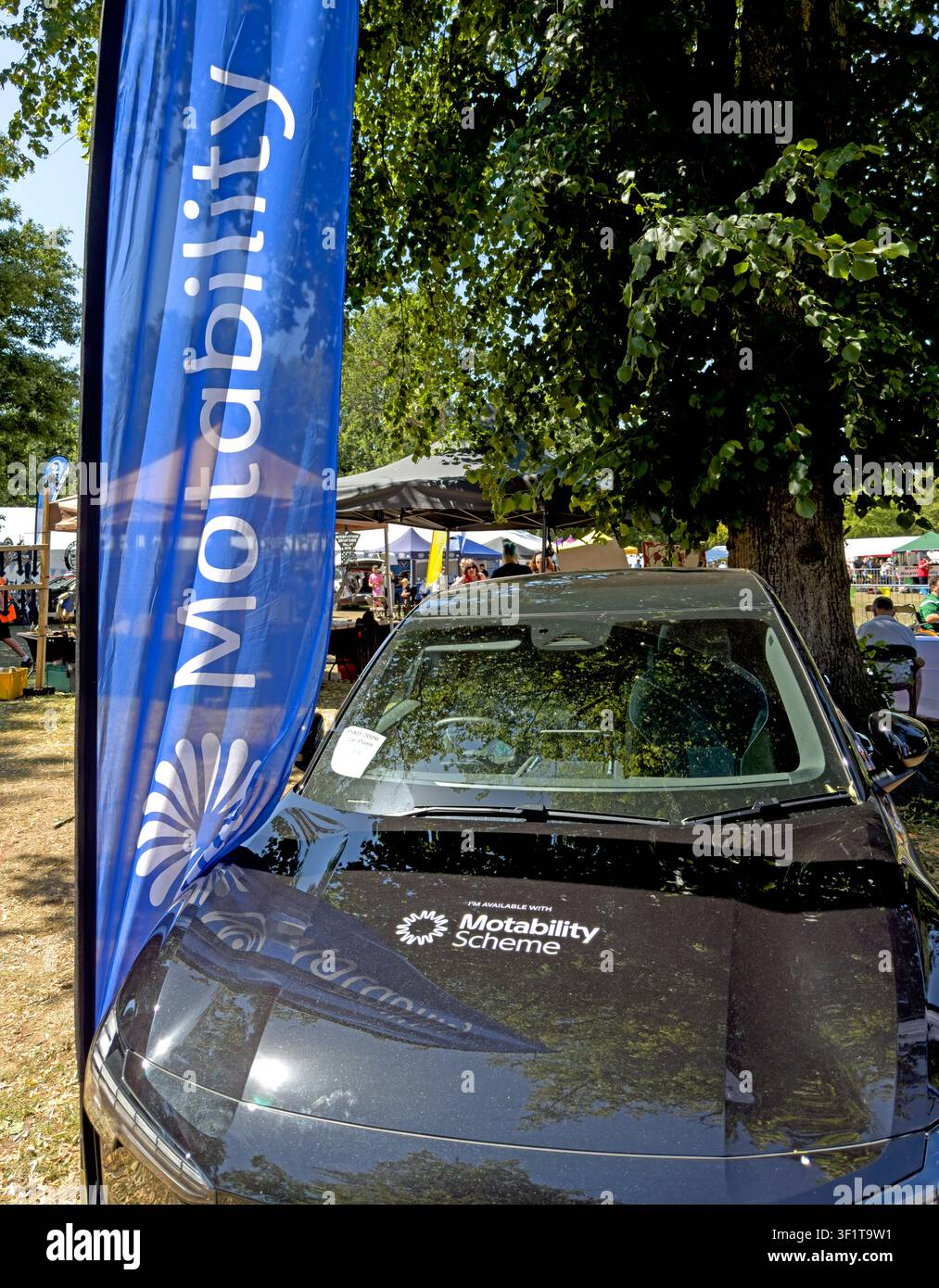
Image details
Contributor:
Tony SmithImage ID:
3F1T9W1File size:
85.3 MB (4 MB Compressed download)Releases:
Model - no | Property - noDo I need a release?Dimensions:
4820 x 6184 px | 40.8 x 52.4 cm | 16.1 x 20.6 inches | 300dpiDate taken:
12 July 2026Location:
DAD2026, Walton Hall and Gardens, Walton Lea Road, Higher Walton, Warrington, Cheshire, WA4 6SNMore information:
Black car carrying Motability Scheme branding stands beside a tall blue promotional banner at an outdoor summer event in Warrington, Cheshire. The image illustrates a contentious area of Britain’s welfare debate: rising numbers receiving disability-related benefits, the growing cost of Personal Independence Payment, and claims from some right-wing politicians and commentators that eligibility has become too broad or insufficiently tested. The Motability Scheme allows eligible recipients of the enhanced mobility component of PIP and equivalent allowances to exchange that payment for a leased car, accessible vehicle, wheelchair or scooter. It is intended to enable independent travel and is not a separate free-car benefit. Nevertheless, the visibility of new vehicles carrying Motability branding has fuelled allegations that some claimants receive cars despite not appearing visibly disabled, or that premium vehicles represent poor value for taxpayers. These claims form part of a wider argument about benefit fraud, mental-health and neurodevelopmental claims, assessment standards, work incentives and public spending. Official forecasts published in 2026 showed growth in PIP expenditure and claimant numbers, prompting renewed calls for stricter reassessment and tighter qualification rules. The government also introduced Motability tax and scheme changes from July 2026, while premium brands had already been removed from the vehicle range. Disability organisations argue that visible appearance is not evidence of eligibility, many serious conditions are hidden or variable, and PIP is assessed according to functional limitations rather than diagnosis, income or employment status. They warn that claims of widespread abuse risk stigmatising legitimate claimants and reducing mobility, independence and access to work. The photograph captures the clash between welfare-cost concerns, allegations of misuse, disability rights and accessible personal transport.

