
Northern European and Russian holidaymakers crowd the dark-sand beach at Los Cristianos, Tenerife, during a winter-sun break.
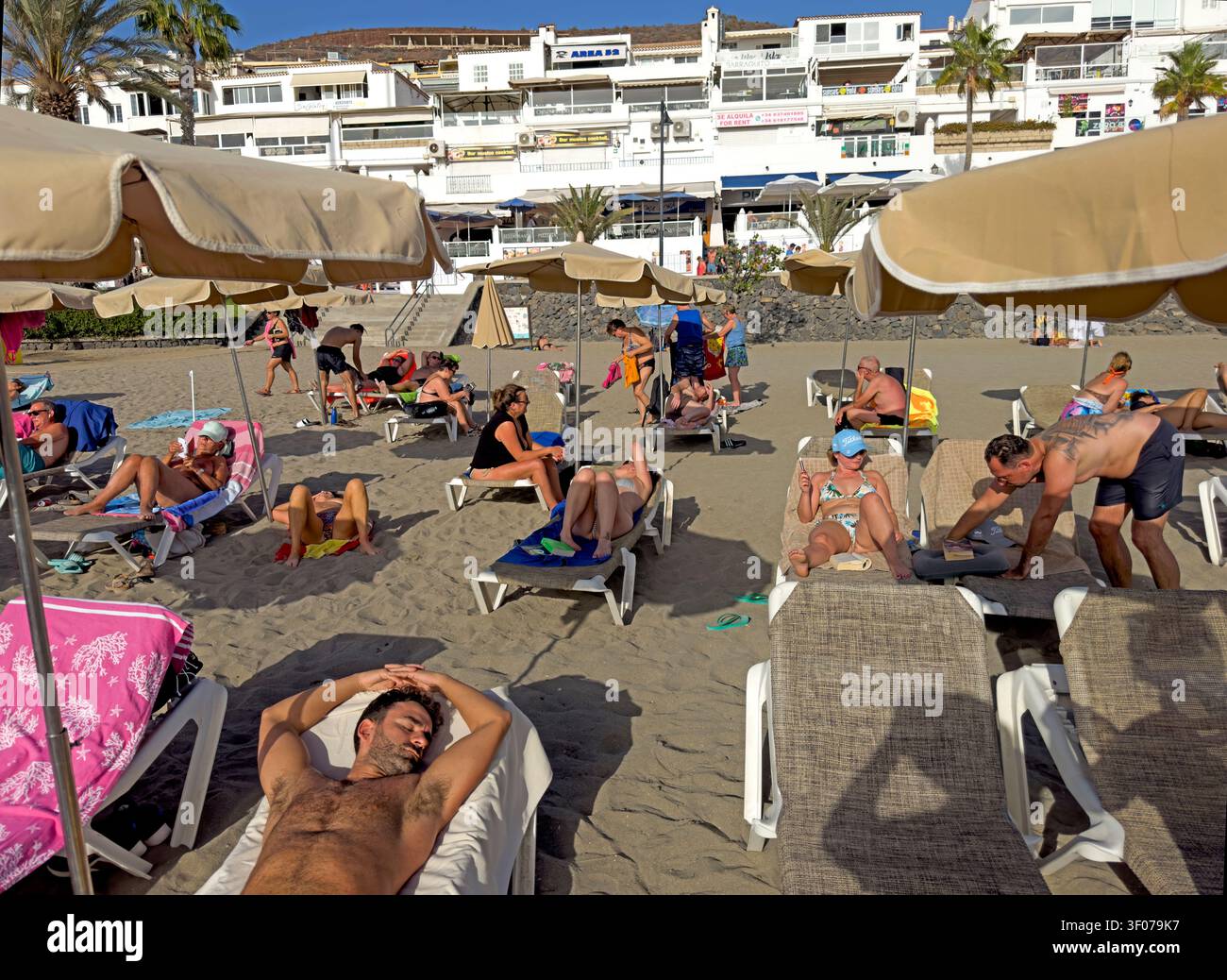
Image details
Contributor:
Tony SmithImage ID:
3F079K7File size:
108.4 MB (4.5 MB Compressed download)Releases:
Model - no | Property - noDo I need a release?Dimensions:
7207 x 5257 px | 61 x 44.5 cm | 24 x 17.5 inches | 300dpiDate taken:
12 November 2023Location:
Paseo Marítimo, 38650 Los Cristianos, Arona, Tenerife, Canary Islands, SpainMore information:
Northern European and Russian holidaymakers relax on rows of sun loungers beneath beige parasols along the busy seafront at Los Cristianos in southern Tenerife, Canary Islands, Spain. Adults sunbathe on dark grey sand while resort apartments and hotel terraces rise behind the beach. The view records a crowded winter-sun scene under partly cloudy skies, with low volcanic hills beyond the urban coastline. Los Cristianos developed from a fishing settlement into one of Tenerife’s earliest southern resorts as international tourism expanded during the 1960s. Its warm climate, restaurants, apartment complexes, ferry port and nearby beaches attract visitors year-round, particularly travellers escaping colder northern European winters. The official Los Cristianos beach is urban, with calm water and lounger hire. The darker sand, gravel and rocky shoreline beside it around Los Tarajales reflects Tenerife’s volcanic character. The crowded shore illustrates both the economic importance and pressures created by mass package tourism. Visitor spending supports hotels, restaurants, retail, transport and employment, but southern resorts also place pressure on housing, roads, public services, water supplies, waste systems and coastal land. Short-term holiday rentals have become concerns for residents. Large demonstrations took place across the Canary Islands in 2024 and 2025 under slogans including “Canaries have a limit”. Protesters called for a different tourism model, arguing that rising housing costs, congestion and environmental strain were reducing quality of life. Organisers stressed that criticism was directed at unmanaged growth rather than individual visitors. The photograph is a familiar winter-sun image and an illustration of overtourism. Packed loungers, parasols and a built-up waterfront show how an attractive climate can produce crowding, commercialised public space and competing demands between tourism income, resident needs and island sustainability.

