
Black and white view of City Radio Stores, the long-running Ealing radio and components shopfront in west London. 37 Bond Street, W5 5AS
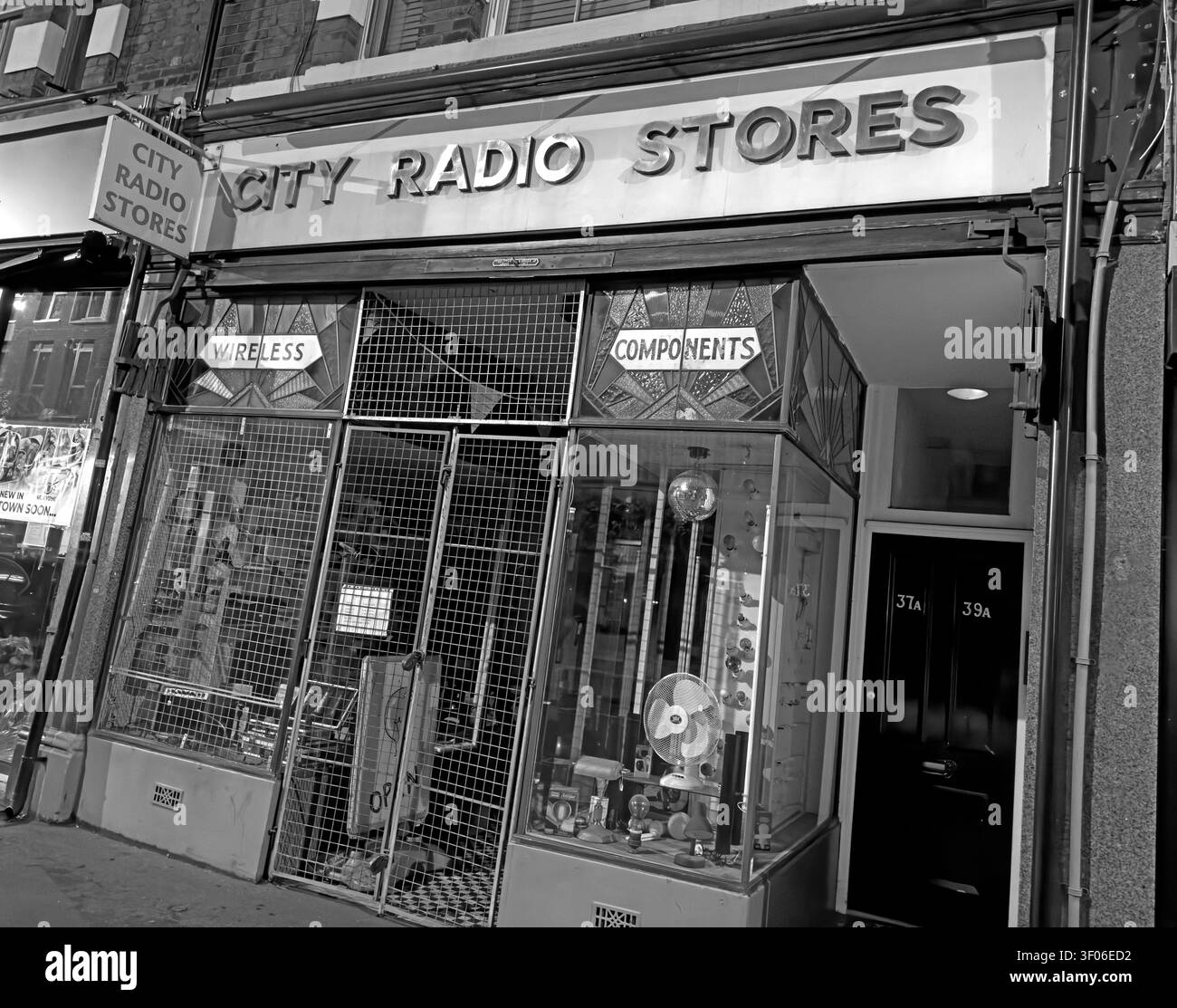
Image details
Contributor:
Tony SmithImage ID:
3F06ED2File size:
100.6 MB (4.2 MB Compressed download)Releases:
Model - no | Property - noDo I need a release?Dimensions:
6684 x 5263 px | 56.6 x 44.6 cm | 22.3 x 17.5 inches | 300dpiDate taken:
27 November 2023Location:
City Radio Stores, 37 Bond Street, Ealing, London, England, UK, W5 5ASMore information:
Black and white editorial street photograph shows the distinctive frontage of City Radio Stores on Bond Street in Ealing, west London. The shopfront carries large raised lettering above the windows, with smaller signs for wireless and components still visible in the display area. Metal security grilles, old display cabinets, boxed goods, electrical parts, domestic items and a fan in the window all add to the sense of an independent specialist retailer from a different era of the high street. City Radio Stores was a long-running Ealing electrical and radio business, reported locally as having traded on Bond Street since 1929 before closing after almost a century. Its frontage has strong visual appeal because of the surviving period character: bold signage, narrow display windows, angular decorative glass, shop-door numbering and a street-level presence very different from modern chain retail. The monochrome treatment suits the subject well, giving the image an archival feel and emphasising the textures of glass, metal, brick, lettering and pavement. The picture is useful for editorial themes around disappearing independent shops, the decline of specialist electronics retailers, radio history, vintage wireless equipment, components, repair culture, analogue technology, Ealing heritage, London high streets, Art Deco shopfronts, small business closure, local memory and changing patterns of retail. It also works for wider stories about the loss of traditional technical expertise from town centres, the shift from repair and parts counters to online shopping, and the survival of historic shop signs as part of neighbourhood identity. The image has particular relevance for features on west London heritage, old electrical stores, twentieth-century consumer technology and the changing face of British shopping streets.

