
Roadworks with Tayside Contracts excavator and construction equipment on Union Street Dundee city street in Scotland, UK.
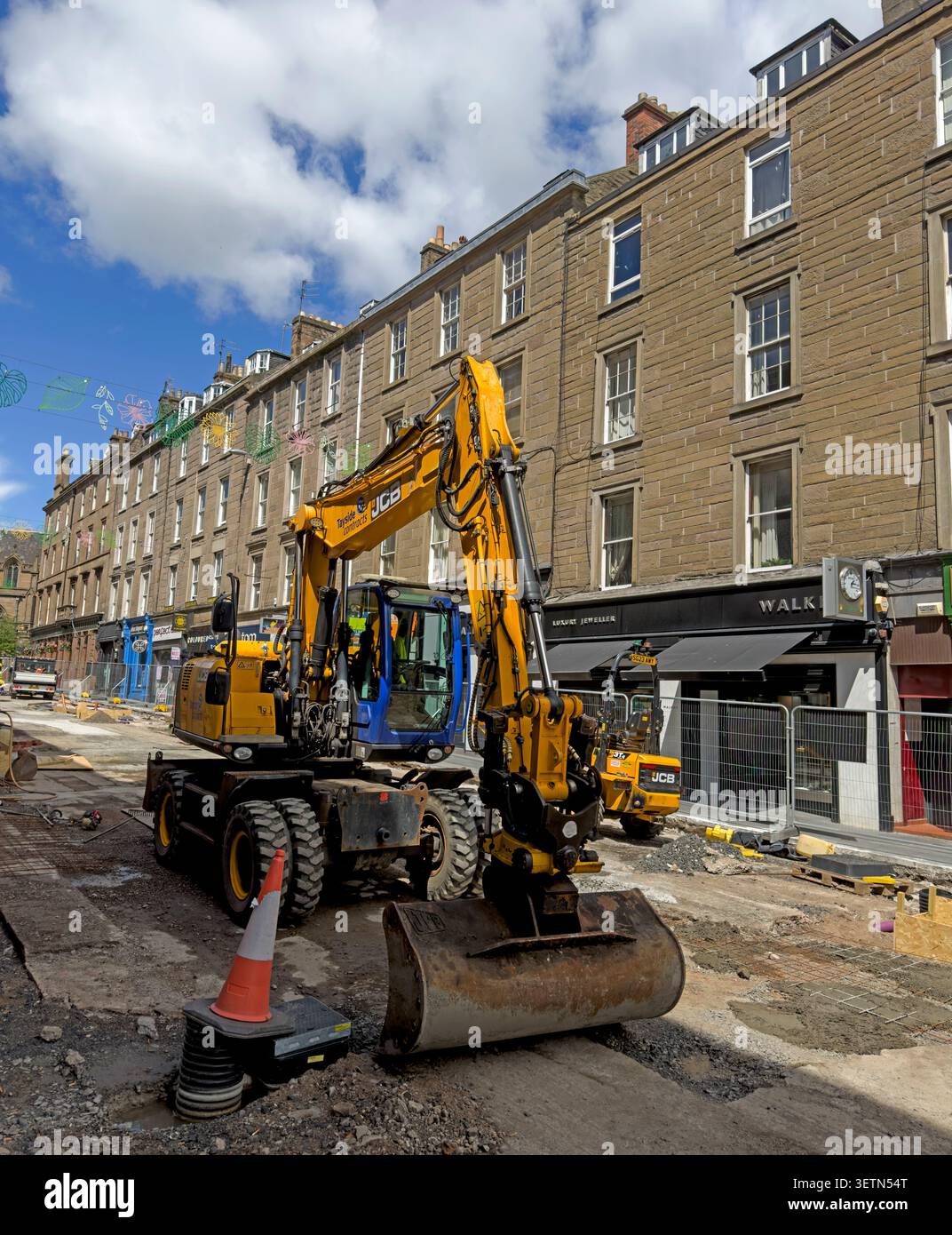
Image details
Contributor:
Tony SmithImage ID:
3ETN54TFile size:
94.6 MB (4.2 MB Compressed download)Releases:
Model - no | Property - noDo I need a release?Dimensions:
5223 x 6328 px | 44.2 x 53.6 cm | 17.4 x 21.1 inches | 300dpiDate taken:
10 June 2026Location:
Union Street, Dundee, Scotland, UK, DD1 4BHMore information:
. Roadworks with Tayside Contracts excavator and construction equipment on Union Street Dundee city street in Scotland, UK. Photographed on 10 June 2026. The recorded location is Union Street, Dundee, Scotland, UK, DD1 4BH. A wheeled excavator stands beside cones and an open section of roadway while surrounding stone tenements, shops and parked vehicles remain in use. The combination of heavy machinery and occupied historic buildings clearly shows the practical challenges of carrying out infrastructure work in a dense urban environment. Seen through port machinery, the earlier context is that construction sites became increasingly controlled environments during the twentieth century, with access gates, turnstiles, personal protective equipment and formal safety management replacing more informal working practices. For working life, the historical context is that industrial buildings and machinery preserve the material history of manufacturing: steam power, engineering, mining, textiles, ceramics and mass production transformed both the economy and the physical character of towns; Surviving equipment is now studied as industrial archaeology. Looking at public realm, the longer history is that street furniture is often overlooked until it changes; Signs, bollards, crossings and road markings reveal the regulatory framework that organises traffic and pedestrian movement at a particular moment. The 2026 relevance of port machinery comes from the fact that port and construction cranes also illustrate the continuing shift towards larger, more mechanised logistics and building systems, while historic dockside equipment is increasingly preserved as industrial heritage. For working life, the 2026 context is that industrial heritage is increasingly tied to regeneration, tourism, conservation and skills education, particularly in former manufacturing towns seeking new uses for historic sites.

