
Yellow gas utility survey markings painted on a residential pavement in Britain, UK.
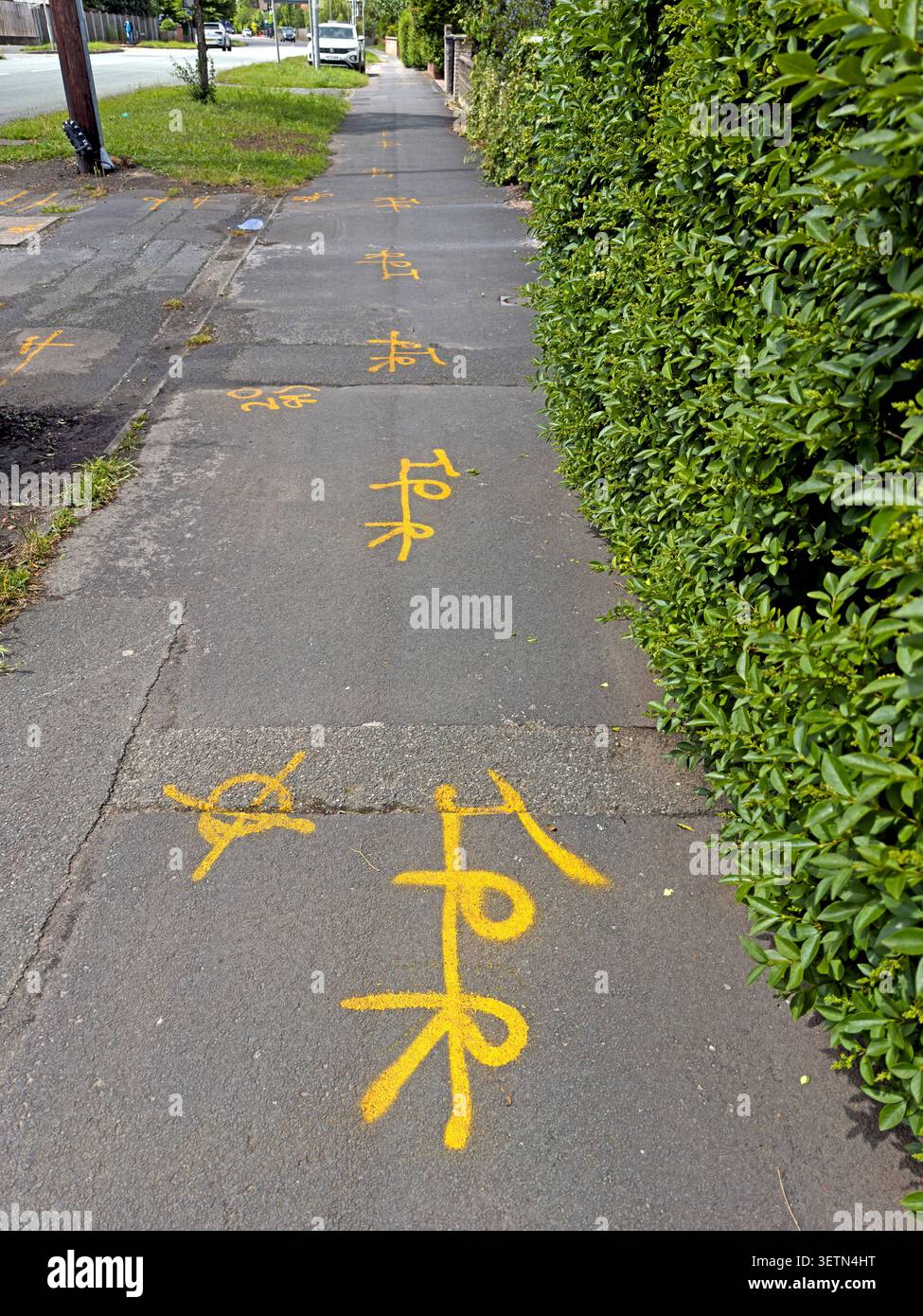
Image details
Contributor:
Tony SmithImage ID:
3ETN4HTFile size:
78.9 MB (5.4 MB Compressed download)Releases:
Model - no | Property - noDo I need a release?Dimensions:
4548 x 6064 px | 38.5 x 51.3 cm | 15.2 x 20.2 inches | 300dpiDate taken:
8 June 2026Location:
Britain, UKMore information:
. Yellow gas utility survey markings painted on a residential pavement in Britain, UK. Photographed on 8 June 2026. Numerous arrows, letters and symbols have been sprayed across the footway beside hedges and front gardens, indicating the position or route of underground gas infrastructure before excavation or engineering work. Utility companies and contractors commonly use temporary colour-coded pavement markings to identify buried services and reduce the risk of accidental damage. The repeating yellow paint creates a strong visual pattern along the otherwise ordinary suburban footpath. In relation to neighbourhood, historical context shows that residential architecture is closely tied to planning and social change; Post-war estates, high-rise blocks, gated developments and city-centre apartments reveal assumptions about land values, transport, security and the relationship between private and public space. For the story of production technology, it is useful to note that industrial heritage links architecture and machinery with the people who worked in mines, potteries, foundries and factories; As production declined or modernised, many sites were demolished, adapted or preserved as museums and regeneration projects. As of 2026, the position for neighbourhood is that housing remains one of the UK's most politically significant issues , with sustained pressure to increase social and affordable supply as well as private housebuilding; Images of estates, new-build sites and apartment schemes are directly relevant to affordability, planning and regeneration. For present-day production technology, 2026 is significant because former industrial sites continue to be repurposed for housing, offices and cultural attractions; Historic machinery and surviving fabric therefore illustrate both deindustrialisation and current debates about adaptive reuse, local identity and heritage-led regeneration.

