
Wide panorama of the interior of Leeds Corn Exchange in Leeds, West Yorkshire, England, UK.
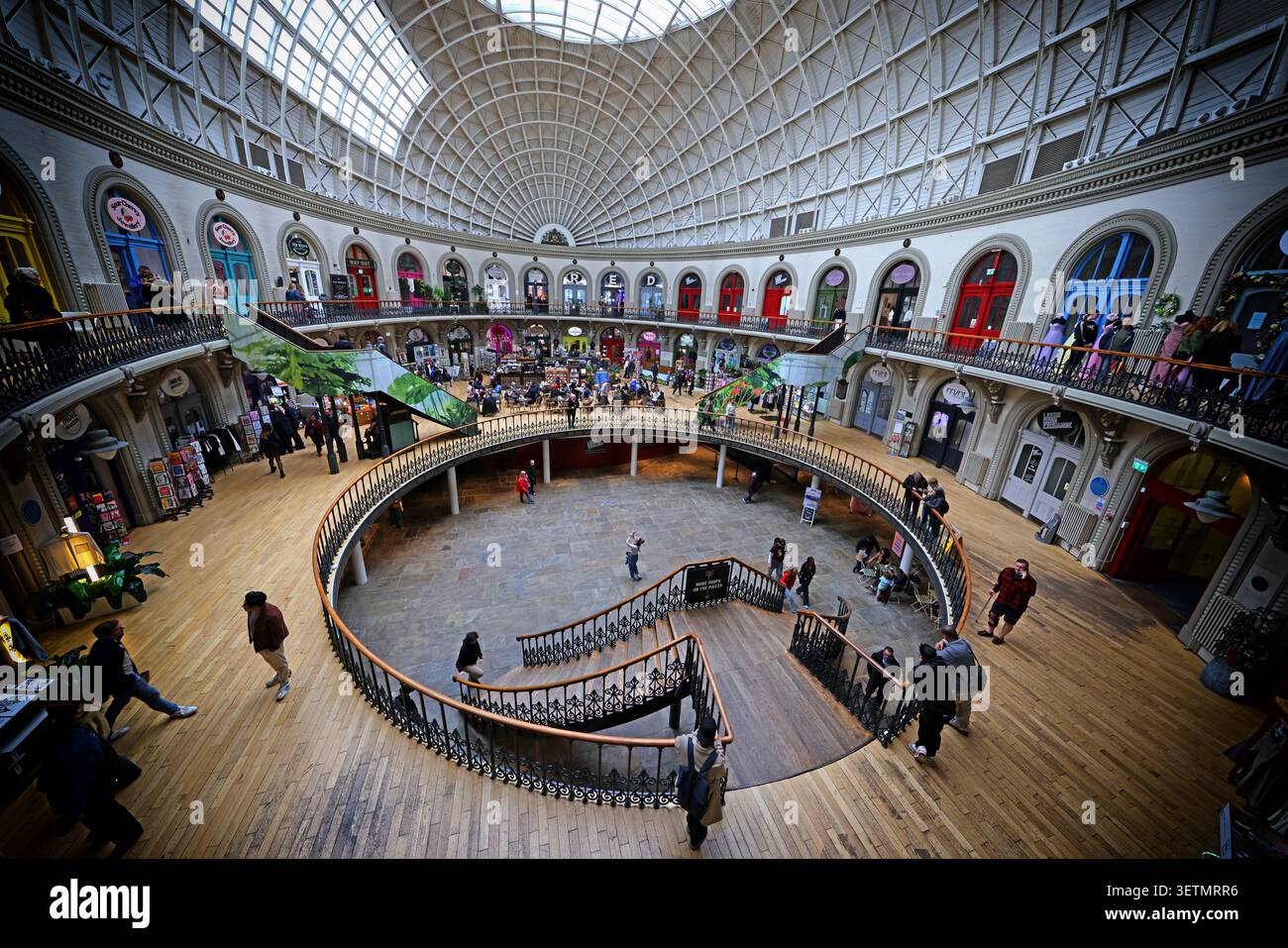
Image details
Contributor:
Tony SmithImage ID:
3ETMRR6File size:
121.9 MB (6.3 MB Compressed download)Releases:
Model - no | Property - noDo I need a release?Dimensions:
7992 x 5331 px | 67.7 x 45.1 cm | 26.6 x 17.8 inches | 300dpiDate taken:
16 May 2026Location:
Leeds Corn Exchange, Call Lane, Leeds LS1 7BR, West Yorkshire, England, UKMore information:
. Wide panorama of the interior of Leeds Corn Exchange in Leeds, West Yorkshire, England, UK. Photographed on 16 May 2026. The recorded location is Leeds Corn Exchange, Call Lane, Leeds LS1 7BR, West Yorkshire, England, UK. The image looks down into the circular trading floor from an upper level and shows the dramatic domed roof, sweeping balconies, independent shops and visitors moving through the historic Victorian building. Designed by architect Cuthbert Brodrick and completed in the nineteenth century, Leeds Corn Exchange is one of the city's most distinctive commercial landmarks and today houses independent retailers, food businesses and events. The wide-angle perspective emphasises the scale and geometry of the interior. The historical setting for regeneration is that buildings are often the most durable evidence of former institutions and businesses; Brickwork, stonework, windows, entrances and signs can survive changes of ownership or use, allowing photography to document architectural style as well as the evolution of a street or district. Seen through visitor destination, the earlier context is that travel imagery becomes historical evidence when transport, signage or the visitor economy changes; A familiar destination photographed years earlier can reveal redevelopment, altered businesses and changing patterns of access. In the 2026 discussion of regeneration, reuse of existing buildings is increasingly discussed alongside embodied carbon, heritage conservation and town-centre regeneration; Photographs of older façades and converted premises can illustrate the practical tension between preservation, energy performance and new development. The 2026 relevance of visitor destination comes from the fact that current travel trends increasingly emphasise rail, cycling, walking and lower-carbon itineraries alongside conventional car and air travel; Integrated transport scenes therefore have growing relevance to sustainable tourism and destination.

