
LNER Azuma train standing at Dundee railway station in Dundee, Scotland, UK.
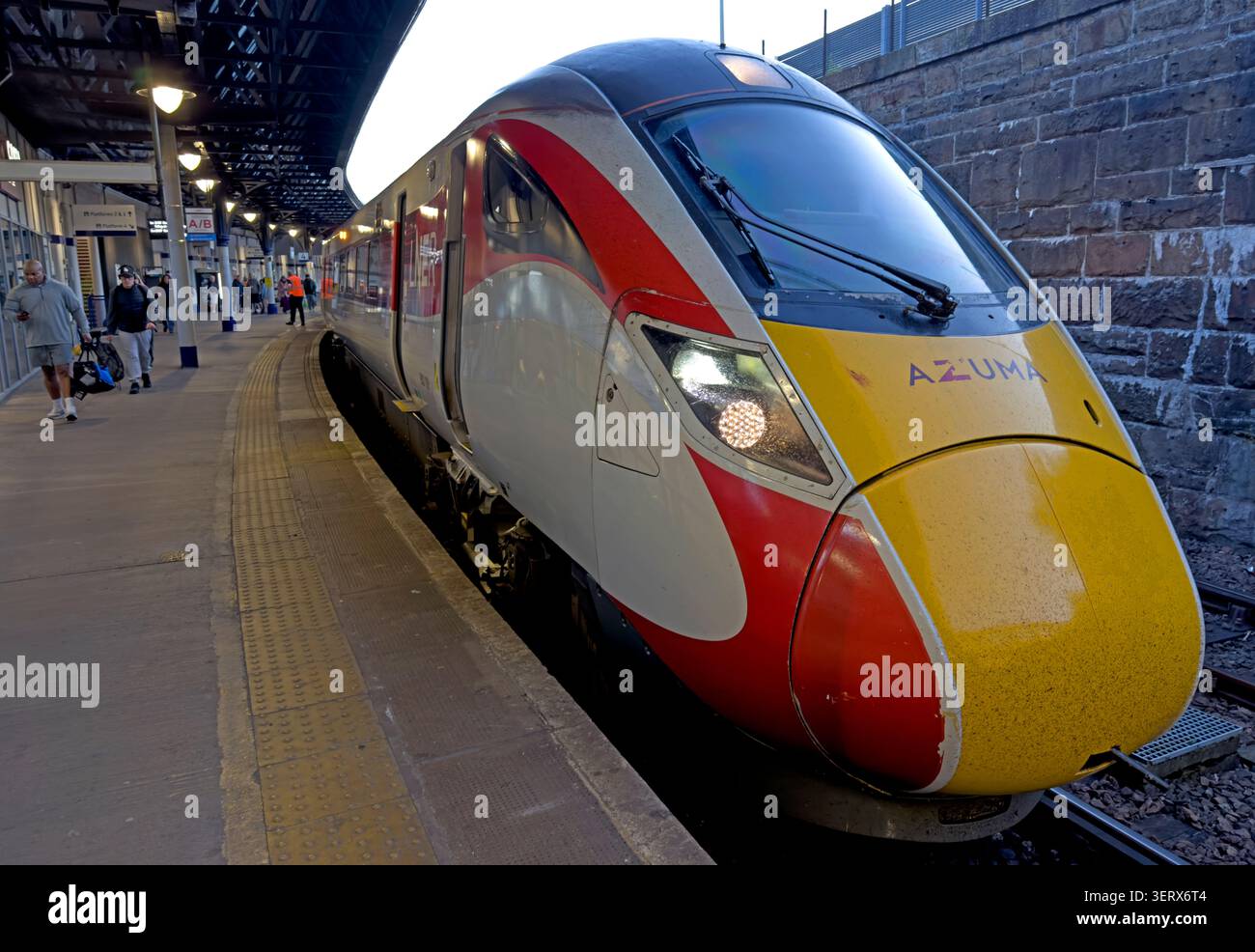
Image details
Contributor:
Tony SmithImage ID:
3ERX6T4File size:
111 MB (2.6 MB Compressed download)Releases:
Model - no | Property - noDo I need a release?Dimensions:
7500 x 5172 px | 63.5 x 43.8 cm | 25 x 17.2 inches | 300dpiDate taken:
8 June 2026Location:
Dundee Railway Station, South Union Street, Dundee DD1 4BY, Scotland, UKMore information:
. LNER Azuma train standing at Dundee railway station in Dundee, Scotland, UK. Photographed on 8 June 2026. The recorded location is Dundee Railway Station, South Union Street, Dundee DD1 4BY, Scotland, UK. The streamlined red, white and grey intercity train is shown close-up at the platform with passengers and station structures visible along the side. LNER Azuma trains operate long-distance services on the East Coast Main Line between Scotland and England, linking Dundee with major cities including Edinburgh and London. Within the history of platform, railways transformed British towns from the nineteenth century onwards, concentrating passenger movement around stations while creating new suburbs, goods yards and industrial connections; Station buildings, platforms, signals and rolling stock can date a transport scene as clearly as surrounding architecture. Against the 2026 backdrop for platform, rail reform, fares, accessibility and passenger information remain central issues as government develops the Great British Railways model; Photographs of stations, trains and earlier operating equipment can illustrate both current public transport and the rapid disappearance of previous brands and systems. Further subject-specific language includes rail transport, passenger railway, train service, rail infrastructure, station architecture, rail heritage, commuter travel, inter-city rail, signalling, ticketing, IMG_0953, travel, Scottish, technology, Hitachi, reliable, and reliability. In relation to public transport, historical context shows that railways transformed British towns from the nineteenth century onwards, concentrating passenger movement around stations while creating new suburbs, goods yards and industrial connections; Station buildings, platforms, signals and rolling stock can date a transport scene as clearly as surrounding architecture. The image also relates directly to rail transport, passenger railway and train service.

