
Wrexham football mural beside the STŌK Cae Ras stadium redevelopment in Wrexham, Wales, UK.
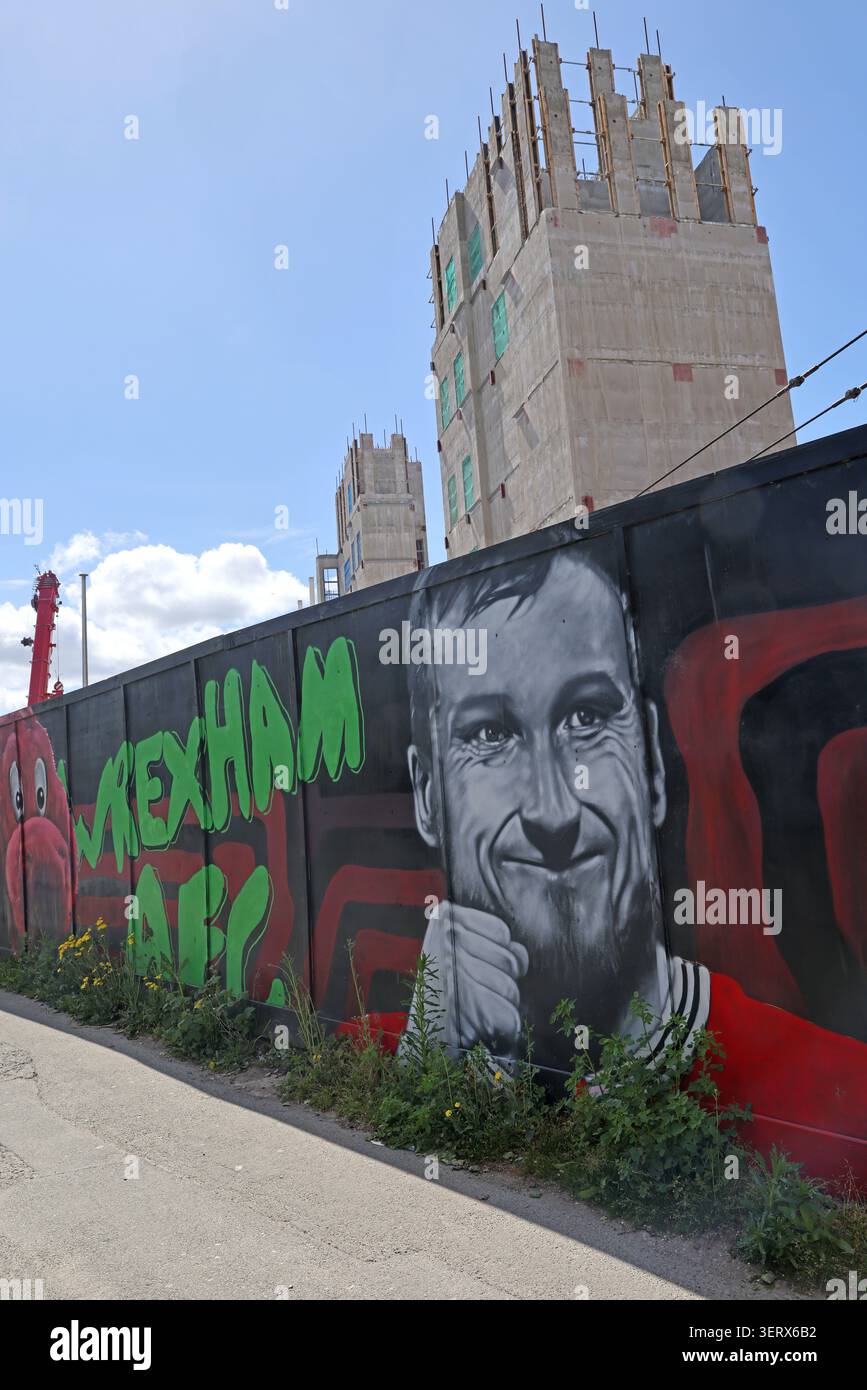
Image details
Contributor:
Tony SmithImage ID:
3ERX6B2File size:
128.1 MB (4 MB Compressed download)Releases:
Model - no | Property - noDo I need a release?Dimensions:
5464 x 8192 px | 46.3 x 69.4 cm | 18.2 x 27.3 inches | 300dpiDate taken:
17 May 2026Location:
STŌK Cae Ras, Mold Road, Wrexham LL11 2AH, Wales, UKMore information:
. Wrexham football mural beside the STÅŒK Cae Ras stadium redevelopment in Wrexham, Wales, UK. Photographed on 17 May 2026. The recorded location is STÅŒK Cae Ras, Mold Road, Wrexham LL11 2AH, Wales, UK. The large painted portrait is set against green and red club colours on construction hoardings near the Racecourse Ground, with stadium works and the distinctive tower structures visible behind. The juxtaposition of portrait art and active construction creates a strong visual record of a city reshaped by renewed international interest in its football club. Wrexham AFC, founded in 1864, is one of the oldest professional football clubs in the world. Its Racecourse Ground, now known as STōK Cae Ras, is recognised as the world's oldest international football stadium still hosting international matches. The club's global profile rose dramatically after its 2021 takeover by actors Ryan Reynolds and Rob McElhenney. Looking at supporters, the longer history is that british sports venues often have histories extending far beyond their current appearance, with rebuilt stands, sponsorship names and safety standards reflecting the professionalisation and commercial growth of spectator sport. The background to artwork is that public art turns streets and buildings into records of local culture; Murals, statues and memorial sculpture can commemorate people and events, celebrate industry, respond to politics or simply enliven public space, while materials and style often identify a particular era. Within the history of turnstile, industrial cranes transformed ports by mechanising the movement of heavy cargo from ship to quay; As containerisation changed dock work, many traditional cranes disappeared or became preserved landmarks within regenerated waterfronts. In 2026, supporters remains relevant because sporting imagery has relevance beyond results, illustrating club identity, fan culture, major-event economics, venue investment and the role of sport in local.

