
Warrington Pride 2026 entertainment and visitors inside Warrington Market, Cheshire, England, UK.
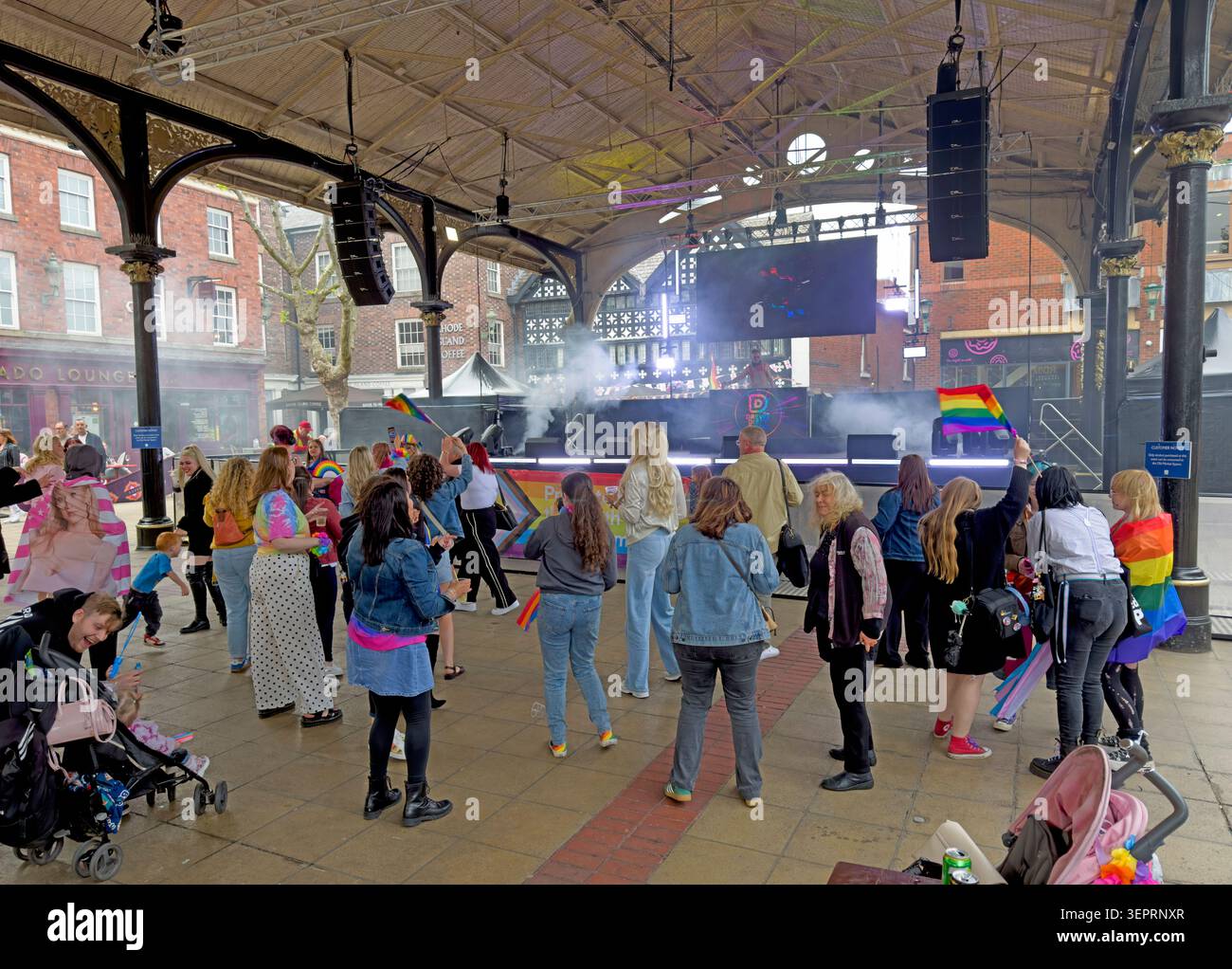
Image details
Contributor:
Tony SmithImage ID:
3EPRNXRFile size:
96.6 MB (3.8 MB Compressed download)Releases:
Model - no | Property - noDo I need a release?Dimensions:
6860 x 4922 px | 58.1 x 41.7 cm | 22.9 x 16.4 inches | 300dpiDate taken:
13 June 2026Location:
Warrington Market, Time Square, Warrington, Cheshire, England, UKMore information:
. Warrington Pride 2026 entertainment and visitors inside Warrington Market, Cheshire, England, UK. Photographed on 13 June 2026. The recorded location is Warrington Market, Time Square, Warrington, Cheshire, England, UK. People gather beneath the market's large vaulted roof around a performance area with colourful lighting and rainbow-themed details, combining the atmosphere of a Pride festival with the busy everyday setting of the modern market hall. The mix of shoppers, Pride visitors and performance infrastructure shows how the event is integrated into mainstream public venues across Warrington rather than operating as a separate private gathering. Looking at place-making, the longer history is that place-based photography helps document the relationship between named locations and the people or businesses associated with them, especially where formal architectural records are limited. The background to recreation is that commercial entertainment continually reinvents itself through new technologies and formats, from cinemas and video rental to escape rooms, themed attractions and interactive gaming. Within the history of protest, public campaigning forms part of democratic culture, documenting how people express support, opposition and identity outside formal institutions; Temporary signs and banners are especially useful historical evidence because they often disappear immediately after an election or referendum. In 2026, place-making remains relevant because current place-making policy increasingly emphasises distinctive local identity rather than generic development, so small landmarks and community businesses can become important parts of how an area is represented. Current 2026 context around recreation is that experience-led leisure such as escape rooms and themed attractions competes alongside streaming and gaming for discretionary spending, making town-centre entertainment an important part of the post-retail economy.

