
Pathways to Recovery advert on a BT call box in Latchford, Warrington, promoting local free drug and alcohol support, help for addicts & families
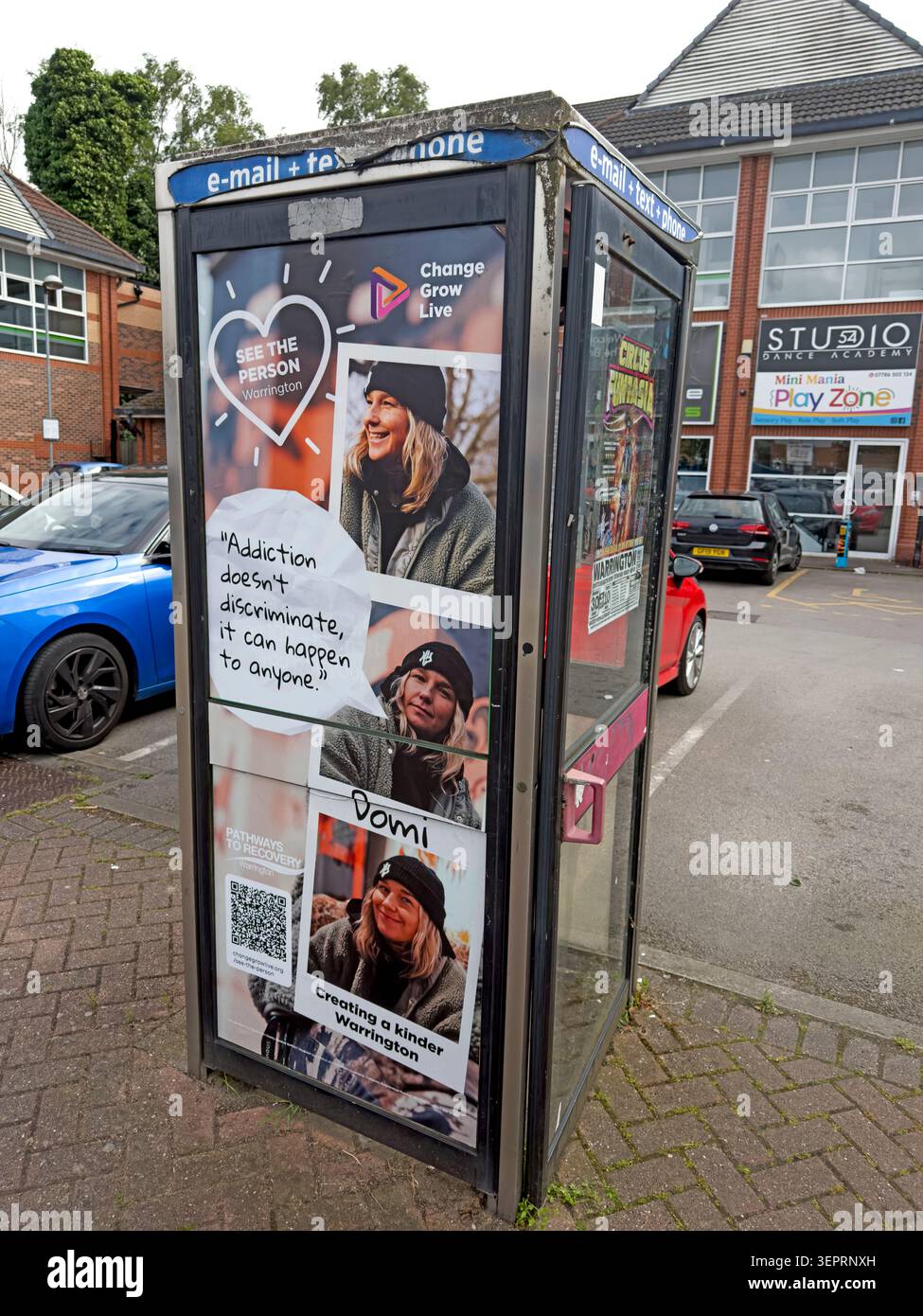
Image details
Contributor:
Tony SmithImage ID:
3EPRNXHFile size:
78.9 MB (3 MB Compressed download)Releases:
Model - no | Property - noDo I need a release?Dimensions:
4548 x 6064 px | 38.5 x 51.3 cm | 15.2 x 20.2 inches | 300dpiDate taken:
13 June 2026Location:
Maybrook Place, Latchford East, Warrington, Cheshire, England, UK, WA4 1JRMore information:
Public BT telephone box in Latchford, Warrington, carries a Pathways to Recovery advertising campaign encouraging people affected by drug or alcohol dependence to seek support. The poster features portraits of people in recovery beside the messages “See the person”, “Addiction doesn’t discriminate, it can happen to anyone” and “Creating a kinder Warrington”. A QR code provides further information, while the Change Grow Live branding identifies the organisation delivering the service. Pathways to Recovery is Warrington’s free and confidential drug and alcohol service for adults, families and carers. It offers advice, assessment, treatment and practical help to people who want to reduce or stop their use of alcohol or drugs. Support can include one-to-one work, medically assisted treatment, harm reduction, health checks, recovery groups, peer support, help for relatives and access to wider services. Change Grow Live describes its approach as non-judgemental and focused on helping each person regain control and work towards personal goals. The roadside call box gives the campaign public visibility in a community setting. Behind it are shops and businesses at The Bridge Shopping Centre in Latchford East, including the visible Mini Mania Play Zone signage. The image can illustrate substance misuse, addiction recovery, public health campaigning, community outreach, harm reduction, alcohol dependency, drug treatment, mental wellbeing, social care, voluntary-sector services and local health partnerships. It also records how outdoor advertising and QR codes are used to reach people discreetly in neighbourhood locations. The wording challenges stigma by stressing that addiction can affect anyone and by asking viewers to recognise the individual rather than the condition. The photograph is relevant to compassion, recovery, treatment access, health inequalities, homelessness, family support and the social impact of substance misuse in British towns.

