
SplitSave rail ticket feature in the Trainline app displayed on an iPhone over a railway map, multiple singles for cheaper travel via the mobile app
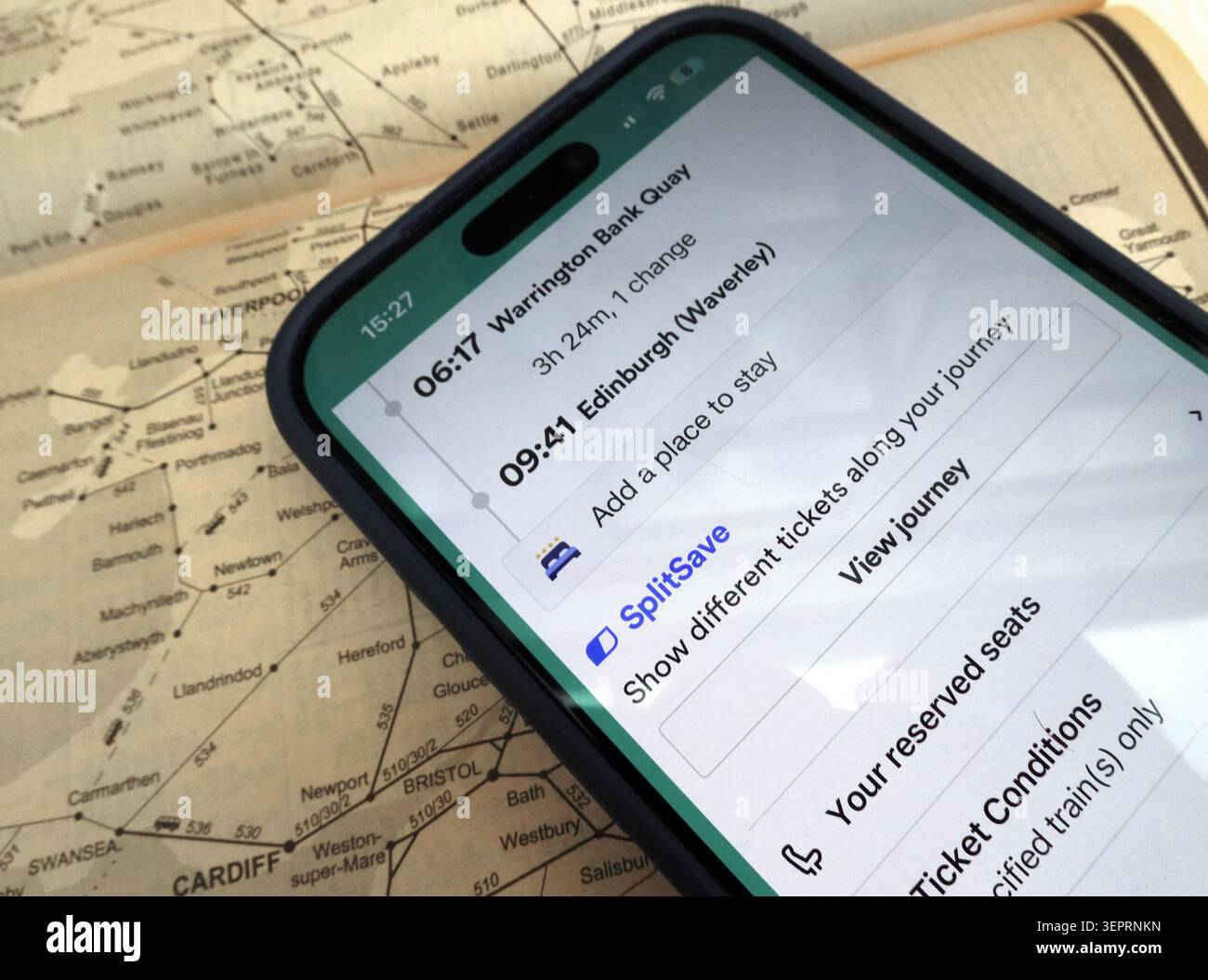
Image details
Contributor:
Tony SmithImage ID:
3EPRNKNFile size:
51.3 MB (1.8 MB Compressed download)Releases:
Model - no | Property - noDo I need a release?Dimensions:
4912 x 3648 px | 41.6 x 30.9 cm | 16.4 x 12.2 inches | 300dpiDate taken:
12 June 2026Location:
United KingdomMore information:
Close-up editorial photograph of the Trainline mobile app displayed on an Apple iPhone showing the SplitSave feature during a rail journey search between Warrington Bank Quay and Edinburgh Waverley, positioned over a printed railway network map. SplitSave automatically identifies journeys where buying multiple separate tickets for different sections of the same train can be cheaper than purchasing a single through ticket, while passengers normally remain on the same service throughout the journey. The technology analyses thousands of fare combinations across the National Rail network to identify potential savings, simplifying what was once a time-consuming manual process undertaken by experienced rail travellers. Split ticketing has become increasingly popular in Britain as passengers seek to reduce travel costs during the continuing cost of living pressures and rising rail fares. Mobile apps such as Trainline have transformed rail ticket retailing by combining journey planning, fare comparison, digital ticketing, seat reservations and live travel information within a single smartphone application. The image also reflects wider changes taking place across Britain’s railway industry, including increased use of e-tickets, digital passenger services, mobile payments and app-based travel management. Split ticketing has generated debate within the rail industry because, although it is entirely legitimate under National Rail Conditions of Travel where ticketing rules are followed, it exposes the complexity of Britain’s rail fare structure and has fuelled calls from passenger groups, transport campaigners and politicians for simpler, more transparent rail pricing. The editorial image therefore illustrates digital innovation, consumer technology, transport apps, fare comparison, travel savings, railway ticketing, public transport, rail fare reform, journey planning and the continuing evolution of ticket purchasing across the UK rail network.

