
Multiple orange rail tickets show how split ticketing can reduce the train journey cost of travelling between England and Scotland.
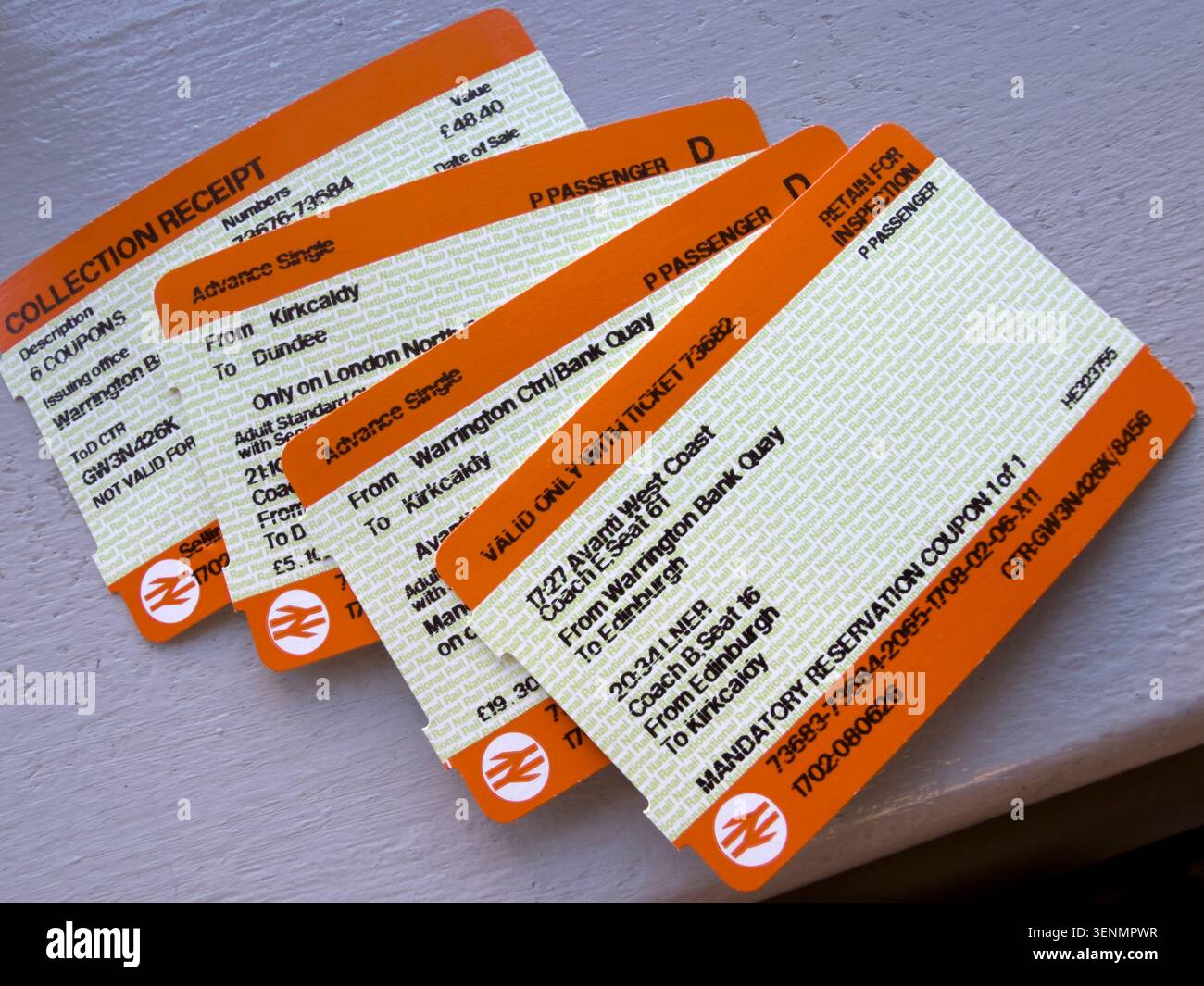
Image details
Contributor:
Tony SmithImage ID:
3ENMPWRFile size:
47.6 MB (1.5 MB Compressed download)Releases:
Model - no | Property - noDo I need a release?Dimensions:
4712 x 3534 px | 39.9 x 29.9 cm | 15.7 x 11.8 inches | 300dpiDate taken:
8 June 2026Location:
Parker Street, Warrington, Cheshire, England, WA1 1LWMore information:
A group of printed orange-edged British railway tickets illustrates split ticketing on a long-distance journey from Warrington Bank Quay in Cheshire to Dundee in Scotland. The visible coupons include separate travel and seat-reservation documents for different stages, with routing through Edinburgh and Kirkcaldy. Different trains, reserved seats and ticket conditions turn one continuous northbound trip into a bundle of individual tickets. Split ticketing means buying two or more valid tickets for sections of the same journey instead of one through fare. Passengers may remain on the same train when it calls at every station where one ticket ends and the next begins, although this example also involves changes of train and differing reservations. The method can produce substantial savings because British rail prices are influenced by route, operator, time restrictions, availability and the combination of Advance, Off-Peak or other fares. The photograph provides a clear example of the complexity passengers have historically faced when seeking the lowest price. A traveller may need several coupons, remember which ticket applies to each section, use the correct booked service where an Advance fare is involved and sometimes move between reserved seats. Printed collection receipts and reservation inserts add further paperwork, even though the tickets collectively cover a single journey. This image is suitable for editorial coverage of UK rail fares, split-ticket savings, the cost of train travel, passenger confusion, railway privatisation, fragmented ticketing, consumer budgeting, domestic tourism and alternatives to driving or flying. It also provides context for rail reform, under which Great British Railways is intended to simplify fares and offer passengers a unified ticketing platform. The physical tickets record an era before smartphone e-tickets became dominant and show why passengers and government have called for a simpler and fairer fares system

