
Elevated view over Haymarket station platforms and a train in Edinburgh, where constrained approaches limit rail network capacity.
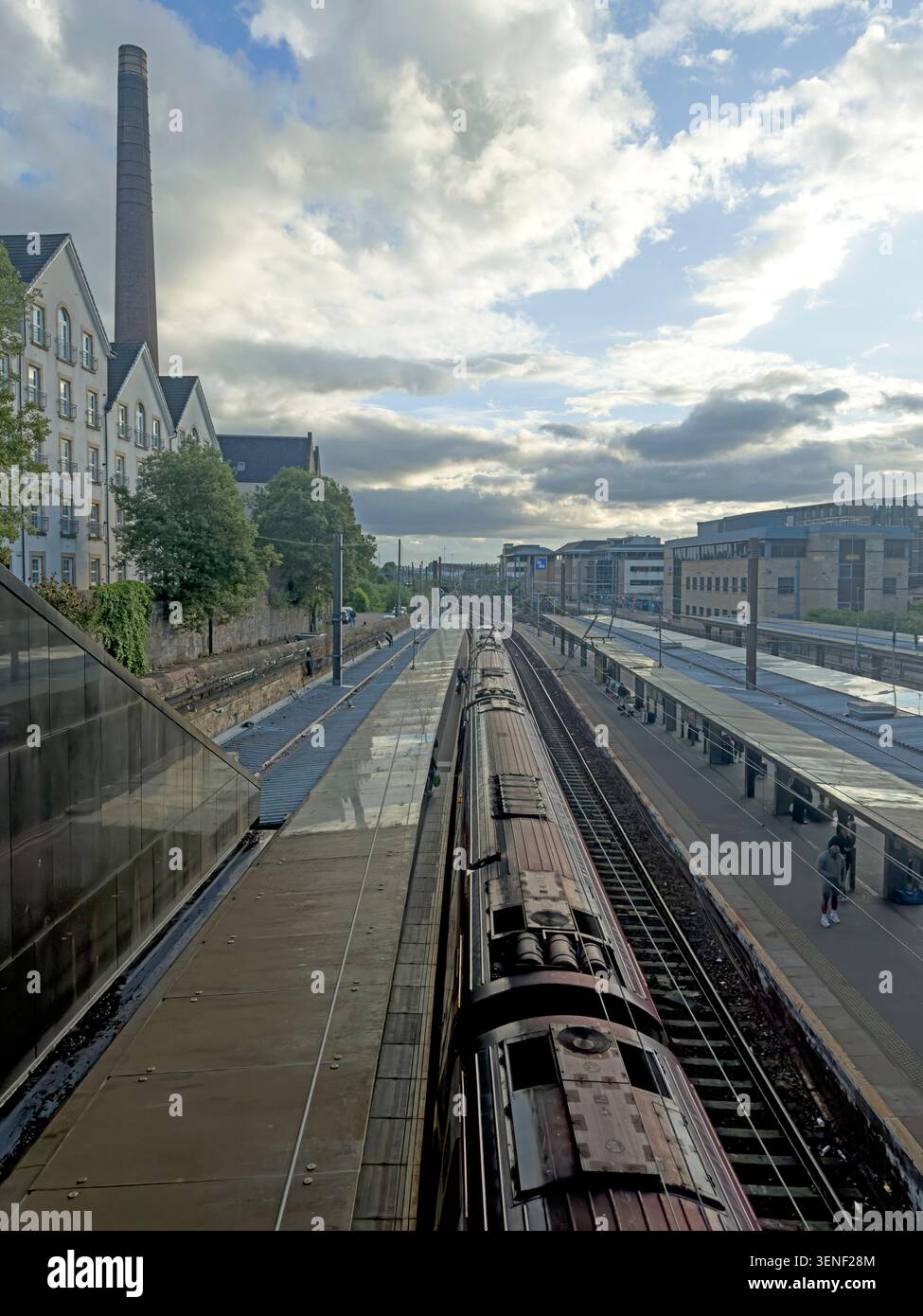
Image details
Contributor:
Tony SmithImage ID:
3ENF28MFile size:
105.6 MB (3.1 MB Compressed download)Releases:
Model - no | Property - noDo I need a release?Dimensions:
5262 x 7016 px | 44.6 x 59.4 cm | 17.5 x 23.4 inches | 300dpiDate taken:
8 June 2026Location:
Haymarket Terrace, Edinburgh, City of Edinburgh, Scotland, EH12 5EY,More information:
An elevated view looks east across the platforms and tracks at Haymarket station in Edinburgh, Scotland, with a passenger train standing below the footbridge. Long platform canopies, overhead electrification equipment and running lines form a strong transport composition, while former industrial buildings and a tall chimney on the left recall the historic character of the Haymarket and Dalry area. Broken cloud, blue sky and low evening or late-afternoon sunlight create reflections on the train roof and station surfaces. Haymarket is Edinburgh’s main rail station west of Waverley and a major interchange for commuter, regional and long-distance services. Trains passing through connect the capital with Glasgow, Fife, Stirling, Perth, Dundee, Aberdeen, western Scotland and destinations in England. The station is managed by ScotRail, carries the National Rail code HYM and connects with Edinburgh Trams, local buses, taxis and airport services. The railway approaches through Haymarket form a strategically important but physically constrained part of Scotland’s network. Transport Scotland has described the approaches to Haymarket and Edinburgh Waverley as constricted, limiting straightforward increases in rail capacity. This does not mean that every delay is caused at Haymarket, but the concentration of routes through a restricted urban corridor means disruption, engineering work or timetable conflicts can affect services over a wider area. Haymarket was substantially redeveloped through the Edinburgh Glasgow Improvement Programme. The modern station was designed to accommodate forecast passenger growth, improve circulation and accessibility, and integrate with the tram network. This image is useful for editorial coverage of railway capacity, infrastructure investment, network bottlenecks, electrification, passenger transport, sustainable travel, Scottish rail policy and the operational challenge of expanding train services through a densely built city.

