
1937 Jenny Spinner string-laying machine displayed at Verdant Works, Dundee, illustrating the city’s historic jute industry and rope making
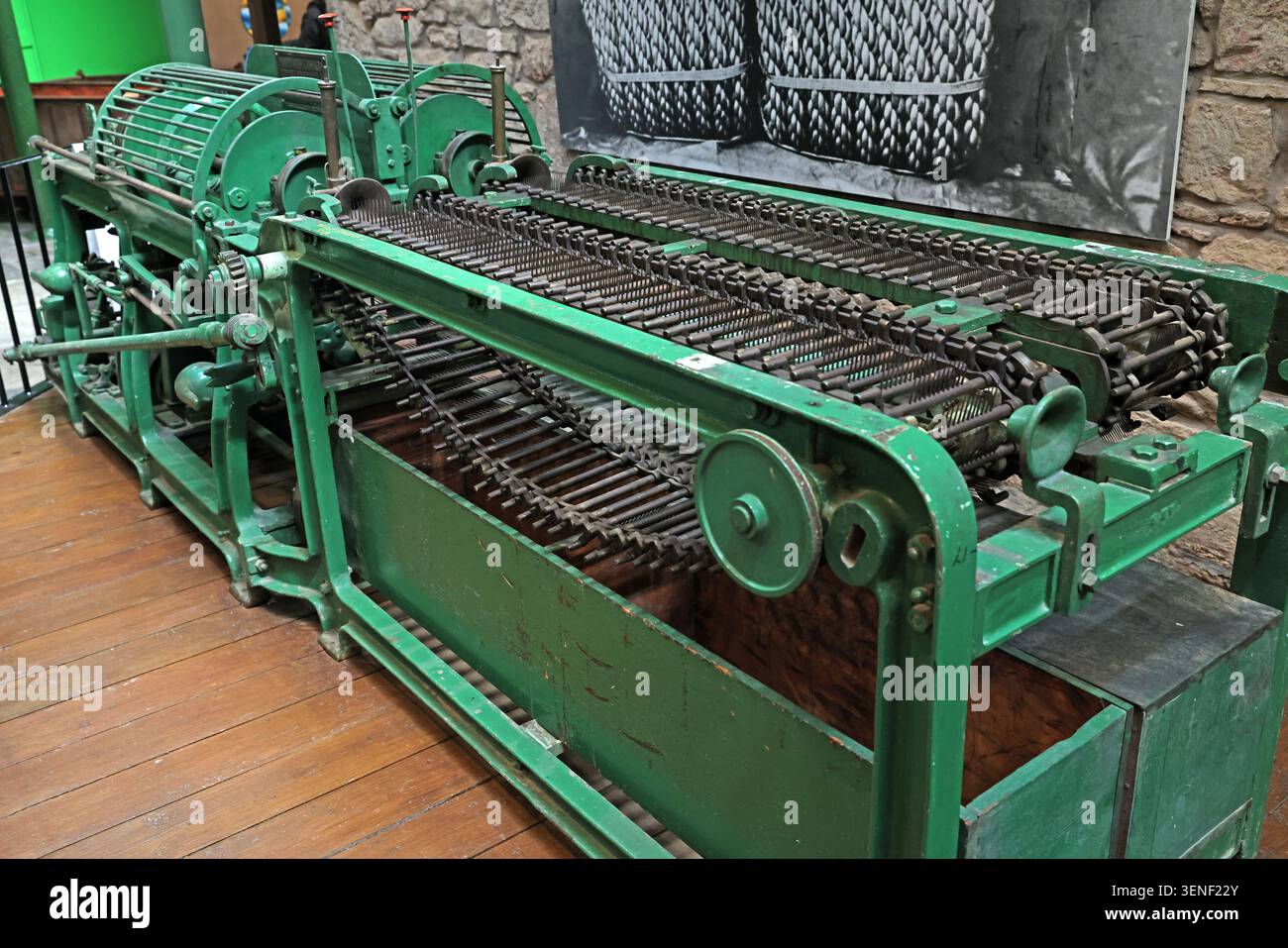
Image details
Contributor:
Tony SmithImage ID:
3ENF22YFile size:
110 MB (4.8 MB Compressed download)Releases:
Model - no | Property - noDo I need a release?Dimensions:
7592 x 5064 px | 64.3 x 42.9 cm | 25.3 x 16.9 inches | 300dpiDate taken:
9 June 2026Location:
Verdant Works, West Henderson’s Wynd, Dundee, DD1 5BT, Scotland, UKMore information:
Preserved Jenny Spinner, or string-laying machine, is displayed at Verdant Works, Dundee’s museum of jute and industrial history. The substantial green-painted machine contains bobbin shafts, chains, gears, pulleys and a long conveyor fitted with rows of small projecting spikes. These components guided and arranged strands of yarn as they were combined into string or light rope for commercial and industrial use. The machine was manufactured by Fairbairn, Lawson, Combe, Barbour Ltd of Leeds and Belfast and dates from 1937. It formed part of a collection of jute-processing machinery used for teaching spinning and weaving at Dundee College of Technology before entering the Dundee Heritage Trust collection. Its survival provides a detailed physical record of the engineering involved in transforming spun jute yarn into finished cordage. Jute was once central to Dundee’s economy and identity, earning the city the nickname Jutopolis. Imported raw fibre was softened, carded, spun, woven and manufactured into sacks, carpet backing, twine and other durable products. Machinery such as the Jenny Spinner demonstrates how repetitive manual processes were mechanised to achieve more consistent output and greater production speed. The close view reveals the machine’s robust steel construction, exposed drive systems and practical factory design. A historic image of rope or twine production is displayed behind the equipment, helping visitors understand its original function. The exhibit supports editorial coverage of industrial archaeology, textile technology, Scottish manufacturing, natural fibres, factory labour, engineering education and the preservation of Dundee’s internationally significant jute heritage

