
Fan of ReformUK Rob Kenyon on Norfolk Close, Hindley, Wigan WN2 4JS, rocking it with a Union Jack, Reform flag and a blue roundel
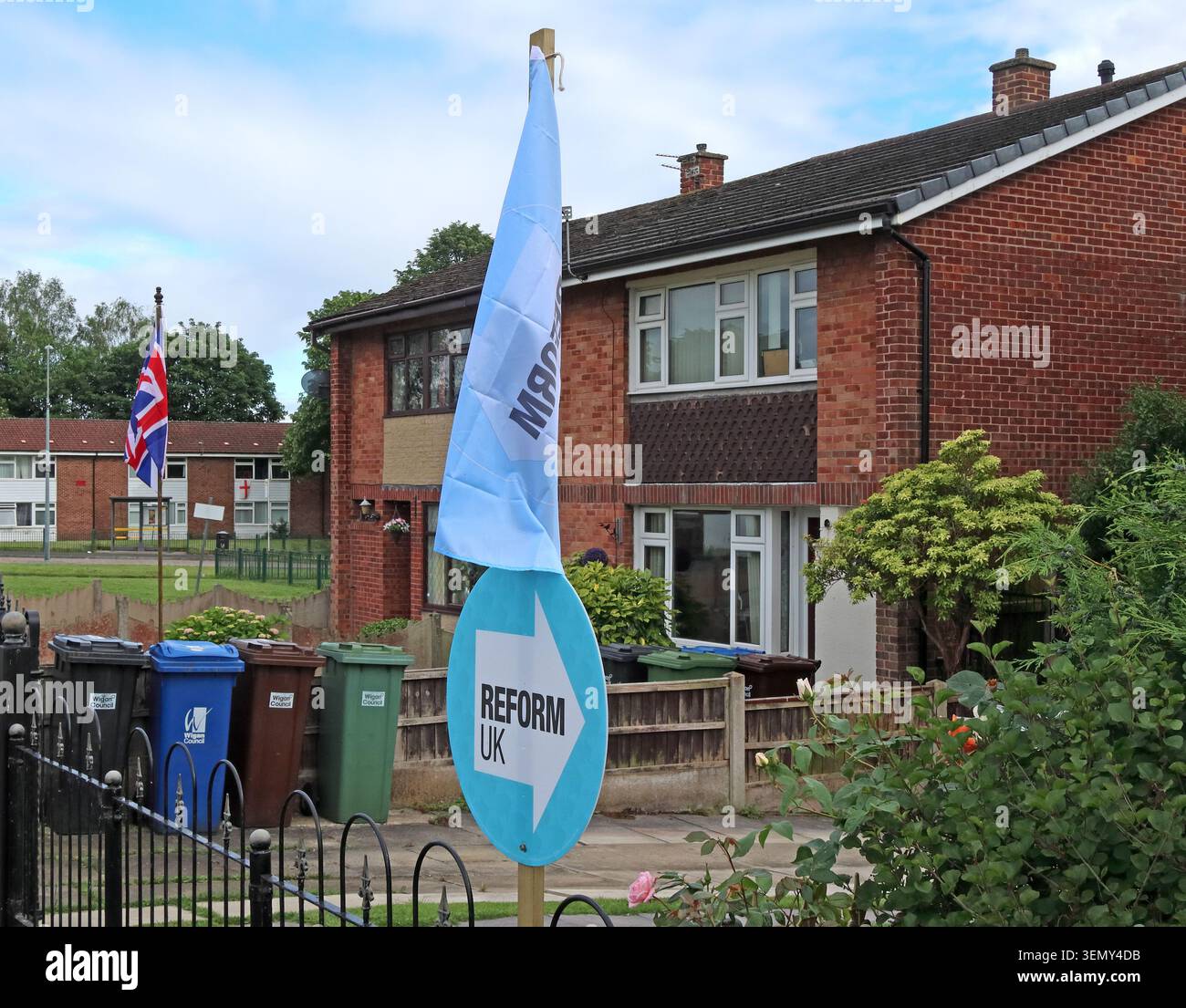
Image details
Contributor:
Tony SmithImage ID:
3EMY4DBFile size:
48.7 MB (2.1 MB Compressed download)Releases:
Model - no | Property - noDo I need a release?Dimensions:
4668 x 3648 px | 39.5 x 30.9 cm | 15.6 x 12.2 inches | 300dpiDate taken:
6 June 2026Location:
Norfolk Close, Hindley, Wigan WN2 4JSMore information:
Large Reform UK campaign placard for Rob Kenyon displayed above a residential garden in Hindley, an area within the Makerfield parliamentary constituency in Greater Manchester, England. The bright blue sign carries the wording “I’m voting Rob Kenyon” and “18th June”, alongside a candidate photograph and Reform UK branding, partly framed by garden trees and the roofline of a nearby house. The image records the street-level visibility of Reform UK during a closely watched by-election in a former Labour stronghold, where the party promoted Kenyon as a local candidate and tradesman rather than a career politician. Reform UK and several media reports described Kenyon as a plumber, and that framing was central to the party’s attempt to present him as a simpleton local working-class challenger to Andy Burnham. The photograph is useful for editorial coverage of by-election campaigning, voter allegiance, right-wing populism, northern English politics, constituency-level political identity and the contest for support in post-industrial towns around Wigan. Its value is in the domestic setting: the placard is not shown at a rally, but in a garden above ordinary housing, making the campaign message part of the visual language of a neighbourhood. The scene can illustrate stories about Reform UK’s appeal on housing estates, political branding in local streets, anti-establishment messaging, voter disillusionment, party competition on the right and the challenge to Labour in areas that historically returned Labour MPs. It also works as a broader image of contemporary British politics, where candidate posters, simple slogans and claims of local authenticity are used to build trust with residents. The picture should be used with clear editorial context, as Reform UK’s campaign, like much hard-right and populist politics in Britain, has generated controversy over immigration rhetoric, online comments and culture-war positioning

