
Dramatic winter view of Beverley Minster, the great Gothic church in Beverley, East Yorkshire, under stormy winter sky
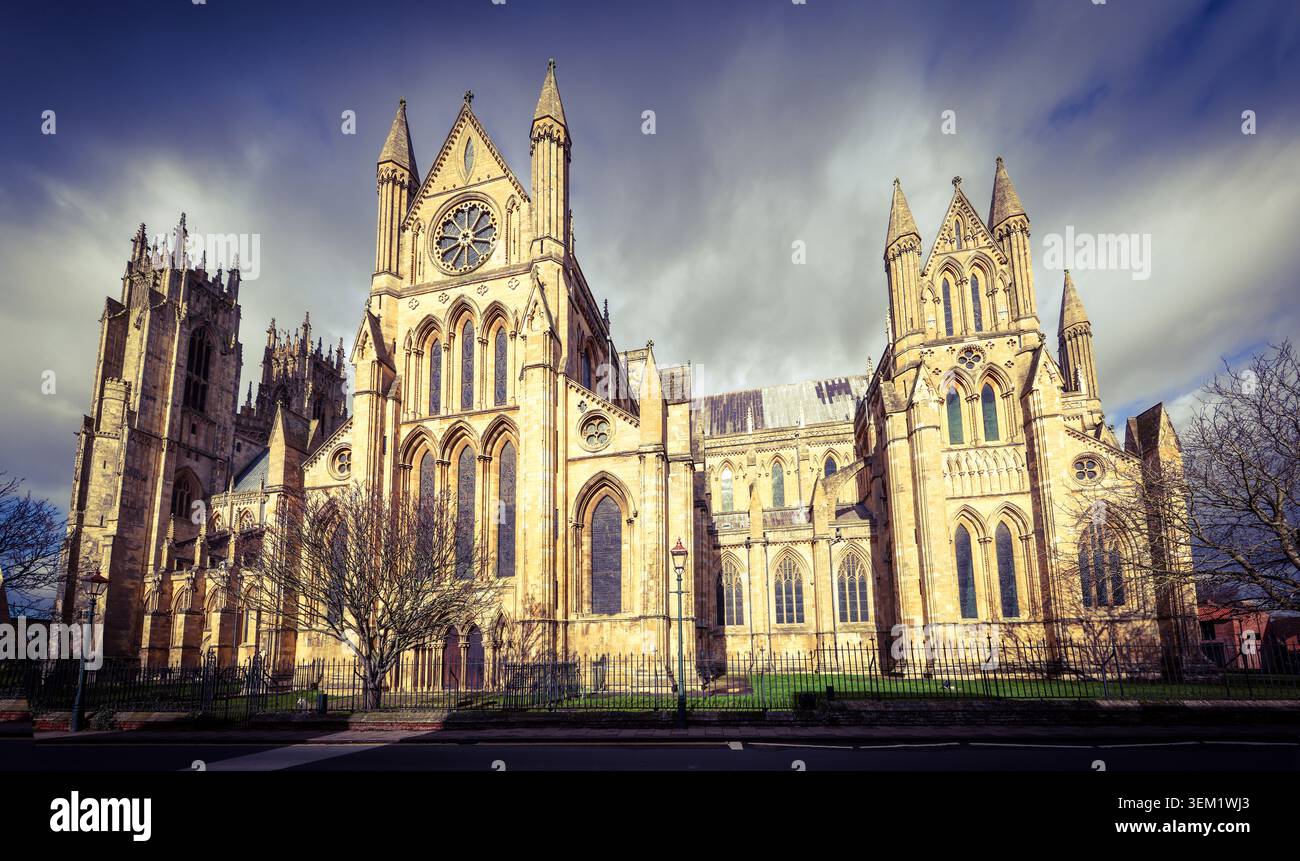
Image details
Contributor:
Tony SmithImage ID:
3EM1WJ3File size:
67 MB (3.4 MB Compressed download)Releases:
Model - no | Property - noDo I need a release?Dimensions:
6284 x 3728 px | 53.2 x 31.6 cm | 20.9 x 12.4 inches | 300dpiDate taken:
22 February 2026Location:
Beverley Minster, Minster Yard North, Beverley, East Yorkshire, England, HU17 0DPMore information:
Panoramic editorial view of Beverley Minster in Beverley, East Yorkshire, photographed in dramatic winter light with a dark, fast-moving sky, bare trees and golden sunlight striking the pale limestone Gothic frontage. Although often mistaken for a cathedral because of its scale and twin-towered west front, Beverley Minster is a major Church of England parish church and one of the finest surviving medieval churches in England. The present building developed mainly between the 13th and 15th centuries on a much older religious site associated with Saint John of Beverley, whose shrine helped make the town an important medieval pilgrimage centre. The image shows the grandeur of the minster’s Gothic architecture, including pointed arches, rose window, tracery, pinnacles, buttresses and high clerestory work, making it suitable for features about English church architecture, sacred heritage, medieval craftsmanship, tourism, conservation, worship, pilgrimage history and the visitor economy of East Yorkshire. The photograph has a strong travel and heritage feel, with the wide composition emphasising the building’s length, height and richly detailed stonework against a moody winter sky. Beverley’s historic market-town setting, close to Hull and the Yorkshire Wolds, gives the image wider use for editorial coverage of Yorkshire tourism, historic towns, ecclesiastical buildings, Grade I listed heritage, Anglican worship, restoration, stone conservation and cultural day trips. The official minster history notes more than 1, 300 years of Christian community on the site, while Historic England describes the present church as built from about 1220 to 1425. The winter atmosphere, low sun and dramatic cloud add visual impact, making the scene useful for calendars, guidebooks, features on British architecture, local identity, religious heritage and the endurance of medieval buildings in modern town centres

