
Mohamed Salah mural by John Culshaw on Anfield Road at Hotel Anfield in Liverpool, England, UK.
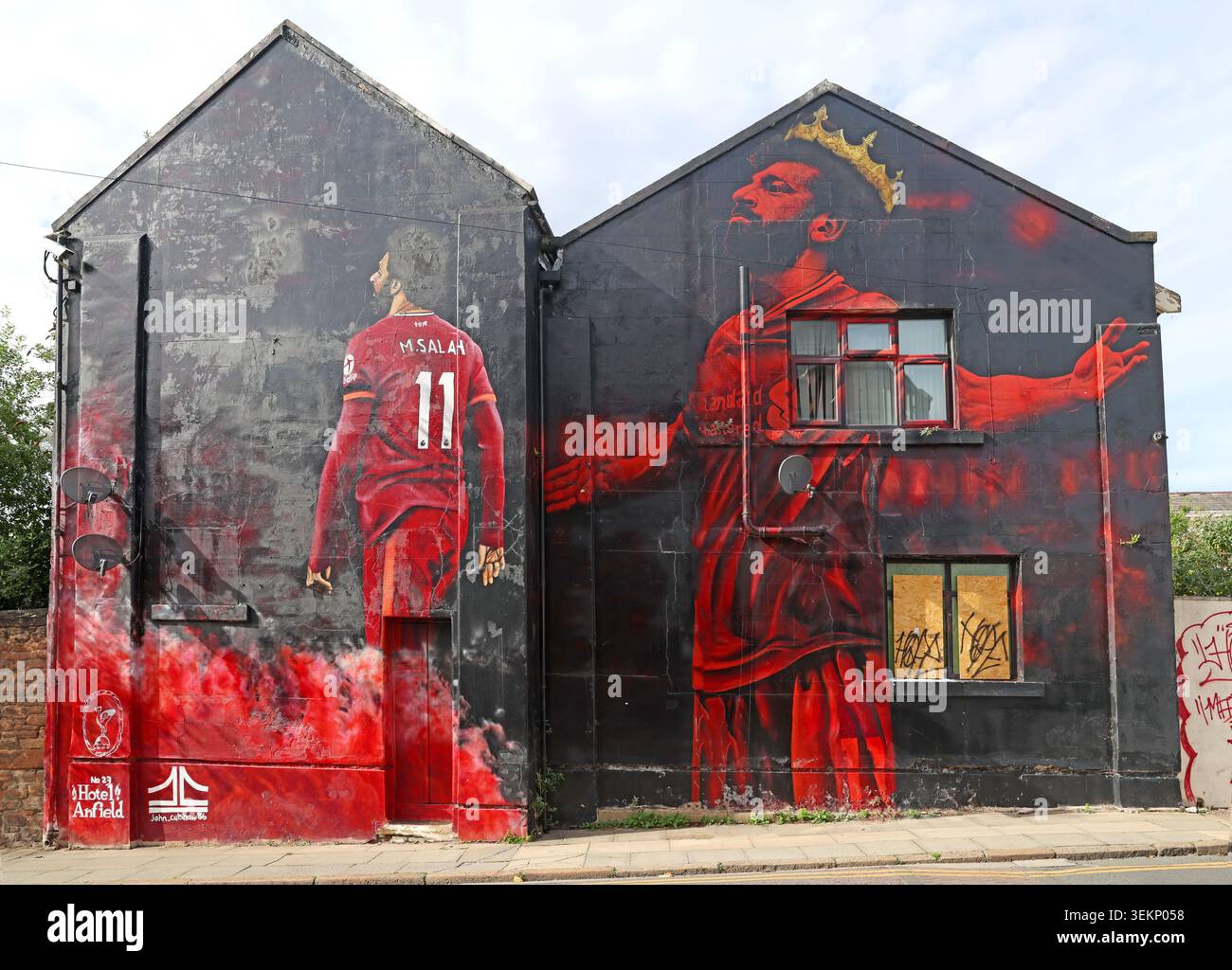
Image details
Contributor:
Tony SmithImage ID:
3EKP058File size:
108.6 MB (4.7 MB Compressed download)Releases:
Model - no | Property - noDo I need a release?Dimensions:
7268 x 5224 px | 61.5 x 44.2 cm | 24.2 x 17.4 inches | 300dpiDate taken:
30 May 2026Location:
Anfield Road, Liverpool, Merseyside, England, UKMore information:
. Mohamed Salah mural by John Culshaw on Anfield Road at Hotel Anfield in Liverpool, England, UK. Photographed on 30 May 2026. The recorded location is Anfield Road, Liverpool, Merseyside, England, UK. The large red-and-black wall painting depicts the Liverpool FC forward from behind in his number 11 shirt alongside dramatic football imagery, covering the side of a building close to Anfield stadium. The mural's intense red palette and monumental scale make it a powerful visual expression of the status leading footballers hold within the identity of the neighbourhood around the club. In relation to public art, historical context shows that public art turns streets and buildings into records of local culture; Murals, statues and memorial sculpture can commemorate people and events, celebrate industry, respond to politics or simply enliven public space, while materials and style often identify a particular era. For the story of fan culture, it is useful to note that football and major sporting events leave a rich material record through flags, tickets, souvenirs, programmes and venue signage; International tournaments in particular can turn everyday objects into historical evidence of national sporting culture. The historical setting for cultural tourism is that travel imagery becomes historical evidence when transport, signage or the visitor economy changes; A familiar destination photographed years earlier can reveal redevelopment, altered businesses and changing patterns of access. As of 2026, the position for public art is that public art is closely connected with regeneration, tourism, identity and debate about representation; Murals and sculptures can become visitor landmarks while also prompting discussion about whose past is visible in public space. For present-day fan culture, 2026 is significant because sporting imagery has relevance beyond results, illustrating club identity, fan culture, major-event economics, venue investment and the role of.

