
Bill Shankly mural by Paul Curtis at Hotel TIA on Anfield Road in Liverpool, England, UK.
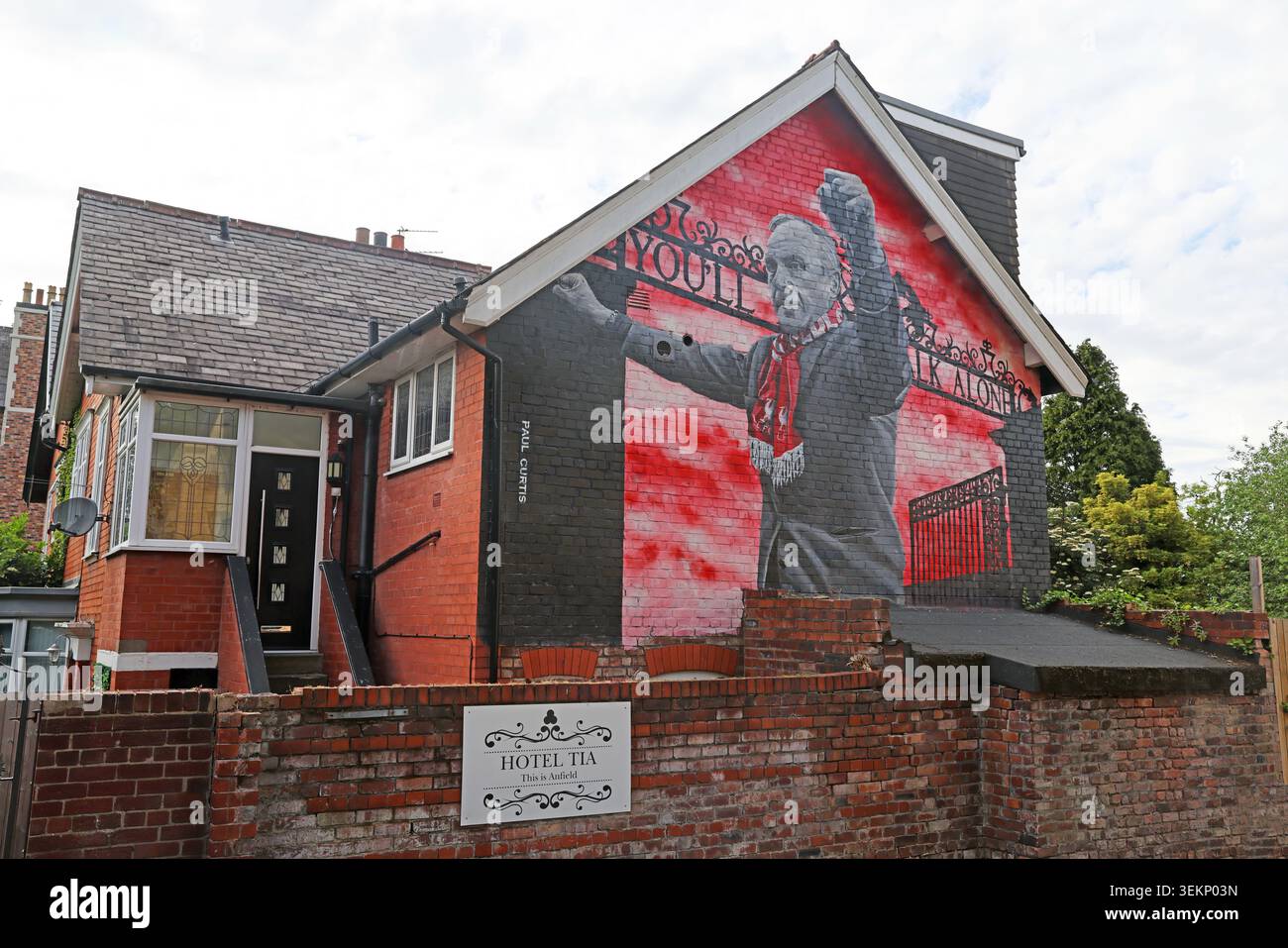
Image details
Contributor:
Tony SmithImage ID:
3EKP03NFile size:
128.1 MB (4.7 MB Compressed download)Releases:
Model - no | Property - noDo I need a release?Dimensions:
8192 x 5464 px | 69.4 x 46.3 cm | 27.3 x 18.2 inches | 300dpiDate taken:
30 May 2026Location:
Hotel TIA, Anfield Road, Liverpool, Merseyside, England, UKMore information:
. Bill Shankly mural by Paul Curtis at Hotel TIA on Anfield Road in Liverpool, England, UK. Photographed on 30 May 2026. The recorded location is Hotel TIA, Anfield Road, Liverpool, Merseyside, England, UK. The artwork covers the gable end of a residential-style building and depicts the legendary former Liverpool FC manager in monochrome and red, with text and football imagery celebrating his enduring place in the club's history. The location close to Anfield stadium places the mural within a wider network of football-themed artworks that have transformed local streets into an informal visual history of Liverpool FC. The historical setting for street art is that street art and murals are especially valuable as temporary cultural evidence because they may be painted over or lost during redevelopment; Photographs preserve both the artwork and its relationship with the surrounding neighbourhood. Seen through sporting heritage, the earlier context is that sporting grounds, club colours and event memorabilia become part of local identity as generations of supporters associate particular streets, gates and stands with matchday ritual; Stadium architecture and branding also change repeatedly as clubs modernise facilities. For memorial, the historical context is that parish churches and cathedrals are among Britain's richest sources of architectural and social history; Medieval fabric, later chapels, organs, altars, monuments and inscriptions can coexist within a single building, revealing generations of craftsmanship and changing liturgy. In the 2026 discussion of street art, public art is closely connected with regeneration, tourism, identity and debate about representation; Murals and sculptures can become visitor landmarks while also prompting discussion about whose history is visible in public space. The wider story encompasses visual culture, community art, place-making, memorial art, and creative industries.

